
Germany vs. Belgium: Flag Comparison
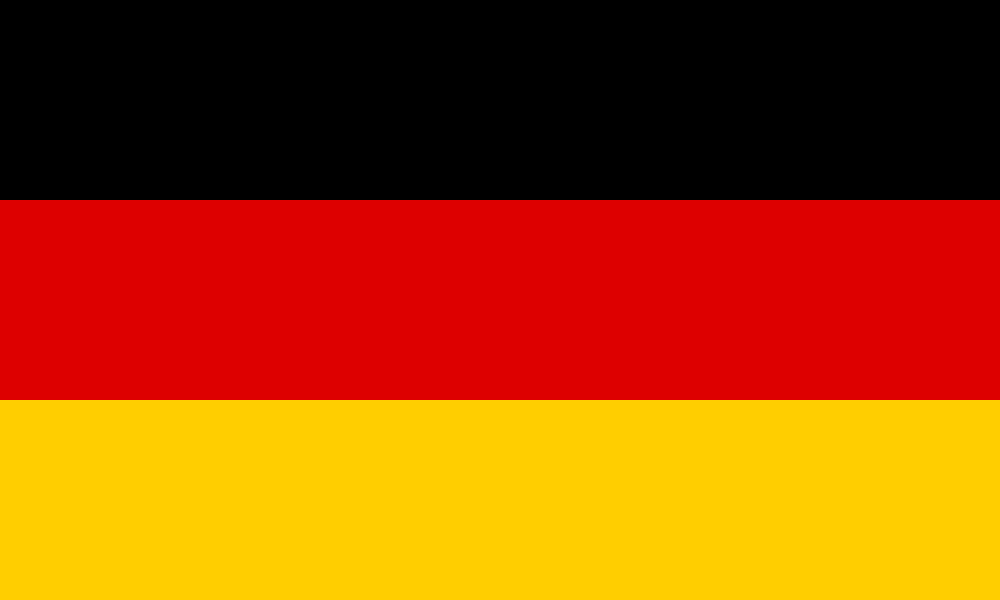
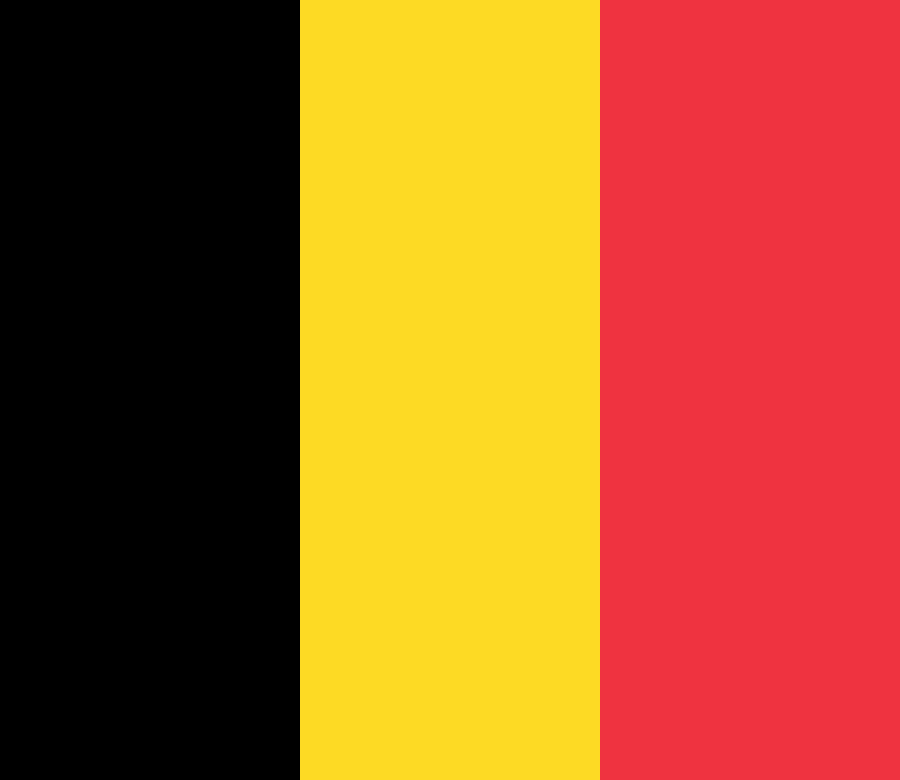
Germany and Belgium both use black, red, and yellow/gold tricolors, but Germany's stripes are horizontal (Black–Red–Gold in 3:5) whereas Belgium's stripes are vertical (Black–Yellow–Red, officially 13:15 but most often made at 2:3).
How to tell Germany and Belgium apart at a glance
- Check the stripe orientation: Germany has horizontal stripes; Belgium has vertical stripes.
- Check the middle color: Germany places RED in the middle (Black–Red–Gold), whereas Belgium places YELLOW in the middle (Black–Yellow–Red).
- Compare the aspect ratio: Germany's flag ordinance fixes a 3:5 rectangle, whereas Belgium's official flag (occasionally seen on important government buildings such as Parliament) is an almost-square 13:15 rectangle; no Belgian statute fixes the ratio, and most Belgian flags are 2:3.
Side-by-side structural comparison
| Attribute | Germany | Belgium |
|---|---|---|
| Aspect ratio | 3:5 (3:5) | 13:15 (13:15) |
| Layout & orientation | horizontal tricolor | vertical tricolor |
| Band / color sequence | black · red · yellow | black · yellow · red |
| Color specifications | Black (Schwarz) (no shade set by law; commonly Pantone Black (unofficial)); Red (Rot) (no shade set by law; commonly Pantone 485 (unofficial)); Gold (Goldfarben) (no shade set by law; commonly Pantone 7405 (unofficial)) | Sable (Black) (no shade set by law; commonly Pantone Black (unofficial)); Or (Yellow) (no shade set by law; commonly Pantone 115 (unofficial)); Gules (Red) (no shade set by law; commonly Pantone 032 (unofficial)) |
| Official adoption | 1949-05-23 | 1831-01-23 |
| Region | Western Europe | Western Europe |
| Visual similarity score | 68/100 (Layout 25/35 · Colors 17/25 · Symbols 20/20 · Ratio 0/10 · Geometry 6/10) | |
Why these two flags look alike
Visitors often assume that neighboring Germany and Belgium derived their black, red, and yellow/gold tricolors from a shared origin, yet the two flags arose independently in the early nineteenth century.
Belgium's colors come directly from the medieval heraldic shield of the Duchy of Brabant—a golden-yellow lion with red claws and a red tongue on a black shield—set vertically for the merchant flag by a Provisional Government decree of 23 January 1831; the decree gives no reason, though the change is usually explained as following the French tricolor and avoiding confusion with the horizontal Dutch tricolor. Germany's colors are commonly traced to the black coats, red facings, and brass buttons of the 1813 Lützow Free Corps during the Napoleonic Wars, and a horizontal flag in today's black-red-gold order was already carried at the 1832 Hambach Festival; the colors were officially adopted in 1848.
Thus, in addition to horizontal versus vertical orientation, the two flags also differ in color sequence: Germany places red between black and gold, while Belgium obeys the heraldic rule of tincture by placing yellow between black and red.
Explore each flag in detail
Read the full specification, color table, and historical timeline on the Flag of Germany page or the Flag of Belgium page, or return to all flag comparisons.