
Compare Flags Side by Side
Several pairs of national flags share near-identical color bands, proportions, or cross geometries. Select any curated look-alike pair below for a full structural breakdown, or use the interactive comparison workbench to inspect any two flags side by side.
Curated look-alike & design-lineage comparisons
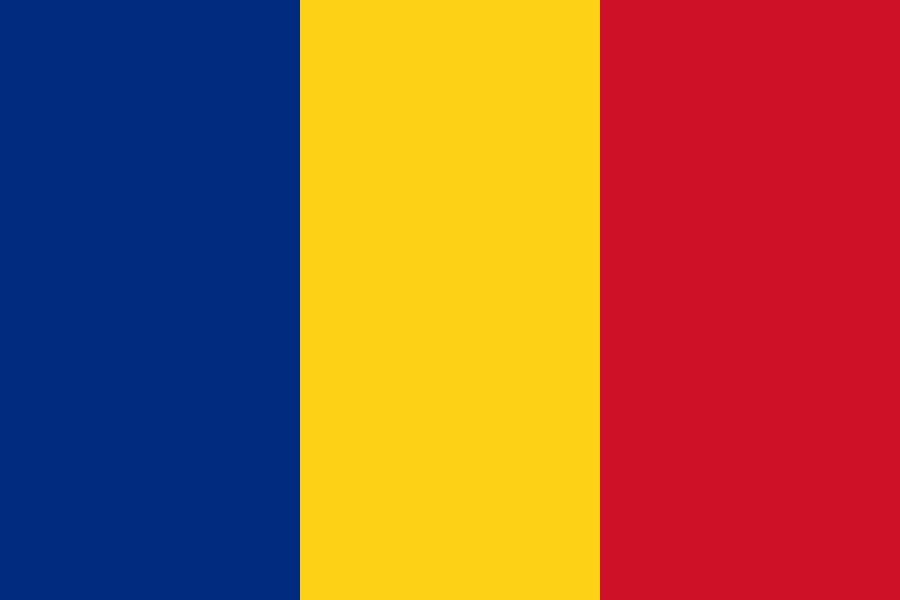 Romania vs. ChadSimilarity: 100/100 · 2:3 vs. 2:3Romania and Chad both fly a 2:3 vertical tricolor of blue, yellow, and red in the exact same hoist-to-fly order, differing mainly in the shade of blue conventionally used for the hoist stripe and in their independent historical origins.
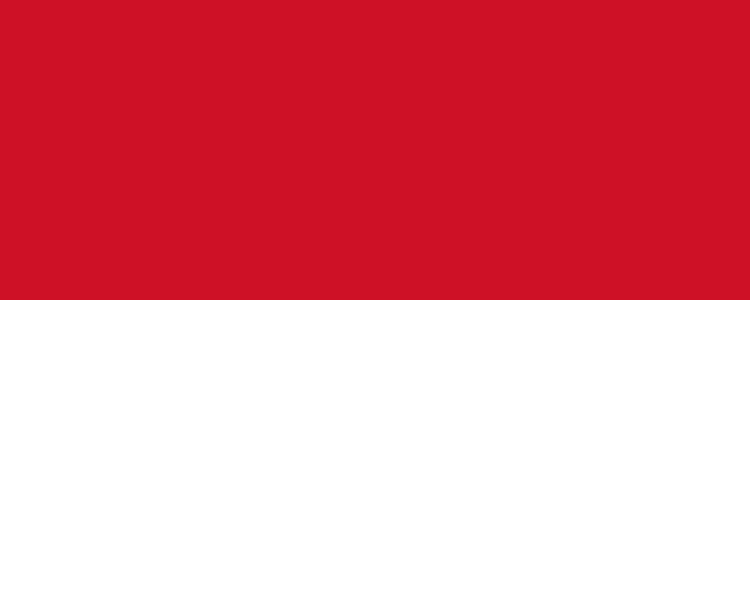 Monaco vs. IndonesiaSimilarity: 95/100 · 4:5 vs. 2:3Monaco and Indonesia both fly a horizontal bicolor of red over white, but Monaco's flag is drawn in a squarer 4:5 aspect ratio (as in the annex to its 1881 ordinance, though 2:3 is common in practice) while Indonesia mandates a wider 2:3 rectangle.
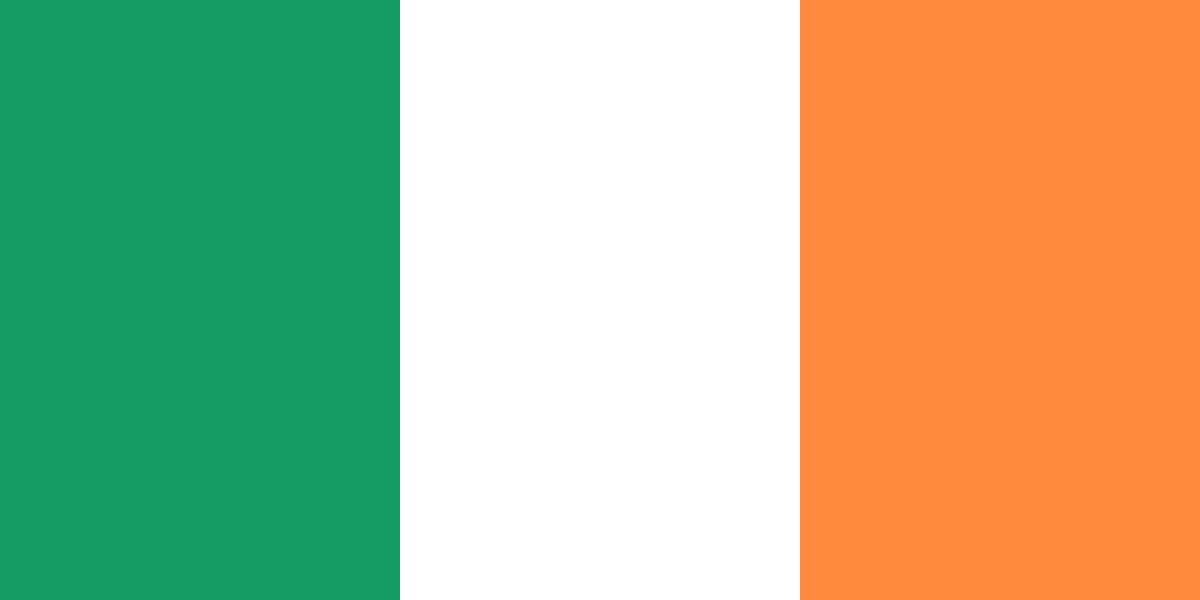 Ireland vs. Côte d'IvoireSimilarity: 85/100 · 1:2 vs. 2:3Ireland and Côte d'Ivoire both use vertical stripes of green, white, and orange, but in opposite hoist-to-fly order and with different aspect ratios (1:2 for Ireland vs. 2:3 for Côte d'Ivoire).
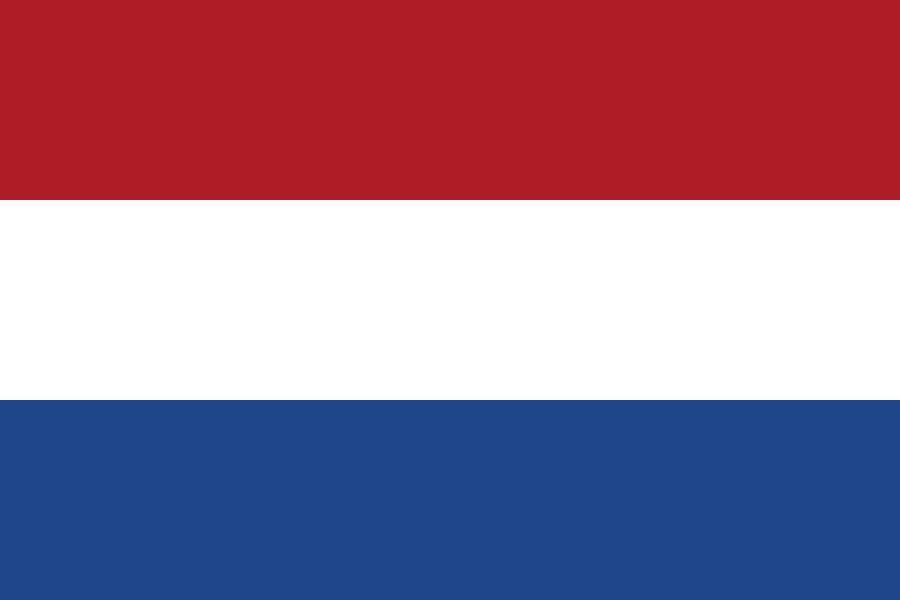 Netherlands vs. LuxembourgSimilarity: 87/100 · 2:3 vs. 3:5The Netherlands and Luxembourg both fly horizontal red-white-blue tricolors, but Luxembourg uses a bright sky-blue bottom stripe (Pantone 299 C) and a longer 3:5 (or 1:2) ratio, while the Netherlands uses dark cobalt blue and a 2:3 ratio.
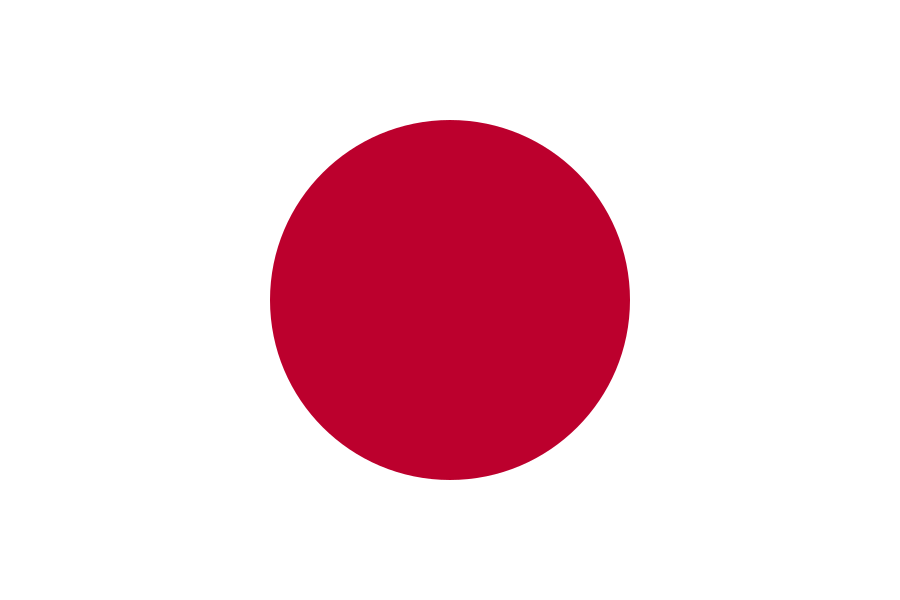 Japan vs. BangladeshSimilarity: 77/100 · 2:3 vs. 3:5Japan and Bangladesh both feature a single red circular sun disc on an unadorned rectangular field, but Japan places a crimson disc at the exact center of a 2:3 white field while Bangladesh offsets a bright red disc slightly toward the hoist on a 3:5 bottle-green field.
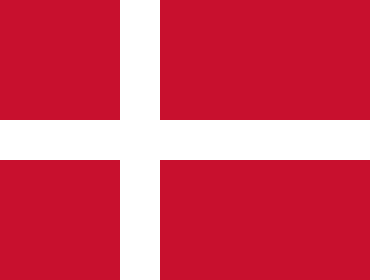 Denmark vs. NorwaySimilarity: 90/100 · 28:37 vs. 8:11Norway's 1821 flag was directly modeled on Denmark's medieval Dannebrog by superimposing a dark-blue Nordic cross inside the white cross of the red-and-white Danish flag.
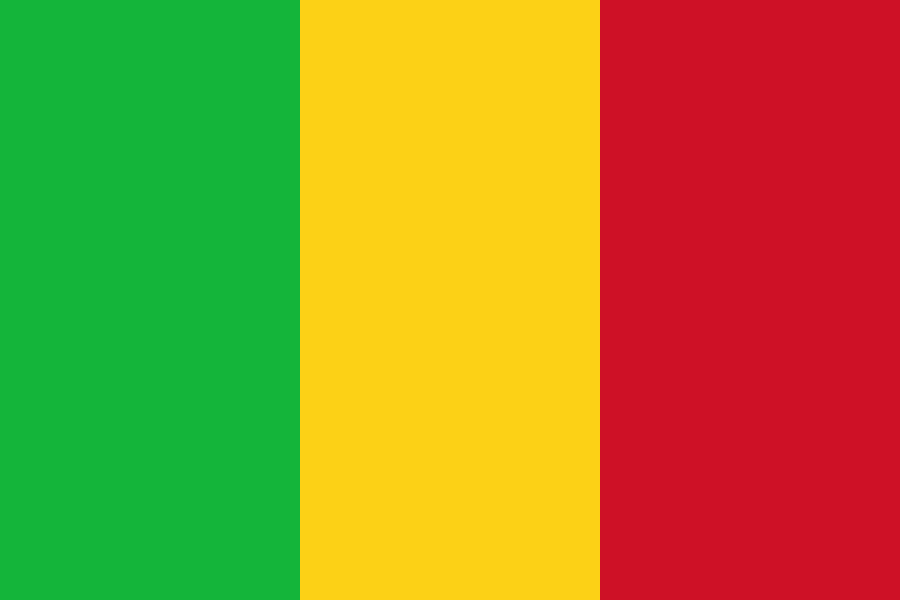 Mali vs. GuineaSimilarity: 92/100 · 2:3 vs. 2:3Mali and Guinea share the same three-equal-vertical-band geometry (both normally made in 2:3) and Pan-African green, yellow, and red colors, but in reversed hoist-to-fly order.
- Mali vs. SenegalSimilarity: 90/100 · 2:3 vs. 2:3Mali and Senegal fly the exact same 2:3 Green–Yellow–Red vertical tricolor inherited from the 1959–1960 Mali Federation; Senegal adds a centered green five-pointed star.
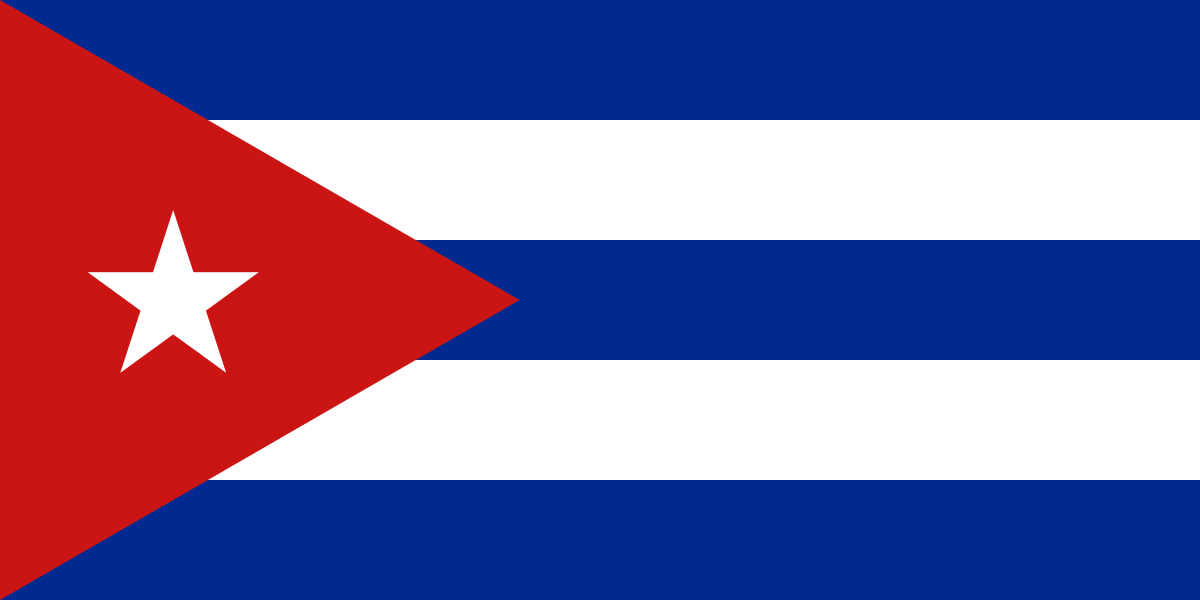 Cuba vs. Puerto RicoSimilarity: 86/100 · 1:2 vs. 2:3Cuba and Puerto Rico share an identical five-stripe, hoist-triangle, and lone-star layout because Puerto Rico's 1895 flag was intentionally designed by inverting the red and blue of Cuba's 1849 flag.
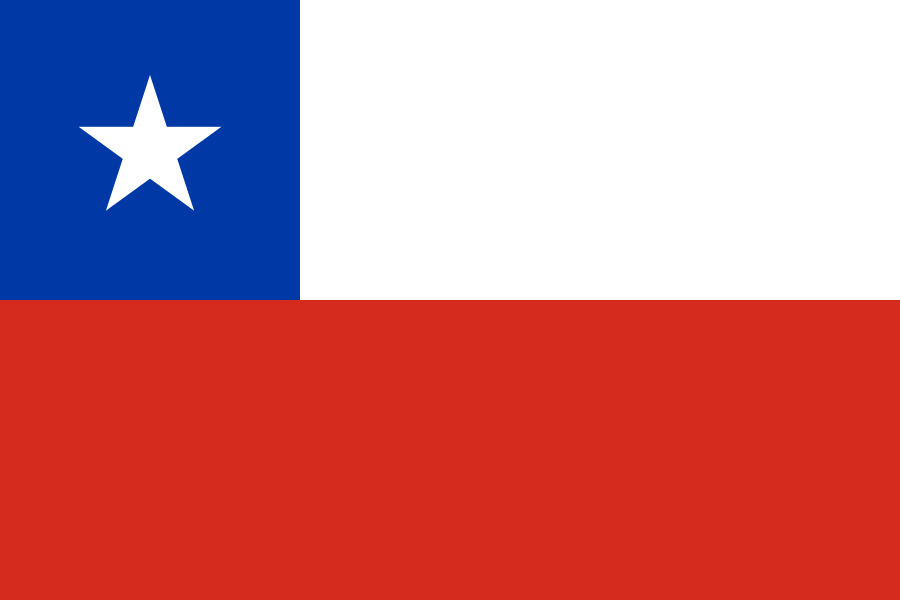 Chile vs. TexasSimilarity: 70/100 · 2:3 vs. 2:3Both Chile (adopted 1817) and Texas (adopted 1839) are 2:3 red-white-blue 'Lone Star' flags, but Chile places its white star in a square upper-hoist blue canton while Texas places its star in a full-height vertical blue hoist band.
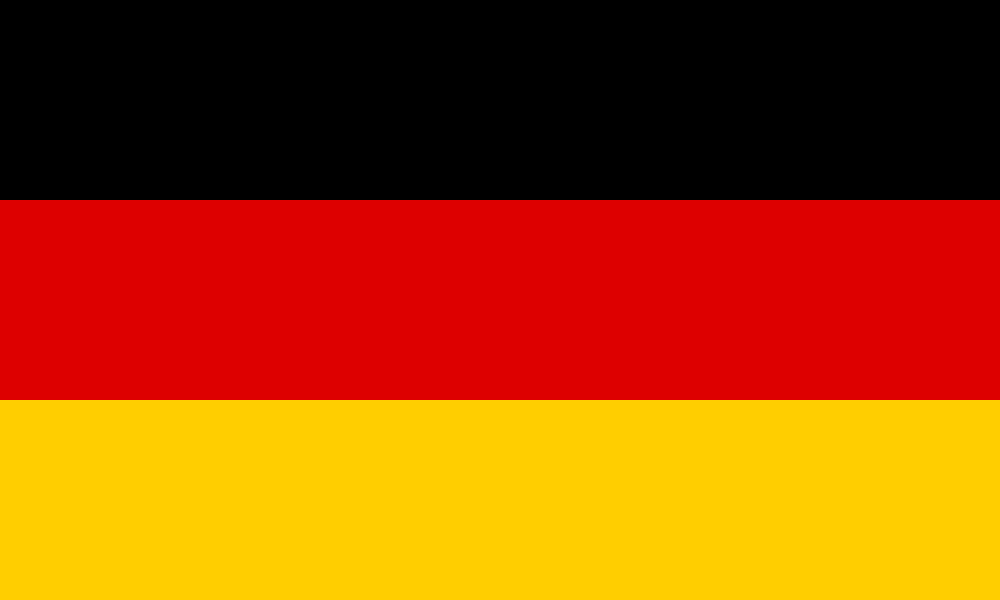 Germany vs. BelgiumSimilarity: 68/100 · 3:5 vs. 13:15Germany and Belgium both use black, red, and yellow/gold tricolors, but Germany's stripes are horizontal (Black–Red–Gold in 3:5) whereas Belgium's stripes are vertical (Black–Yellow–Red, officially 13:15 but most often made at 2:3).
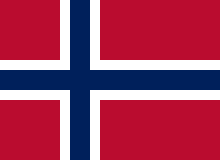 Norway vs. IcelandSimilarity: 92/100 · 8:11 vs. 18:25Iceland's 1915/1944 flag is, in effect, a color inversion of Norway's 1821 flag: Norway places a white-bordered blue Nordic cross on a red field (8:11), whereas Iceland places a white-bordered red Nordic cross on a blue field (18:25).
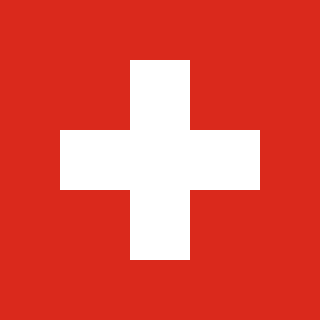 Switzerland vs. International Red CrossSimilarity: 65/100 · 1:1 vs. 2:3The Red Cross protective flag was created at the 1863–1864 Geneva Conferences by reversing the federal colors of Switzerland: Switzerland flies a white cross on a red 1:1 square field, while the Red Cross flies a red cross on a white field of no fixed proportions.
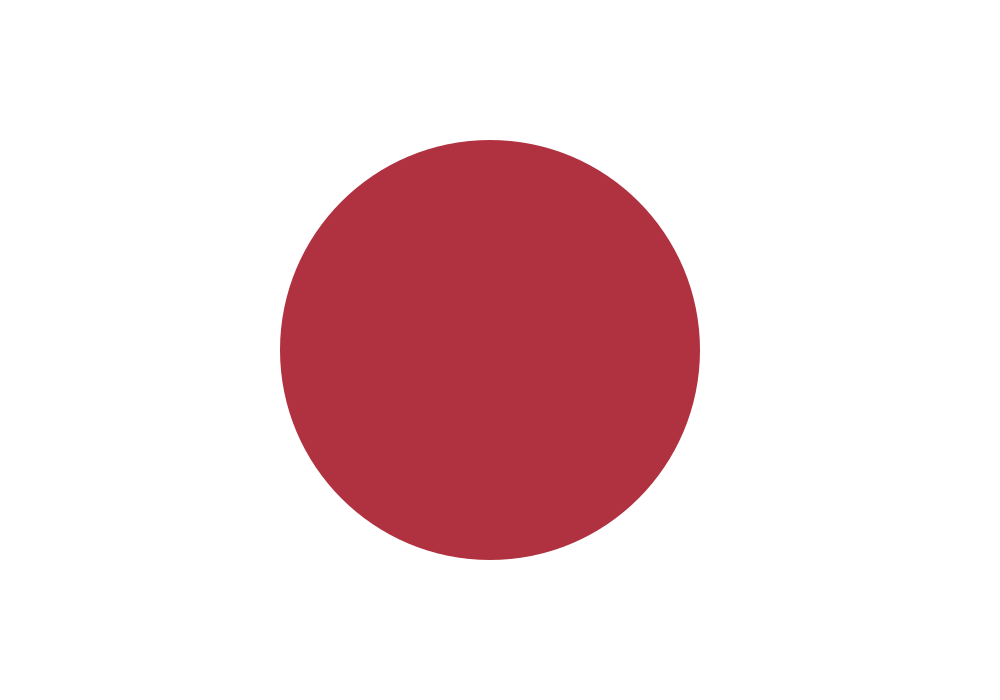 Japan (1870–1999) vs. JapanSimilarity: 87/100 · 7:10 vs. 2:3Japan's 1999 Act on National Flag and Anthem modernized the 1870 Meiji Proclamation No. 57 specification by changing the aspect ratio from 7:10 to 2:3 and centering the sun disc (which was previously shifted 1% toward the hoist), while still permitting the old proportions for the time being.
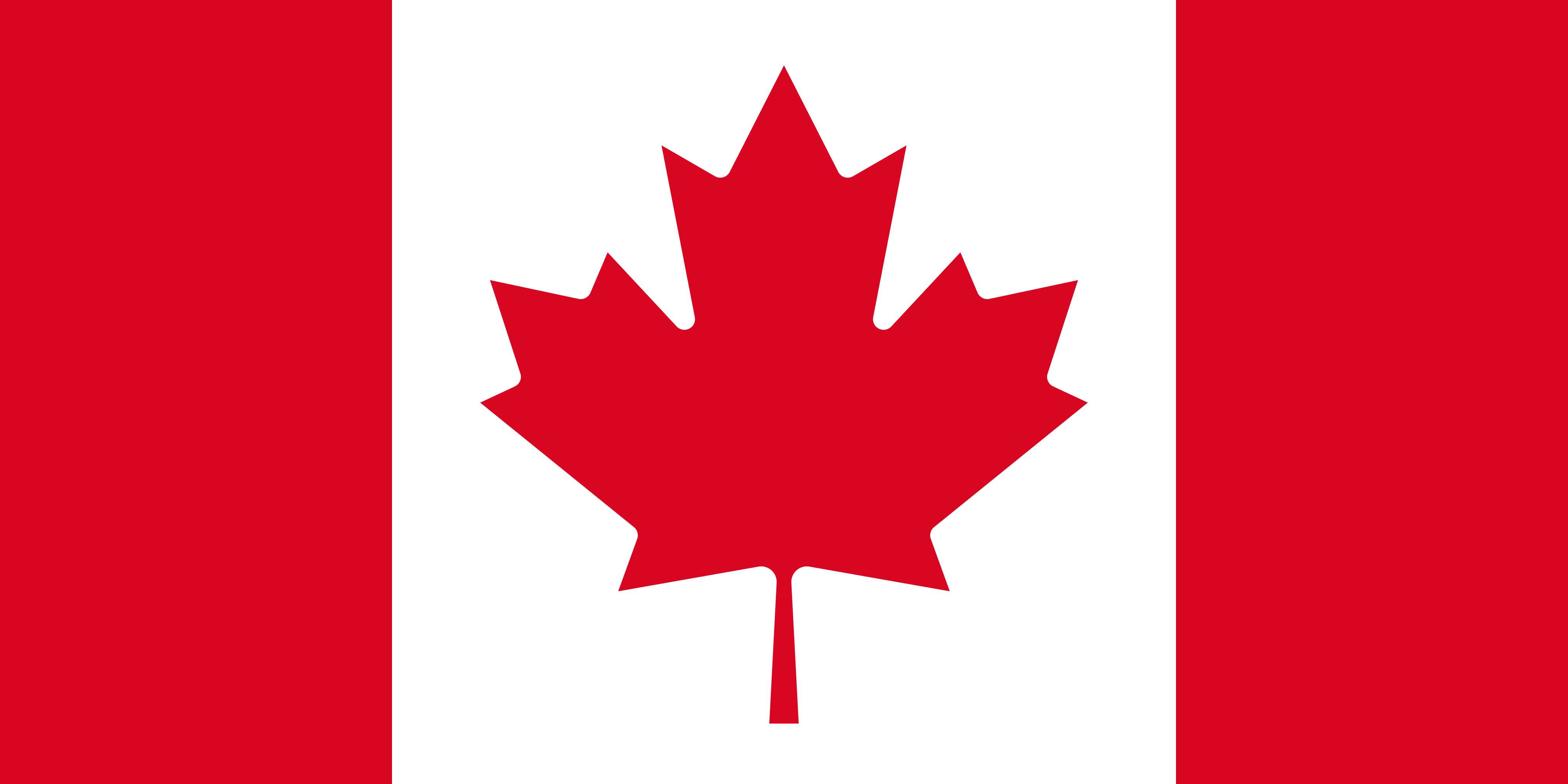 Canada vs. PeruSimilarity: 83/100 · 1:2 vs. 2:3Canada and Peru both fly striking vertical red-white-red tribands, but Canada uses a 1:2 Canadian pale with an 11-pointed maple leaf, while Peru flies equal 1:1:1 stripes in a 2:3 proportion.
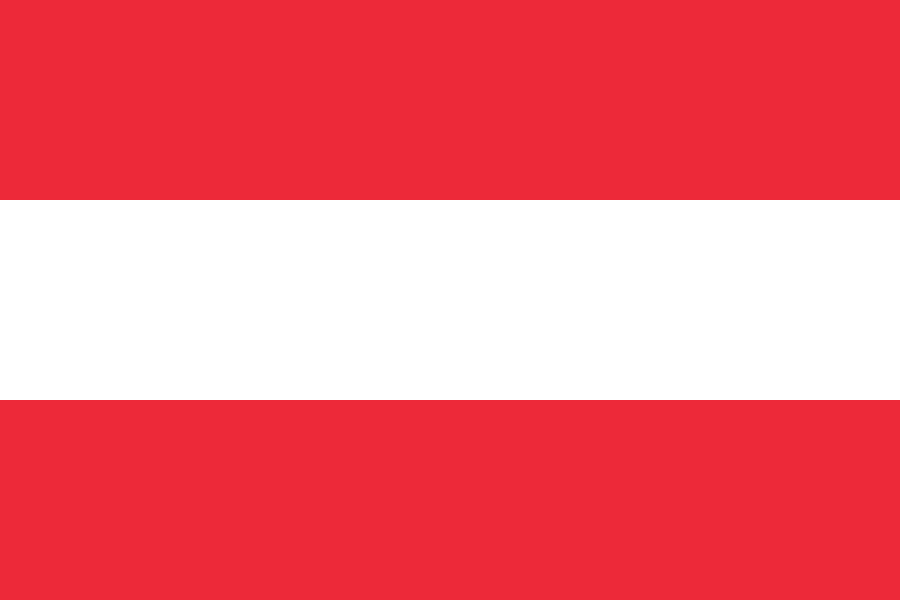 Austria vs. LatviaSimilarity: 77/100 · 2:3 vs. 1:2Austria and Latvia both fly horizontal red-white-red tribands, but Latvia uses an elongated 1:2 ratio with 2:1:2 stripe proportions and a distinctive dark carmine red.
- Austria vs. PeruSimilarity: 90/100 · 2:3 vs. 2:3Austria and Peru share red-white-red triband tinctures, usually in a 2:3 proportion, but Austria's stripes run horizontally while Peru's run vertically.
 Hungary vs. BulgariaSimilarity: 84/100 · 1:2 vs. 3:5Hungary and Bulgaria both fly horizontal tricolors composed of red, white, and green, but Hungary places red at the top in a 1:2 ratio, while Bulgaria places white at the top in a 3:5 ratio.
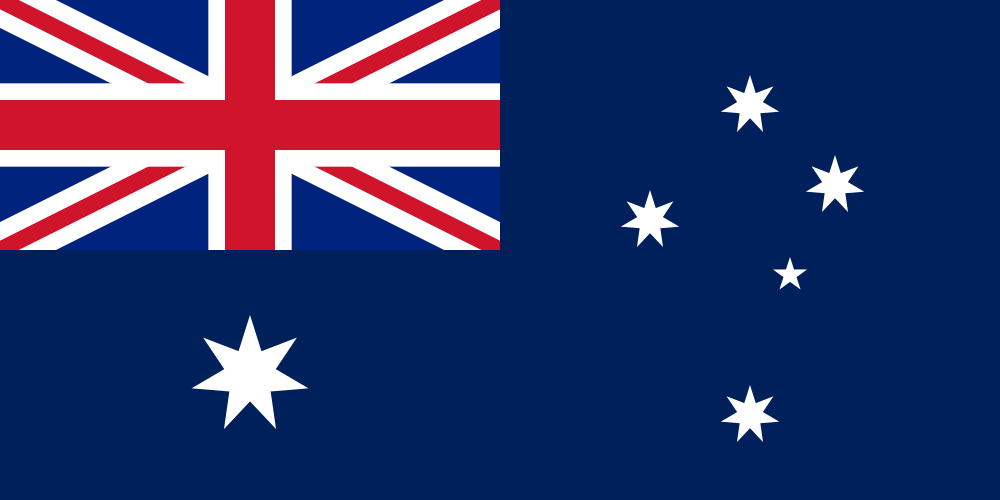 Australia vs. New ZealandSimilarity: 96/100 · 1:2 vs. 1:2Australia and New Zealand both fly British Blue Ensigns featuring the Southern Cross, but Australia includes a large Commonwealth Star in the lower hoist and uses five white stars, while New Zealand uses four red stars with white borders.
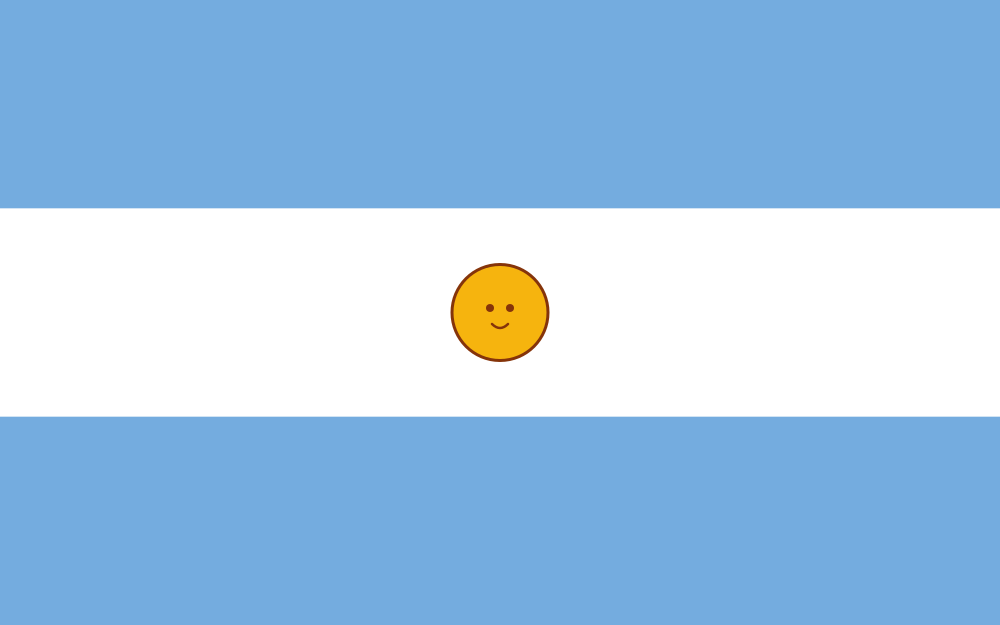 Argentina vs. UruguaySimilarity: 50/100 · 5:8 vs. 2:3Argentina and Uruguay are Río de la Plata neighbors that both fly the golden Sun of May on blue and white fields, but Argentina uses a horizontal triband while Uruguay uses nine horizontal stripes with a canton.