
Flag of Belgium
Native & traditional name: Drapeau de la Belgique / Vlag van België
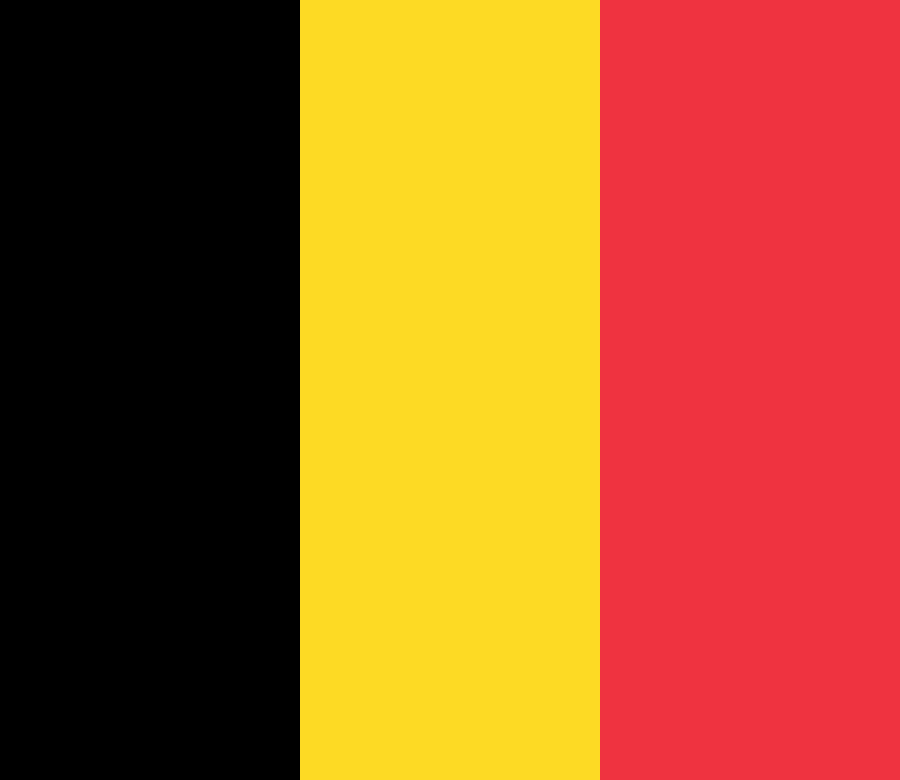
| Entity | Belgium (BE) |
|---|---|
| Type | Sovereign national flag (national, state) |
| Proportion | 13:15 (13:15) |
| Primary colors | black, yellow, red |
| Main symbol | None (geometric bands) |
| Arrangement | vertical tricolor (black · yellow · red) |
| Official adoption | 1831-01-23 |
| Region | Western Europe |
Plain-language visual description
The national flag of Belgium consists of three equal vertical stripes of black at the hoist, yellow in the center, and red at the fly, specified in an official 13:15 near-square proportion.
Construction and geometry
Proportion & symmetry: The Flag of Belgium uses a statutory 13:15 height-to-width ratio on a rectangular field with horizontal mirror symmetry. Three equal vertical bands of black, yellow, and red in an unusually near-square 13:15 official ratio.
- Official state and ceremonial aspect ratio is 13:15 (2.60 m × 3.00 m), making it one of the most nearly square rectangular national flags.
- Civil ensigns and everyday flags lawfully use a 2:3 ratio.
- Three equal vertical bands: black at the hoist, yellow in the center, and red at the fly.
Official colors and specification system
Rather than manufacturing false RGB precision where a statute specifies dyed cloth, Pantone, Munsell, or CIE coordinates, the table below records the governing color system alongside a calibrated display hex approximation.
| Color | Official shade name | Specification system | Statutory / standard code | Display hex |
|---|---|---|---|---|
| black | Sable (Black) | pantone | Pantone Black | #000000 |
| yellow | Or (Yellow) | pantone | Pantone Yellow 115 C | #FDDA24 |
| red | Gules (Red) | pantone | Pantone Red 032 C | #EF3340 |
Meaning and symbolism
Documented symbolism
Article 193 of the Belgian Constitution states: 'The Belgian Nation adopts red, yellow and black as colours, and as state coat of arms the Belgian Lion with the motto UNION FAIT LA FORCE.'
The three colors are taken directly from the medieval heraldic shield of the Duchy of Brabant: a golden-yellow lion with red claws and a red tongue on a black field (Sable, a lion rampant Or, armed and langued Gules).
Common interpretations
The vertical layout was modeled on the French revolutionary tricolor to signal liberal constitutionalism during the 1830 Belgian Revolution against the United Kingdom of the Netherlands.
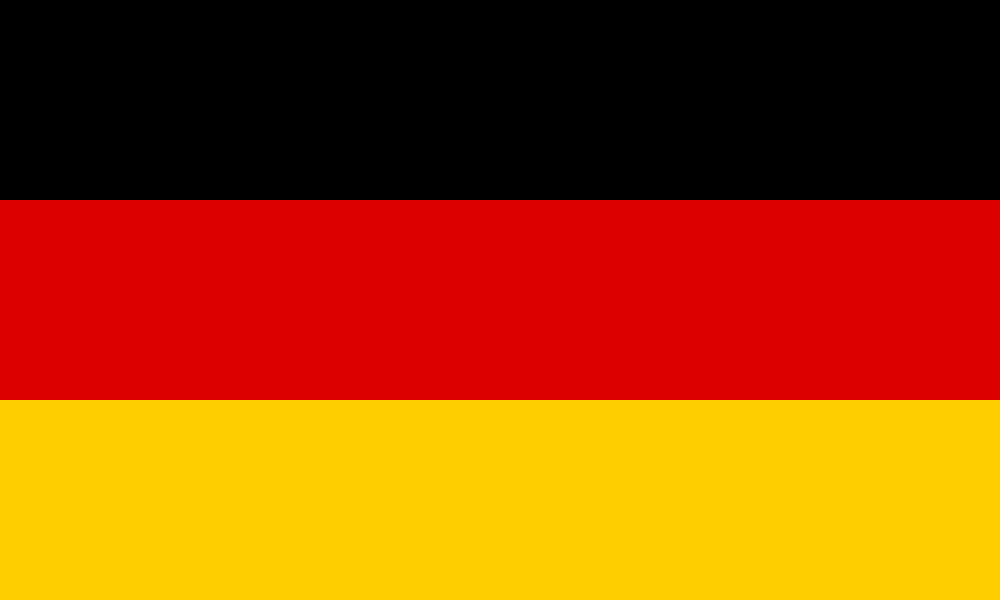
Although Belgium and Germany share black, yellow/gold, and red, their origins are independent: Belgium's colors come from the heraldic Lion of Brabant, whereas Germany's come from the 1813 Lützow Free Corps.
History and design evolution
The combination of black, yellow, and red first appeared as a revolutionary cockade and horizontal banner during the 1789–1790 Brabant Revolution against Austrian Habsburg rule. When the Belgian Revolution broke out in Brussels in August 1830 against King William I of the Netherlands, journalist Édouard Ducpétiaux and lawyer Lucien Jottrand commissioned a horizontal red-yellow-black flag to replace the Dutch tricolor over Brussels City Hall.
On 23 January 1831, the Provisional Government ordered the stripes rotated from horizontal to vertical so the flag would not be confused at a distance with the horizontal tricolor of the Netherlands. Initially flown with red at the hoist, the stripe order was reversed later in 1831 to place black at the hoist, yellow in the middle, and red at the fly—though the text of Constitution Article 193 was never amended and still lists the colors in the original 'red, yellow and black' order.
An 1831 ministerial instruction set the dimensions of official ceremonial flags at 2.60 meters high by 3.00 meters wide, creating Belgium's distinctive 13:15 aspect ratio. In everyday civil use and at sea, a 2:3 proportion is also officially recognized.
Key historical milestones
- 1789Brabant Revolution: Horizontal black-yellow-red banners derived from the Duchy of Brabant arms are carried against Austrian rule.
- 1830Belgian Revolution: Ducpétiaux and Jottrand raise a horizontal red-yellow-black flag on Brussels City Hall on 26 August 1830.
- 1831Vertical Rotation: The Provisional Government rotates the bands to vertical and places black at the hoist in a 13:15 proportion.
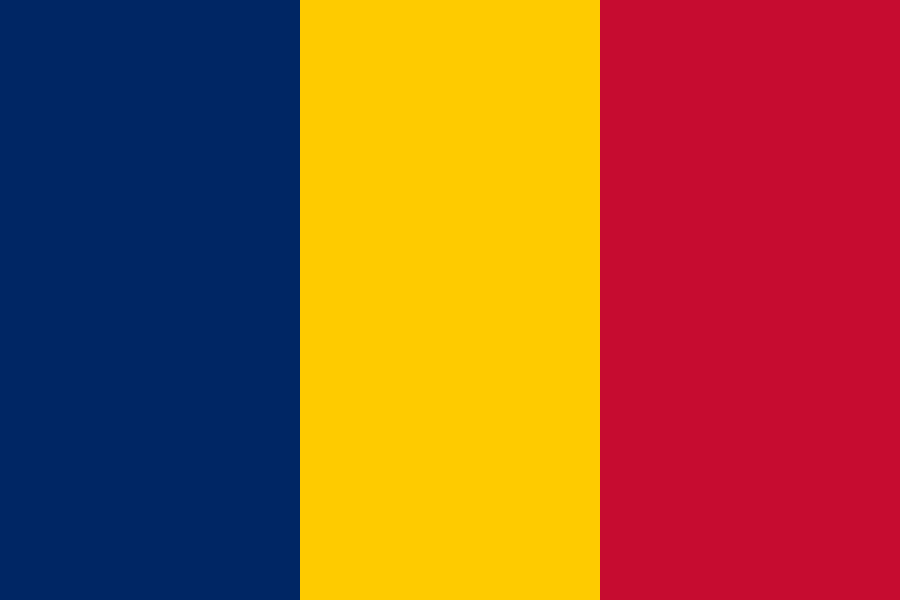
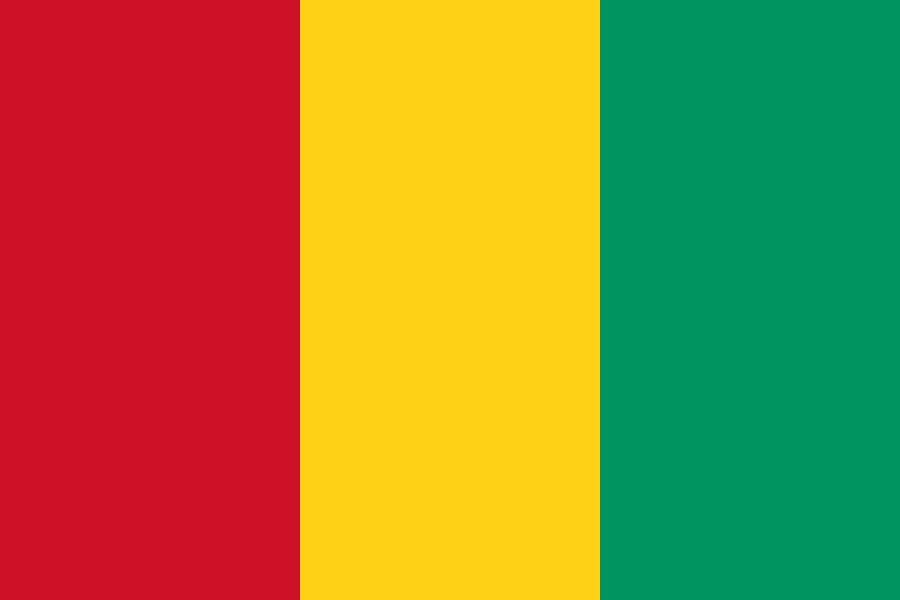
Frequently confused with
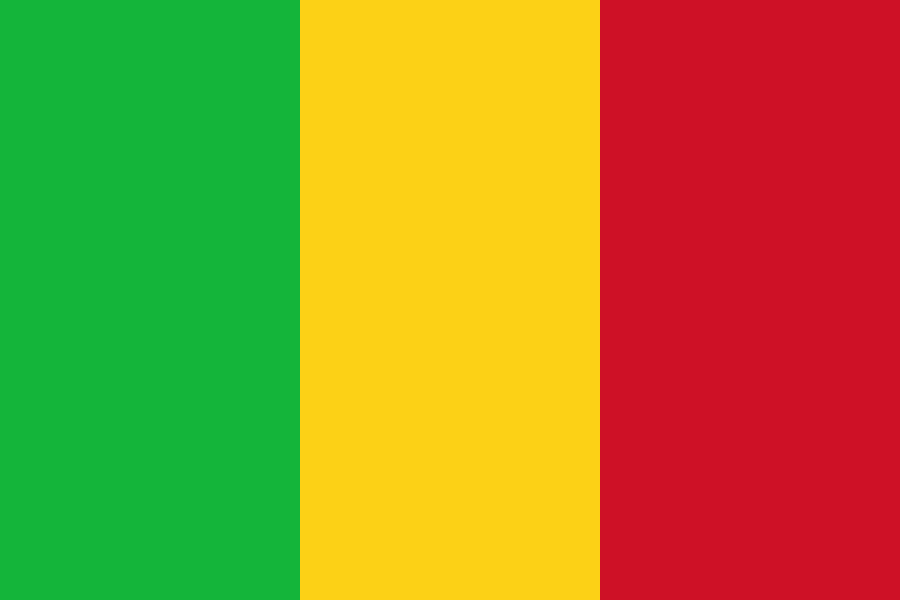
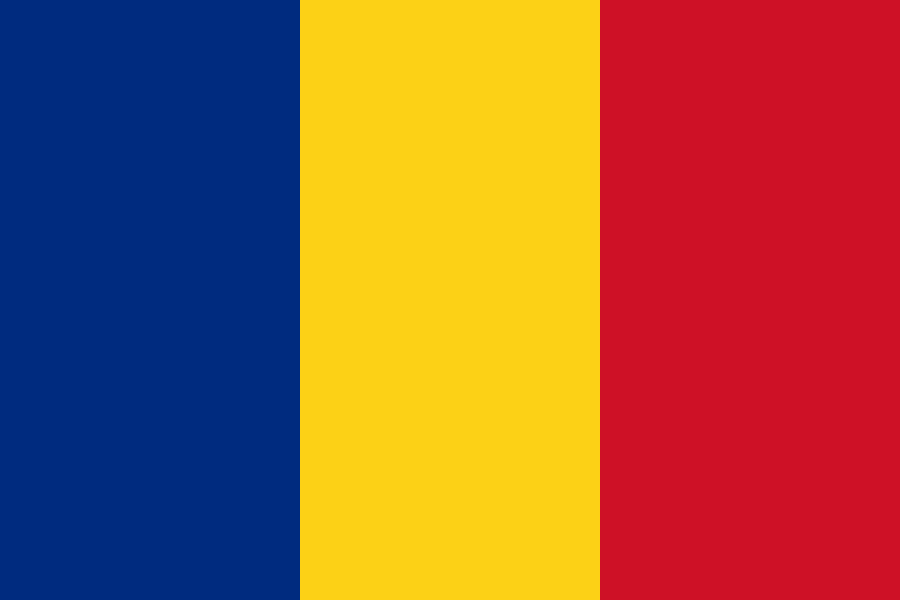
The Flag of Belgium is commonly confused with or compared alongside the following flags due to shared colors, stripe geometry, or central emblems:
Visually and structurally similar flags
Ranked deterministically across layout family (35%), color overlap and stripe order (25%), symbols (20%), aspect ratio (10%), and stripe/symmetry geometry (10%):


Sources and image-rights provenance
- Constitution of Belgium, Article 193
- Flags of the World: Belgium — Flag of Belgium entry
SVG artwork provenance: Constructed from statutory specifications (public-domain-statute, verified 2026-10-13, SHA-256 6873bfaf37c5…).