
Flag of Ukraine
Native & traditional name: Державний Прапор України
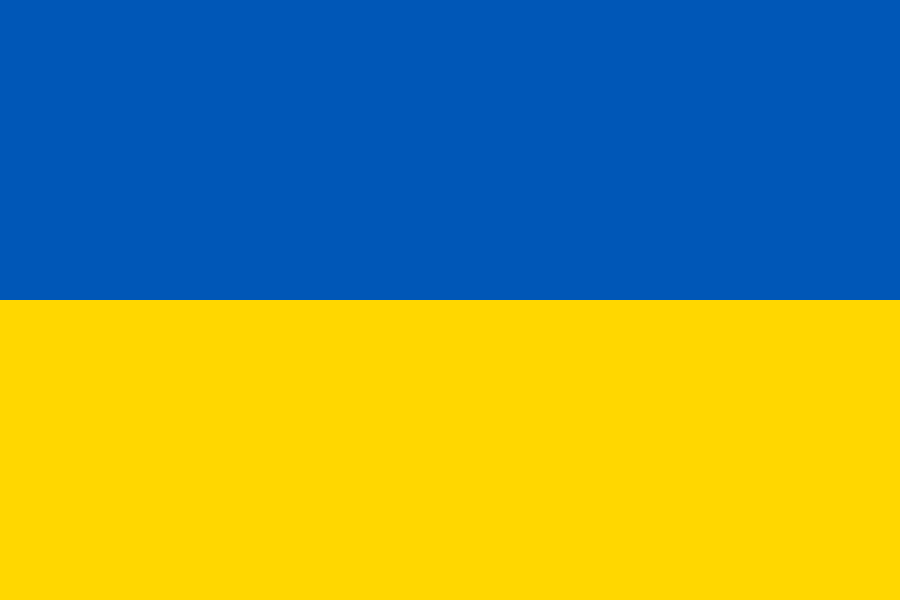
| Entity | Ukraine (UA) |
|---|---|
| Type | Sovereign national flag (national, civil, state) |
| Proportion | 2:3 (2:3) |
| Primary colors | blue, yellow |
| Main symbol | None (geometric bands) |
| Arrangement | horizontal bicolor (blue · yellow) |
| Official adoption | 1992-01-28 |
| Region | Eastern Europe |
Plain-language visual description
The national flag of Ukraine consists of two equal horizontal bands of azure blue on the top and golden yellow on the bottom in a 2:3 aspect ratio.
Construction and geometry
Proportion & symmetry: The Flag of Ukraine uses a statutory 2:3 height-to-width ratio on a rectangular field with vertical mirror symmetry. Two equal horizontal bands of azure blue (top) and golden yellow (bottom).
- Aspect ratio is 2:3.
- Two equal horizontal stripes: azure blue (top, 1/2 height) and golden yellow (bottom, 1/2 height).
Official colors and specification system
Rather than manufacturing false RGB precision where a statute specifies dyed cloth, Pantone, Munsell, or CIE coordinates, the table below records the governing color system alongside a calibrated display hex approximation.
| Color | Official shade name | Specification system | Statutory / standard code | Display hex |
|---|---|---|---|---|
| blue | Azure Blue | pantone | Pantone Coated 2935 C (DSTU 4512:2006) | #0057B7 |
| yellow | Golden Yellow | pantone | Pantone Coated Yellow 012 C (DSTU 4512:2006) | #FFD700 |
Meaning and symbolism
Documented symbolism
Article 20 of the 1996 Constitution of Ukraine states that 'The State Flag of Ukraine is a banner of two equally-sized horizontal bands of blue and yellow colour.'
Heraldically, the colors derive from the medieval coat of arms of the Kingdom of Galicia–Volhynia (a golden lion on an azure shield) and the ancient Trident (Tryzub) of Kyivan Rus.
Common interpretations
In popular and poetic usage across Ukraine since the 19th century, the upper blue stripe represents the clear peaceful sky and the lower yellow stripe represents boundless fields of ripened wheat.
History and design evolution
Blue and gold banners trace back to the 13th-century Principality of Galicia–Volhynia under King Danylo Romanovych and were carried by Ruthenian knights from Lviv at the Battle of Grunwald in 1410. During the European Spring of Nations in 1848, the Supreme Ruthenian Council in Lviv revived the blue-and-yellow horizontal bicolor on 25 June 1848 as the national emblem of Ukrainians in the Austrian Empire.
Following the collapse of the Russian Empire in 1917, the Central Rada of the Ukrainian People's Republic and the West Ukrainian People's Republic both adopted the blue-over-yellow horizontal bicolor in 1918. Under Soviet rule from 1922 to 1991, public display of the blue-and-yellow flag was strictly prohibited and replaced by red Soviet republic banners.
As the Ukrainian independence movement surged in 1989–1991, citizens raised the blue-and-yellow flag across Lviv and Kyiv. Following the August 1991 Declaration of Independence, the Verkhovna Rada officially adopted the 2:3 blue-and-yellow flag on 28 January 1992, and National Standard DSTU 4512:2006 codified its Pantone 2935 C and 012 C shades.
Key historical milestones
- 1848Lviv Revival: The Supreme Ruthenian Council hoists the blue-and-yellow banner over Lviv City Hall on 25 June 1848.
- 1918Ukrainian People's Republic: Central Rada Fleet Law standardizes the blue-over-yellow national bicolor.
- 1992Post-Soviet Restoration: Verkhovna Rada Resolution No. 2067-XII formally restores the 2:3 blue-and-yellow national flag on 28 January 1992.
Visually and structurally similar flags
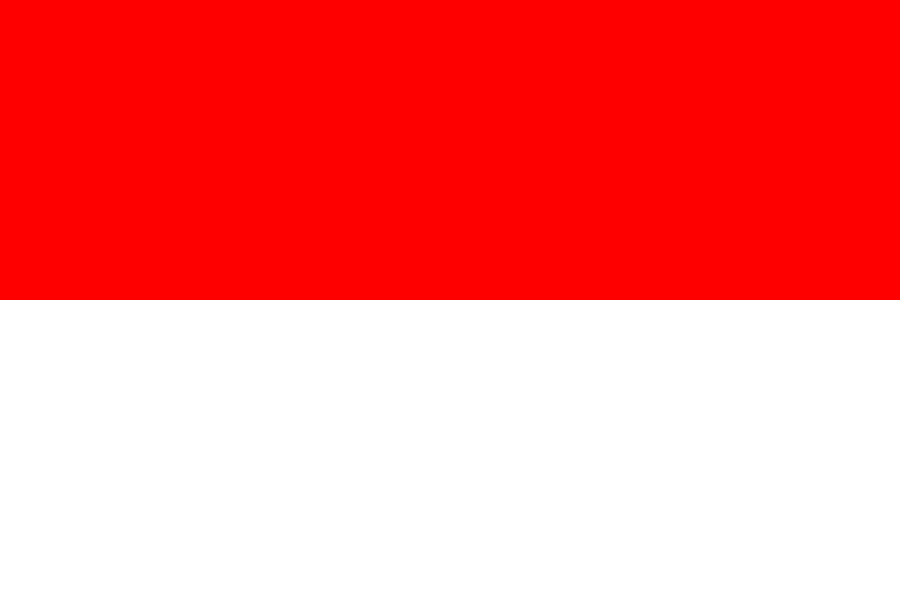
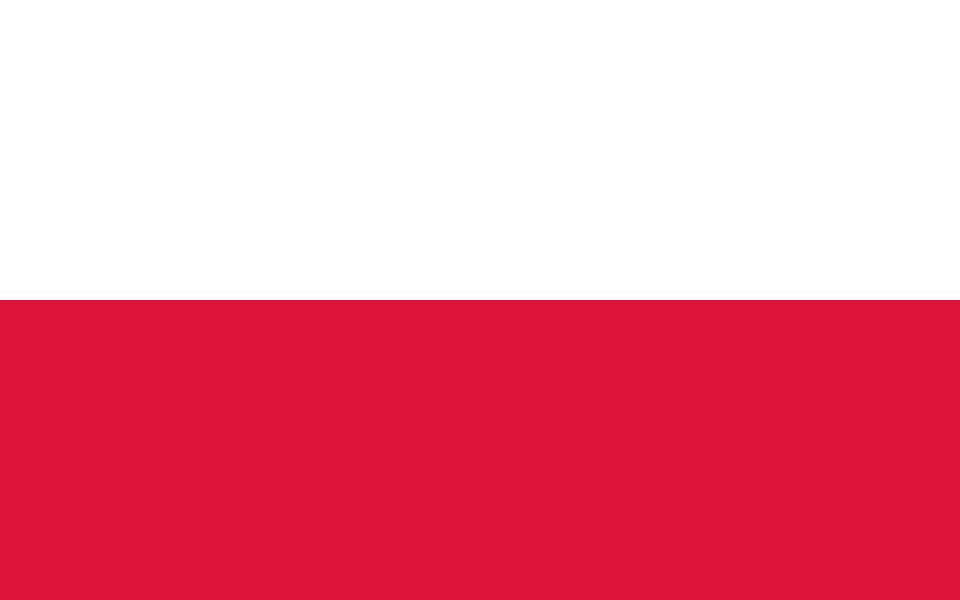
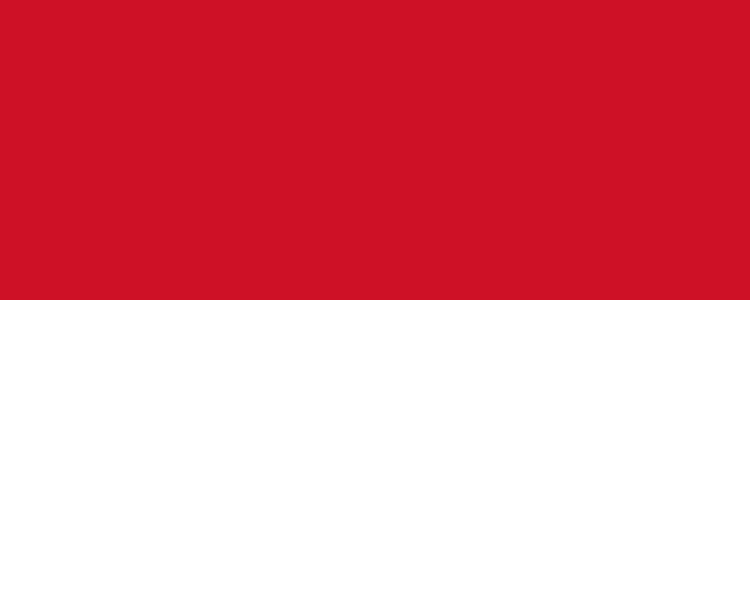
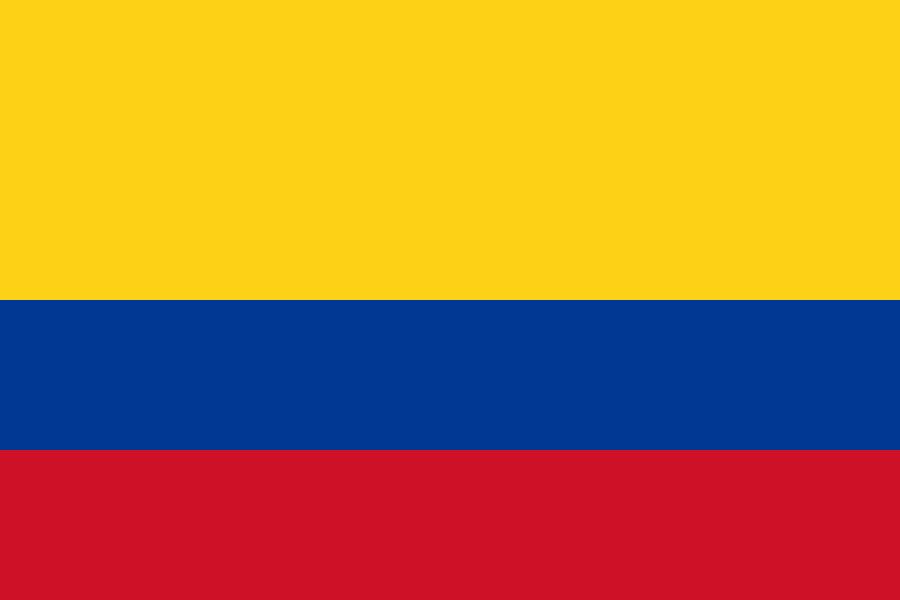
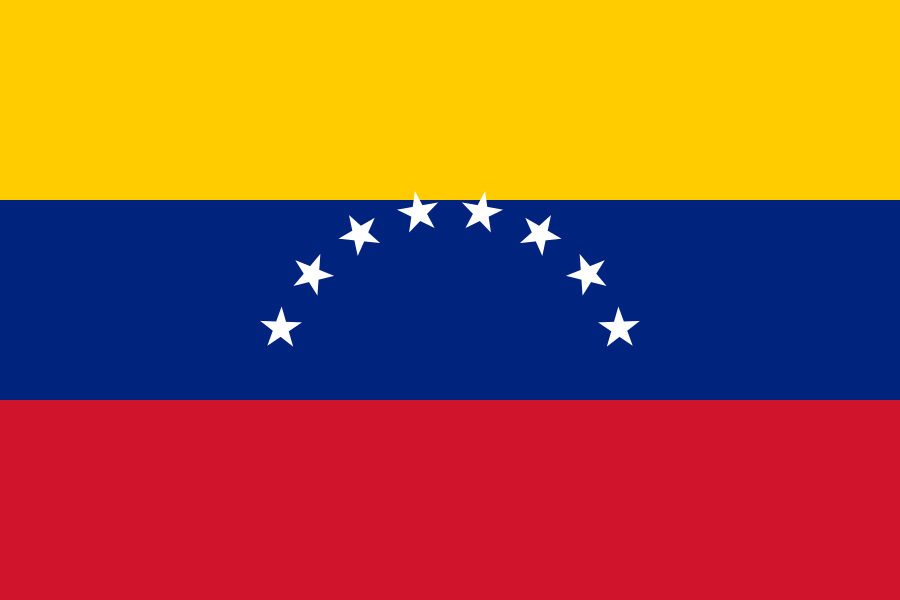
Ranked deterministically across layout family (35%), color overlap and stripe order (25%), symbols (20%), aspect ratio (10%), and stripe/symmetry geometry (10%):
Sources and image-rights provenance
- Resolution of the Verkhovna Rada of Ukraine No. 2067-XII on the State Flag of Ukraine
- DSTU 4512:2006 State Flag of Ukraine: Technical Specifications — DSTU 4512:2006
SVG artwork provenance: Constructed from statutory specifications (public-domain-statute, verified 2026-10-13, SHA-256 bfee1258fdf2…).