
Flag of Colombia
Native & traditional name: Bandera de la República de Colombia
| Entity | Colombia (CO) |
|---|---|
| Type | Sovereign national flag (national, civil) |
| Proportion | 2:3 (2:3) |
| Primary colors | yellow, blue, red |
| Main symbol | None (geometric bands) |
| Arrangement | horizontal tricolor (yellow · blue · red) |
| Official adoption | 1861-11-26 |
| Region | South America |
Plain-language visual description
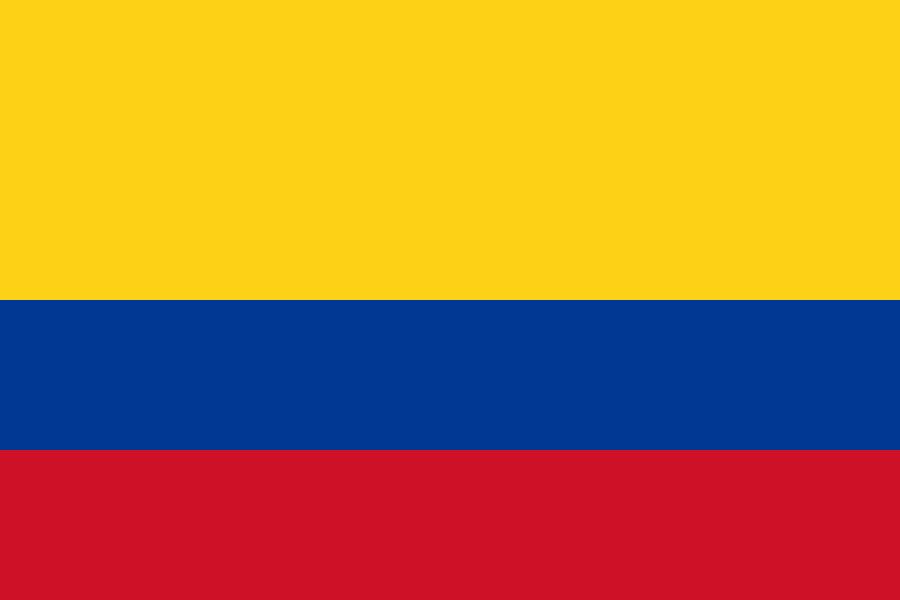
The national flag of Colombia consists of three horizontal stripes of yellow, blue, and red in an unequal 2:1:1 vertical proportion, where the top yellow band occupies half the flag's height.
Construction and geometry
Proportion & symmetry: The Flag of Colombia uses a statutory 2:3 height-to-width ratio on a rectangular field with vertical mirror symmetry. Three unequal horizontal bands in a 2:1:1 vertical height ratio (yellow 50%, blue 25%, red 25%).
- Aspect ratio is 2:3.
- Horizontal stripe heights are 2:1:1 (yellow = 1/2 of hoist height; blue = 1/4 of hoist height; red = 1/4 of hoist height).
Official colors and specification system
Rather than manufacturing false RGB precision where a statute specifies dyed cloth, Pantone, Munsell, or CIE coordinates, the table below records the governing color system alongside a calibrated display hex approximation.
| Color | Official shade name | Specification system | Statutory / standard code | Display hex |
|---|---|---|---|---|
| yellow | Gold / Yellow (Amarillo) | pantone | Pantone 116 C | #FCD116 |
| blue | Cobalt Blue (Azul) | pantone | Pantone 287 C | #003893 |
| red | Scarlet Red (Rojo) | pantone | Pantone 186 C | #CE1126 |
Meaning and symbolism
Documented symbolism
Official Colombian protocol attributes the 2:1:1 tricolor to Venezuelan precursor Francisco de Miranda (1806): yellow represents the abundant gold, fertile soil, and sovereignty of the Americas; blue represents the two oceans (Atlantic and Pacific) that wash Colombia's shores and separate it from Spain; and red represents the blood shed by heroes on the battlefields of independence.
Common interpretations
Miranda himself left two contemporary accounts of his color choices: an 1801 letter citing Johann Wolfgang von Goethe's conversation on the three primary colors (yellow, blue, red), and a memory of the blond hair, blue eyes, and red lips of Queen Christina of Sweden.
History and design evolution
On 12 March 1806, General Francisco de Miranda raised a yellow-blue-red horizontal tricolor aboard the armed brig Leander off Jacmel, Haiti, during his initial expedition to liberate Spanish America, and brought it ashore at La Vela de Coro in August 1806. Simón Bolívar adopted Miranda's tricolor during the Venezuelan War of Independence and carried it across the Andes into New Granada.
In December 1819, the Congress of Angostura established the Republic of Gran Colombia (uniting modern Colombia, Venezuela, Ecuador, and Panama) under Miranda's yellow-blue-red banner with unequal stripe widths. Even after Gran Colombia dissolved in 1830 and New Granada briefly experimented with vertical stripes between 1834 and 1861, all three successor republics eventually returned to the horizontal Miranda tricolor.
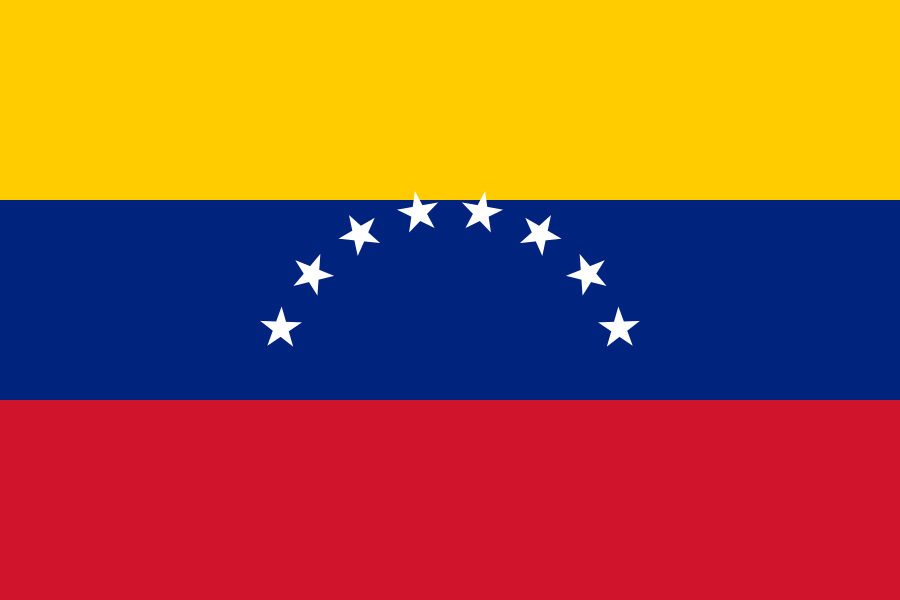
On 26 November 1861, Provisional President General Tomás Cipriano de Mosquera decreed the permanent 2:1:1 horizontal layout for the United States of Colombia (yellow occupying the upper half, blue and red each occupying one quarter), distinguishing Colombia's uncharged civil flag from Venezuela's equal 1:1:1 starred tricolor and Ecuador's armorial flag.
Key historical milestones
- 1806Miranda's Leander Flag: Francisco de Miranda hoists the original yellow-blue-red tricolor on 12 March 1806.
- 1819Gran Colombia: The Congress of Angostura adopts the tricolor for the united republic of Gran Colombia.
- 18612:1:1 Decree: General Tomás Cipriano de Mosquera decrees the permanent horizontal 2:1:1 proportion on 26 November 1861.
Frequently confused with
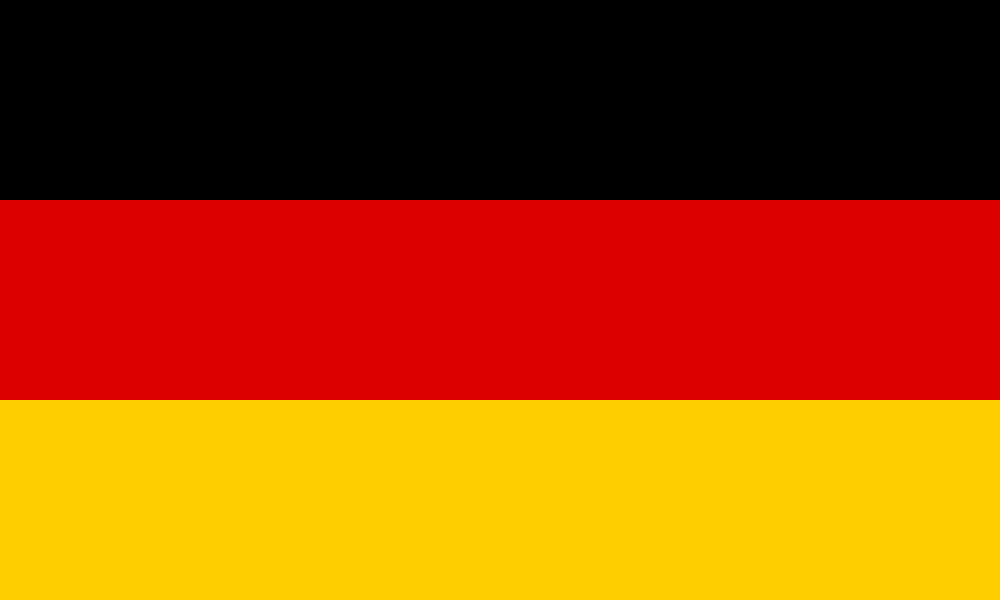
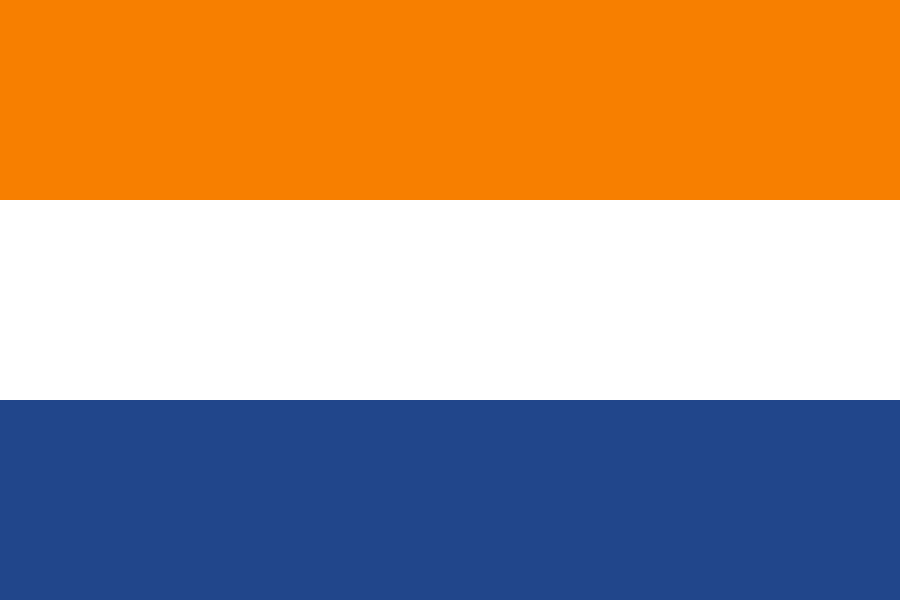
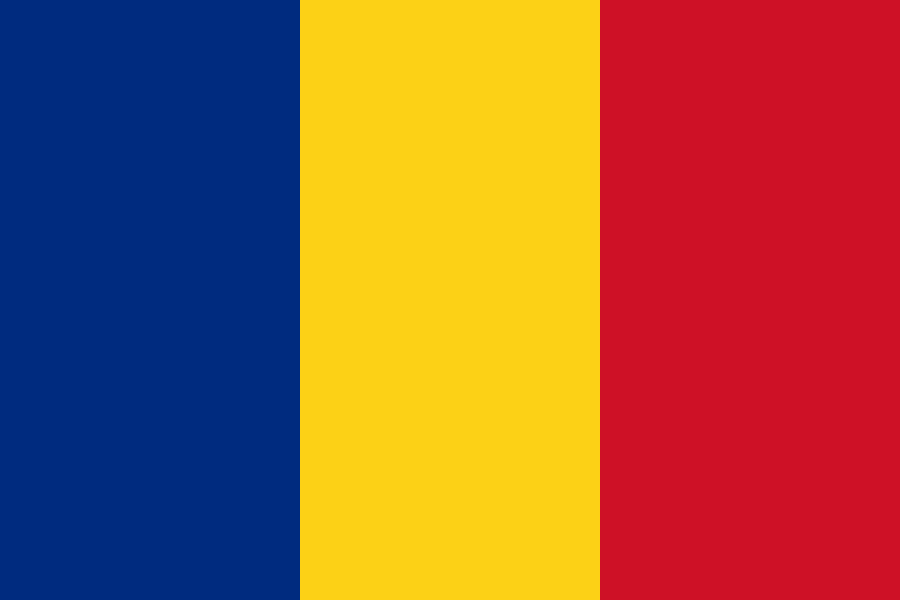
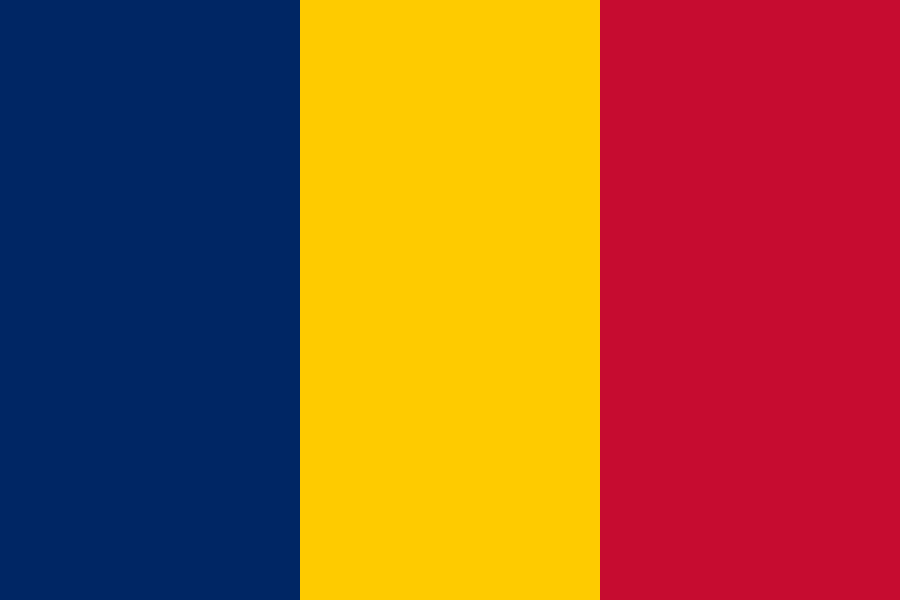
The Flag of Colombia is commonly confused with or compared alongside the following flags due to shared colors, stripe geometry, or central emblems:
Visually and structurally similar flags
Ranked deterministically across layout family (35%), color overlap and stripe order (25%), symbols (20%), aspect ratio (10%), and stripe/symmetry geometry (10%):

Sources and image-rights provenance
- Símbolos Patrios de la República de Colombia (Decree of 26 November 1861 & Decree 861 of 1924)
- World Factbook: Colombia Flag Description
SVG artwork provenance: Constructed from statutory specifications (public-domain-statute, verified 2026-10-13, SHA-256 5afef969b604…).