
Flag of Argentina
Native & traditional name: Bandera Oficial de la Nación (Celeste y Blanca)
| Entity | Argentina (AR) |
|---|---|
| Type | Sovereign national flag (national, civil) |
| Proportion | 5:8 (5:8) |
| Primary colors | light blue, white, yellow |
| Main symbol | other |
| Arrangement | horizontal triband (light-blue · white · light-blue) |
| Official adoption | 1812-02-27 |
| Region | South America |
Plain-language visual description
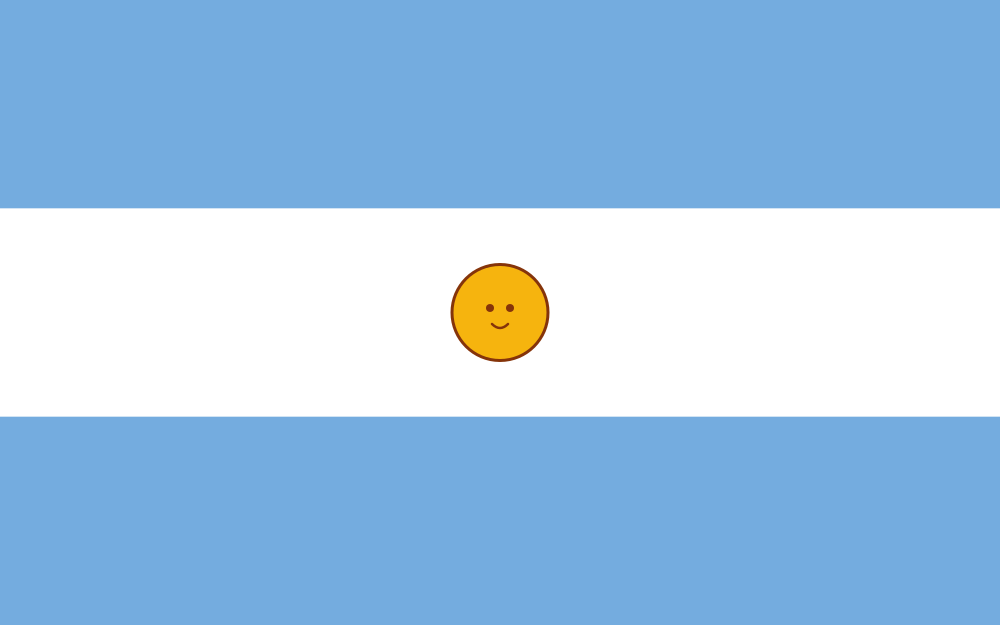
The national flag of Argentina is a horizontal triband of light blue, white, and light blue in a 5:8 aspect ratio, with the golden Sun of May centered on the white band.
Construction and geometry
Proportion & symmetry: The Flag of Argentina uses a statutory 5:8 height-to-width ratio on a rectangular field with both mirror symmetry. Three equal horizontal bands (sky blue, white, sky blue) with centered Sun of May.
Official colors and specification system
Rather than manufacturing false RGB precision where a statute specifies dyed cloth, Pantone, Munsell, or CIE coordinates, the table below records the governing color system alongside a calibrated display hex approximation.
| Color | Official shade name | Specification system | Statutory / standard code | Display hex |
|---|---|---|---|---|
| light blue | Celeste (Sky Blue) | pantone | Pantone 284 C | #74ACDF |
| white | Blanco (White) | statute-named | Named in statute | #FFFFFF |
| yellow | Amarillo Oro (Golden Sun) | pantone | Pantone 1235 C | #F6B40E |
Meaning and symbolism
Documented symbolism
Decree 10302/1944 codifies the national symbols. The colors derive from the blue and white cockades distributed during the May Revolution of 1810.
The golden Sun of May (Sol de Mayo) commemorates the sun breaking through clouds on 25 May 1810 as the first patriotic government took office.
Common interpretations
Popular tradition views the colors as representing the sky and clouds, or the silver (argentum) of the Río de la Plata.
History and design evolution
The national flag of Argentina was created by General Manuel Belgrano, one of the foremost leaders of the Argentine War of Independence. During the military campaigns along the Paraná River near the city of Rosario, Belgrano realized that his revolutionary troops were wearing ribbons and emblems similar to those of the royalist forces, causing confusion on the battlefield. Belgrano had previously established the light blue and white Escarapela (cockade) of Argentina, which the First Triumvirate had approved in February 1812.
On February 27, 1812, on the banks of the Paraná River, Belgrano raised a new flag made of white and light blue silk for his troops to swear allegiance to the cause of Argentine independence. Although the cautious Triumvirate in Buenos Aires initially ordered Belgrano to suppress the flag out of diplomatic hesitation toward Spain, Belgrano had already carried it into the Army of the North, where it became beloved by the troops after decisive victories at Tucumán and Salta.
The Congress of Tucumán officially declared Argentine independence and formally adopted the Bandera Menor (the light blue and white triband) as the national flag on July 20, 1816. Two years later, on February 25, 1818, the Congress added the golden Sol de Mayo (Sun of May) with 32 alternating straight and wavy rays to the central white stripe to serve as the military war flag (Bandera Mayor). In 1985, Law 23.208 unified the design, granting all Argentine citizens the right to fly the flag bearing the Sun of May, and Presidential Decree 1650/2010 definitively codified its statutory 5:8 proportions, coordinates, and exact CIE color specifications.
Key historical milestones
- 1812Belgrano Flag: Manuel Belgrano hoists the light blue and white flag in Rosario on 27 February 1812.
- 1816Congress of Tucumán: Official adoption following independence declaration on 20 July 1816.
- 1818Sun of May Added: Congress adds the golden Sol de Mayo to the central stripe.
- 1985Law 23.208: Unifies the civil and state flags with the Sun of May.
Frequently confused with
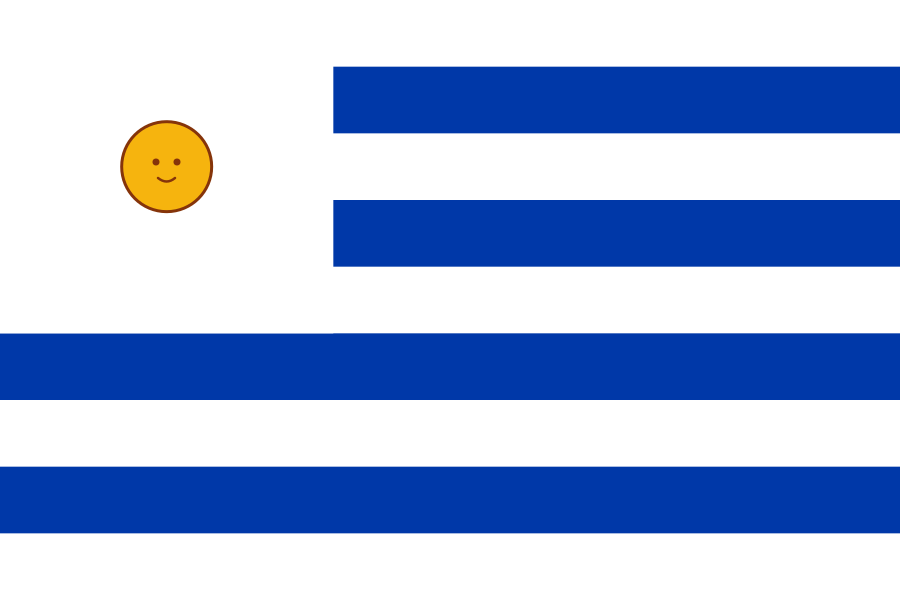
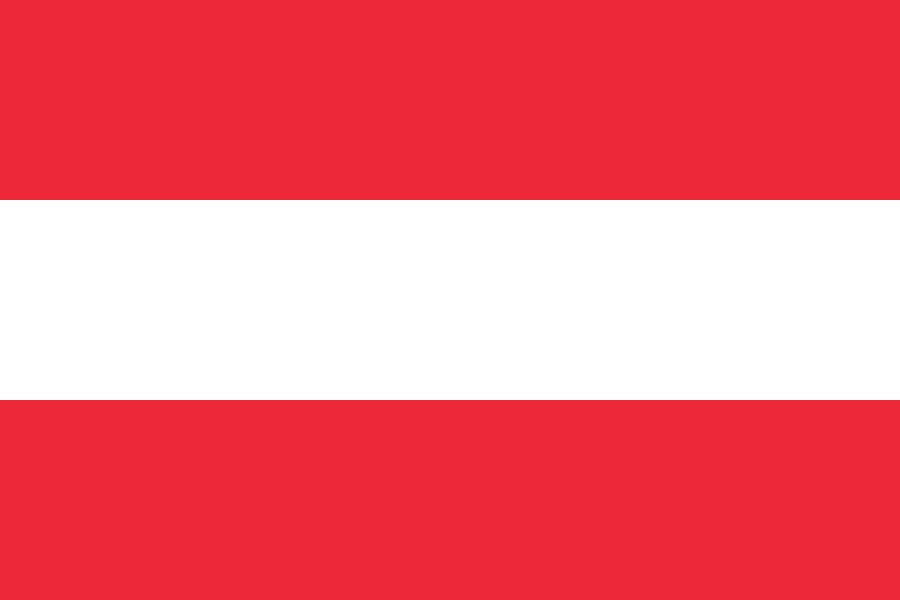
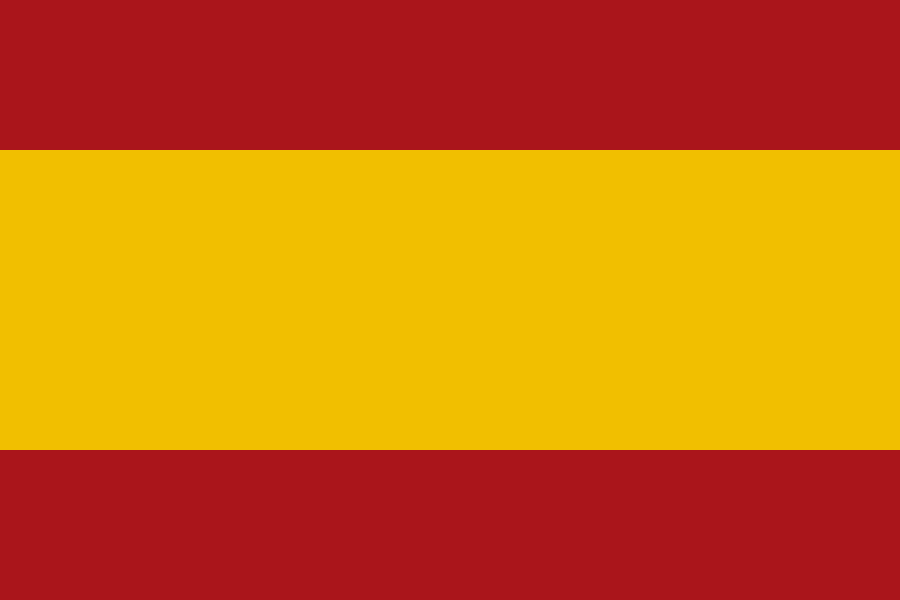
The Flag of Argentina is commonly confused with or compared alongside the following flags due to shared colors, stripe geometry, or central emblems:
Visually and structurally similar flags
Ranked deterministically across layout family (35%), color overlap and stripe order (25%), symbols (20%), aspect ratio (10%), and stripe/symmetry geometry (10%):
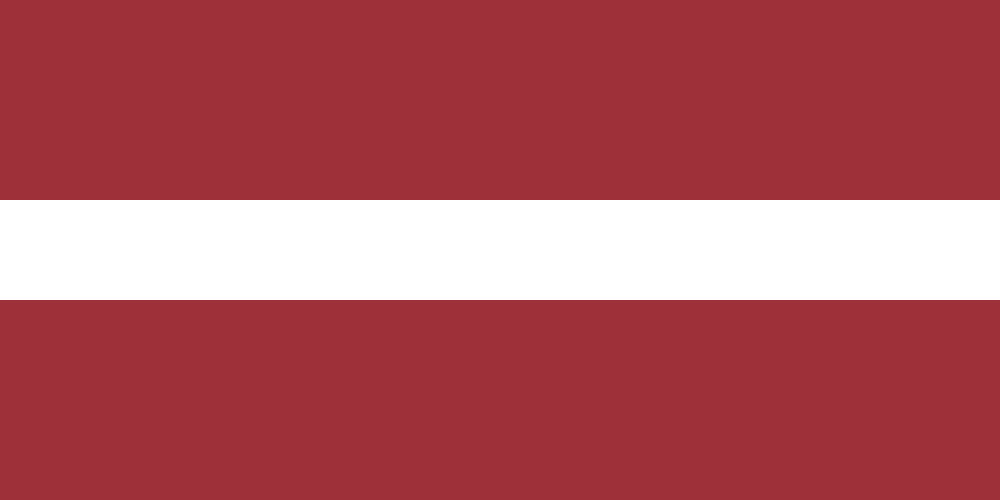
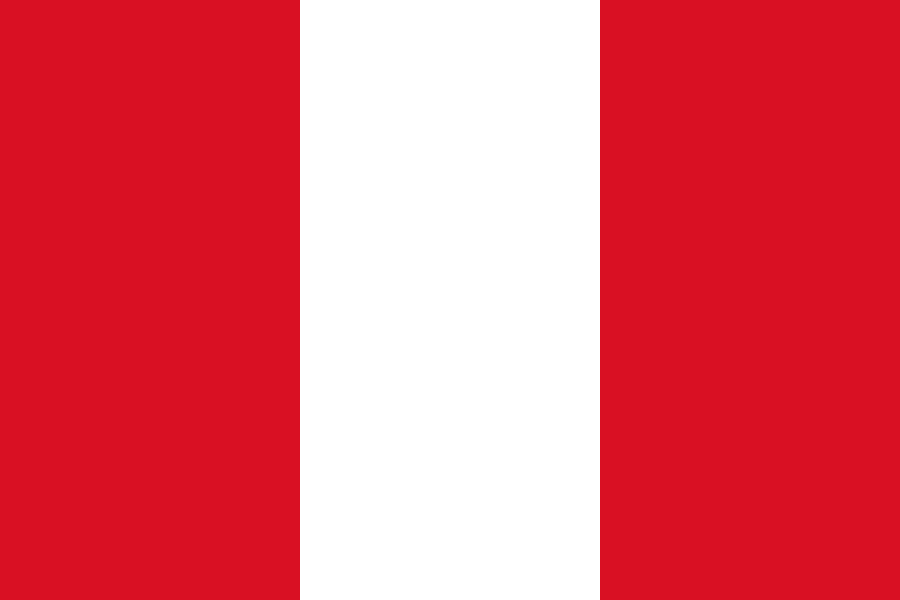
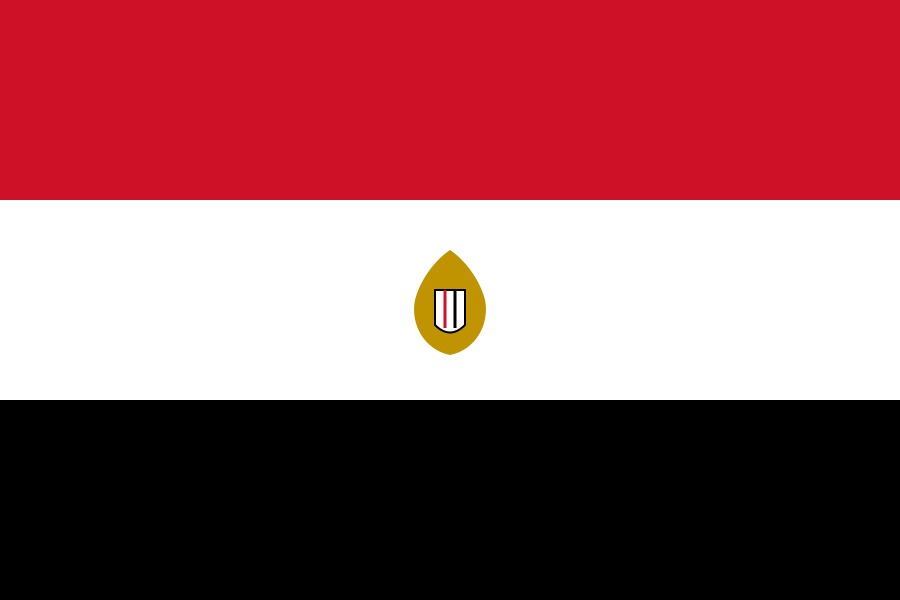
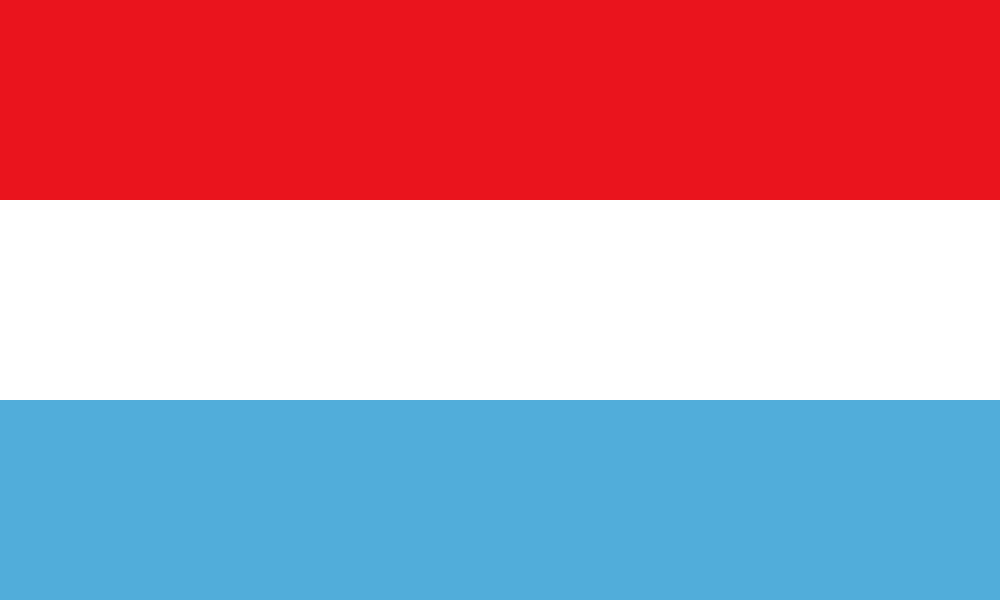
Sources and image-rights provenance
- Decreto 10302/1944: Símbolos Patrios — Boletín Oficial de la República Argentina
- Ley 23.208: Uso de la Bandera Oficial de la Nación — Boletín Oficial No. 25.748
SVG artwork provenance: Constructed from statutory specifications (public-domain-statute, verified 2026-10-14, SHA-256 7c9dcb993d34…).