
Flag of Peru
Native & traditional name: Bandera Nacional del Perú

| Entity | Peru (PE) |
|---|---|
| Type | Sovereign national flag (national, civil) |
| Proportion | 2:3 (2:3) |
| Primary colors | red, white |
| Main symbol | None (geometric bands) |
| Arrangement | vertical triband (red · white · red) |
| Official adoption | 1950-03-31 |
| Region | South America |
Plain-language visual description
The national flag of Peru is a vertical triband of three equal stripes of red at the hoist, white in the center, and red at the fly in a 2:3 aspect ratio.
Construction and geometry
Proportion & symmetry: The Flag of Peru uses a statutory 2:3 height-to-width ratio on a rectangular field with vertical mirror symmetry. Three equal vertical stripes of red, white, and red (1:1:1 ratio).
Official colors and specification system
Rather than manufacturing false RGB precision where a statute specifies dyed cloth, Pantone, Munsell, or CIE coordinates, the table below records the governing color system alongside a calibrated display hex approximation.
| Color | Official shade name | Specification system | Statutory / standard code | Display hex |
|---|---|---|---|---|
| red | Rojo (Red) | pantone | Pantone 186 C | #D91023 |
| white | Blanco (White) | statute-named | Named in statute | #FFFFFF |
Meaning and symbolism
Documented symbolism
The Law of 25 February 1825 and Decree Law No. 11323 of 1950 establish red and white as the Peruvian national colors.
Red represents the blood shed by patriots for freedom and national independence, while white represents purity, truth, and peace.
Common interpretations
Popular tradition recounts that General José de San Martín was inspired by observing a flock of parihuana flamingos with red wings and white chests taking flight over Paracas Bay upon his arrival in 1820.
History and design evolution
The national flag of Peru originated during the South American wars of independence. General José de San Martín established Peru's first independent national flag by decree on October 21, 1820, consisting of four diagonal triangular fields of red and white with an oval laurel wreath framing a sun rising behind mountains.
In March 1822, José Bernardo de Tagle (Marqués de Torre Tagle) simplified the design into a horizontal red-white-red triband with a central sun. However, this design caused dangerous confusion on naval battlefields because, at distance across smoke-filled water, horizontal red and white stripes closely mirrored the Spanish naval ensign. Consequently, Torre Tagle issued a decree in May 1822 turning the stripes vertical.
The design was codified in its definitive proportions on February 25, 1825, by a law enacted by the Constituent Congress under the leadership of Simón Bolívar. In 1950, General Manuel A. Odría's government issued Decree-Law No. 11323, standardizing national symbols and designating the plain, uncharged vertical triband as the official civil flag and ensign (Bandera Nacional), reserving the coat of arms for the state and military flag (Pabellón Nacional).
Key historical milestones
- 1820San Martín Flag: Diagonal red and white flag created in Pisco on 21 October 1820.
- 1825Bolívar Congress: The Constituent Congress formalizes the vertical red-white-red triband.
- 1950Civil Flag Codified: Decree Law No. 11323 establishes the plain triband for civil use.
Frequently confused with
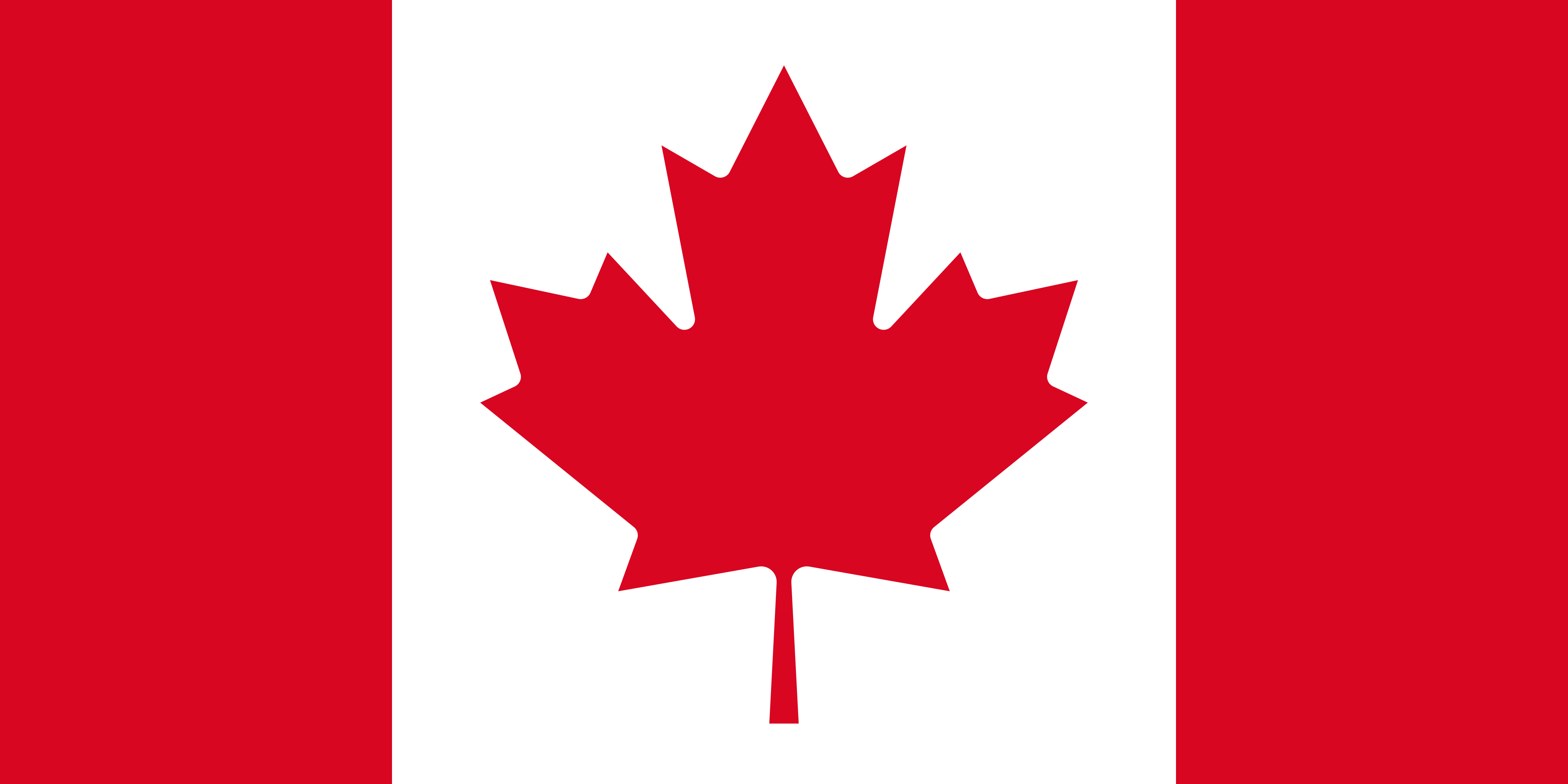
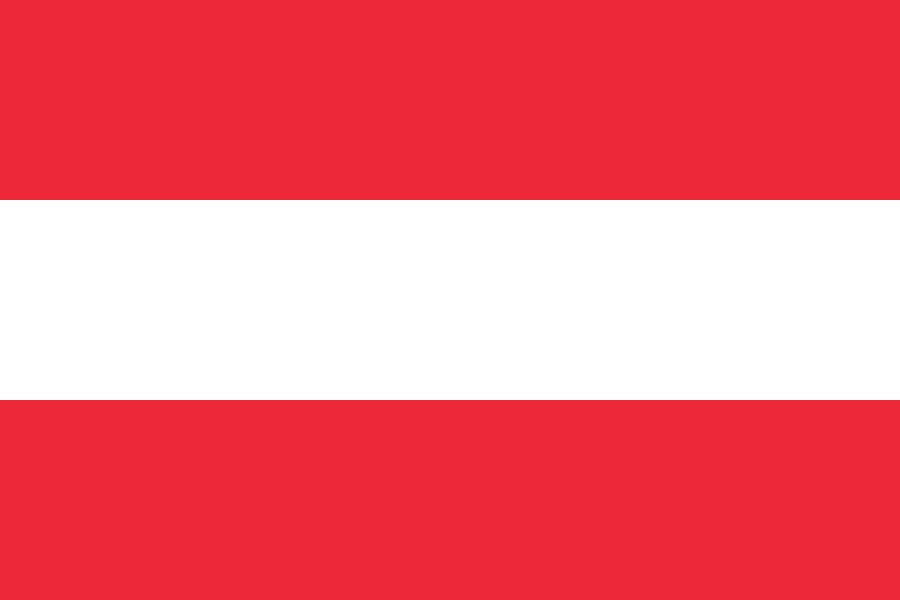
The Flag of Peru is commonly confused with or compared alongside the following flags due to shared colors, stripe geometry, or central emblems:
Visually and structurally similar flags
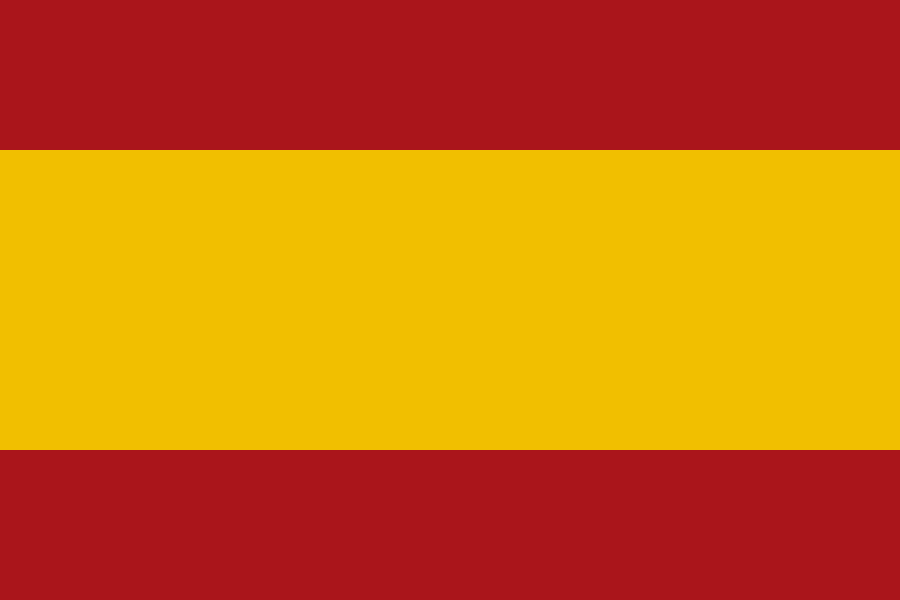
Ranked deterministically across layout family (35%), color overlap and stripe order (25%), symbols (20%), aspect ratio (10%), and stripe/symmetry geometry (10%):



Sources and image-rights provenance
- Decreto Ley No. 11323: Símbolos Patrios — El Peruano, Diario Oficial
- Flags Through the Ages and Across the World — McGraw-Hill, pp. 270–271
SVG artwork provenance: Constructed from statutory specifications (public-domain-statute, verified 2026-10-14, SHA-256 c2b1bdc2600a…).