
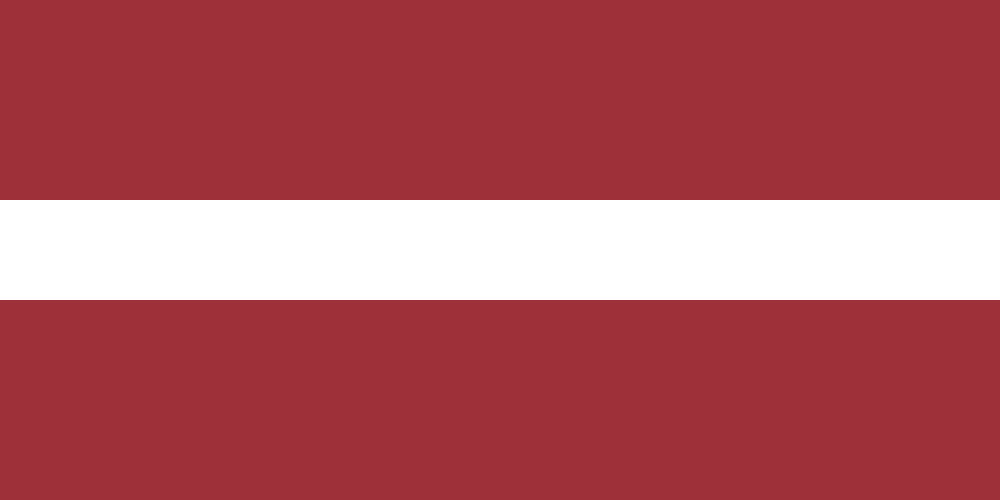
Flag of Latvia
Native & traditional name: Latvijas Republikas karogs
| Entity | Latvia (LV) |
|---|---|
| Type | Sovereign national flag (national, civil) |
| Proportion | 1:2 (1:2) |
| Primary colors | maroon, white |
| Main symbol | None (geometric bands) |
| Arrangement | horizontal triband (maroon · white · maroon) |
| Official adoption | 1990-02-27 |
| Region | Northern Europe |
Plain-language visual description
The national flag of Latvia is a horizontal triband of dark carmine red, white, and carmine red in a 2:1:2 stripe proportion and a 1:2 aspect ratio.
Construction and geometry
Proportion & symmetry: The Flag of Latvia uses a statutory 1:2 height-to-width ratio on a rectangular field with horizontal mirror symmetry. Horizontal stripes in 2:1:2 ratio (top red 40%, white 20%, bottom red 40%).
Official colors and specification system
Rather than manufacturing false RGB precision where a statute specifies dyed cloth, Pantone, Munsell, or CIE coordinates, the table below records the governing color system alongside a calibrated display hex approximation.
| Color | Official shade name | Specification system | Statutory / standard code | Display hex |
|---|---|---|---|---|
| maroon | Latvian Carmine (Carmine Red) | pantone | Pantone 201 C / 1807 C | #9E3039 |
| white | Balta (White) | statute-named | Named in statute | #FFFFFF |
Meaning and symbolism
Documented symbolism
The 2009 Law on the National Flag defines the official Latvian carmine shade (Pantone 201 C / 1807 C) and the 2:1:2 horizontal stripe proportions.
Carmine red symbolizes readiness to shed blood for freedom, while the central white stripe represents justice, truth, and purity.
Common interpretations
Legend recounts that a wounded Latvian chieftain was wrapped in a white sheet; the blood soaked the edges while the cloth under his body remained white.
History and design evolution
The national flag of Latvia has medieval roots that place it among the oldest recorded national flag designs in global history. The flag's distinctive carmine red color and thin white stripe are first documented in the Livonian Rhymed Chronicle (Livländische Reimchronik), which records events from the late 13th century. According to the chronicle, around 1279, a Latgalian militia unit from the castle of Cēsis (Wenden) rode to defend Riga carrying a red banner partitioned by a white stripe.
A popular legend tells of a mortally wounded Latvian chieftain whose blood stained the white sheet he was placed upon, leaving only the area directly beneath his body stark white, which inspired his warriors to victory. During the Latvian National Awakening of the late 19th and early 20th centuries, student societies at the University of Tartu revived this historic chronicle reference.
In May 1917, during the First Latgale Congress in Rēzekne, Latvian artists led by Ansis Cīrulis standardized the specific 2:1:2 horizontal proportions and selected a unique, deep carmine red shade (historically dubbed 'Latvian red') to distinguish their banner clearly from the Austrian flag. The Saeima (Parliament) formally adopted this design as the national flag on June 15, 1921. Suppressed during the half-century Soviet occupation, the flag was re-legalized in 1988 and re-adopted upon restored independence in 1990.
Key historical milestones
- 1279Livonian Chronicle: First written mention of the Cēsis militia red-and-white banner.
- 1917Cīrulis Design: Ansis Cīrulis formalizes the 2:1:2 stripe ratio and carmine shade.
- 1921Constituent Assembly: Officially adopted as the national flag on 15 June 1921.
- 1990Restoration: Re-adopted on 27 February 1990 before regaining independence.
Frequently confused with
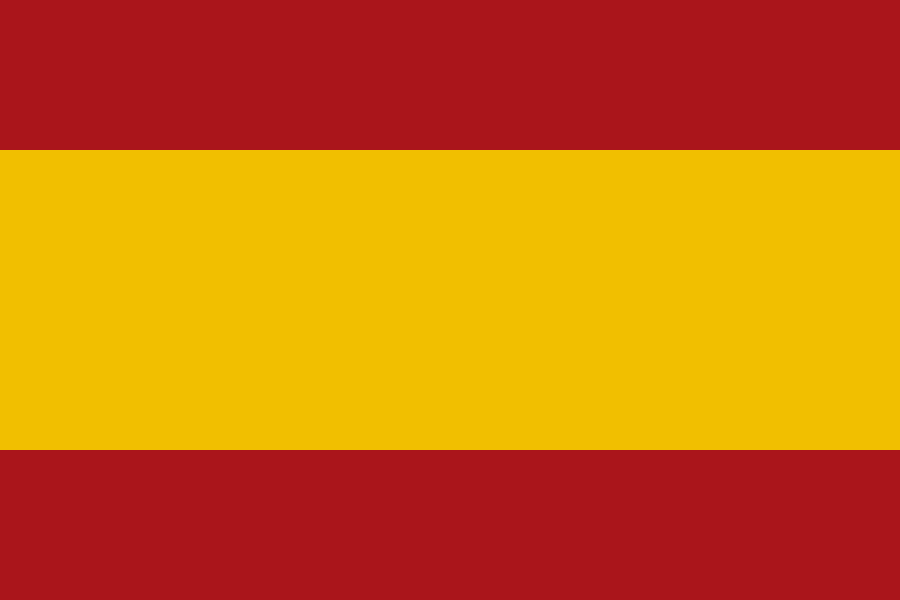
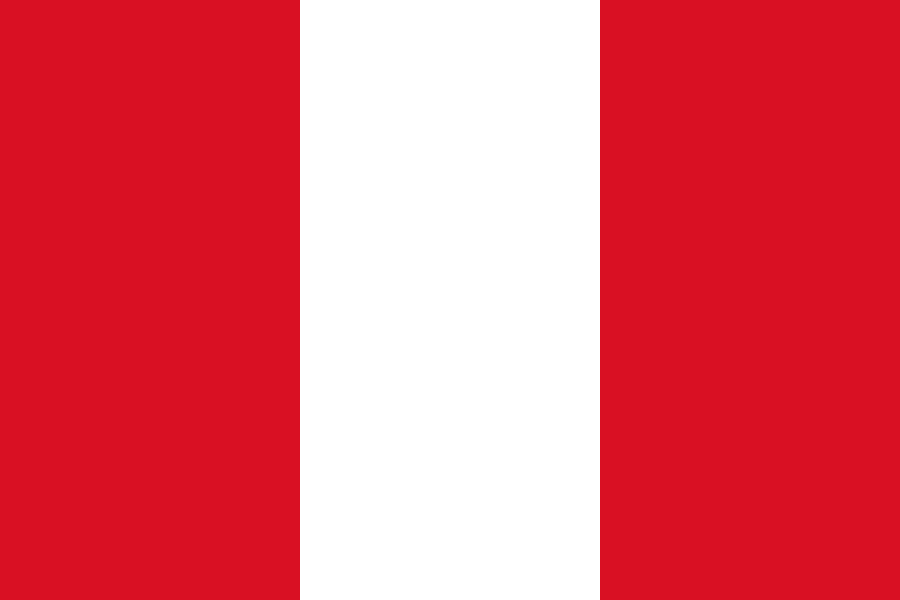
The Flag of Latvia is commonly confused with or compared alongside the following flags due to shared colors, stripe geometry, or central emblems:
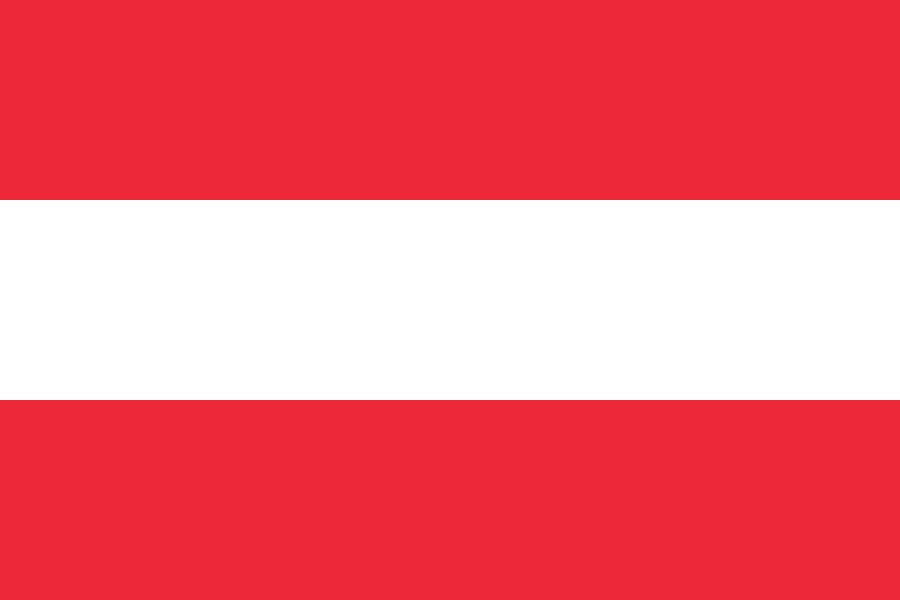
Visually and structurally similar flags
Ranked deterministically across layout family (35%), color overlap and stripe order (25%), symbols (20%), aspect ratio (10%), and stripe/symmetry geometry (10%):



Sources and image-rights provenance
- Latvijas valsts karoga likums (Law on the National Flag of Latvia)
- The Livonian Rhymed Chronicle — Indiana University Publications
SVG artwork provenance: Constructed from statutory specifications (public-domain-statute, verified 2026-10-14, SHA-256 2edfb9a0999f…).