
Flag of Canada
Native & traditional name: National Flag of Canada (Maple Leaf / l'Unifolié)
| Entity | Canada (CA) |
|---|---|
| Type | Sovereign national flag (national, civil) |
| Proportion | 1:2 (1:2) |
| Primary colors | red, white |
| Main symbol | leaf |
| Arrangement | vertical triband (red · white · red) |
| Official adoption | 1965-02-15 |
| Region | Northern America |
Plain-language visual description
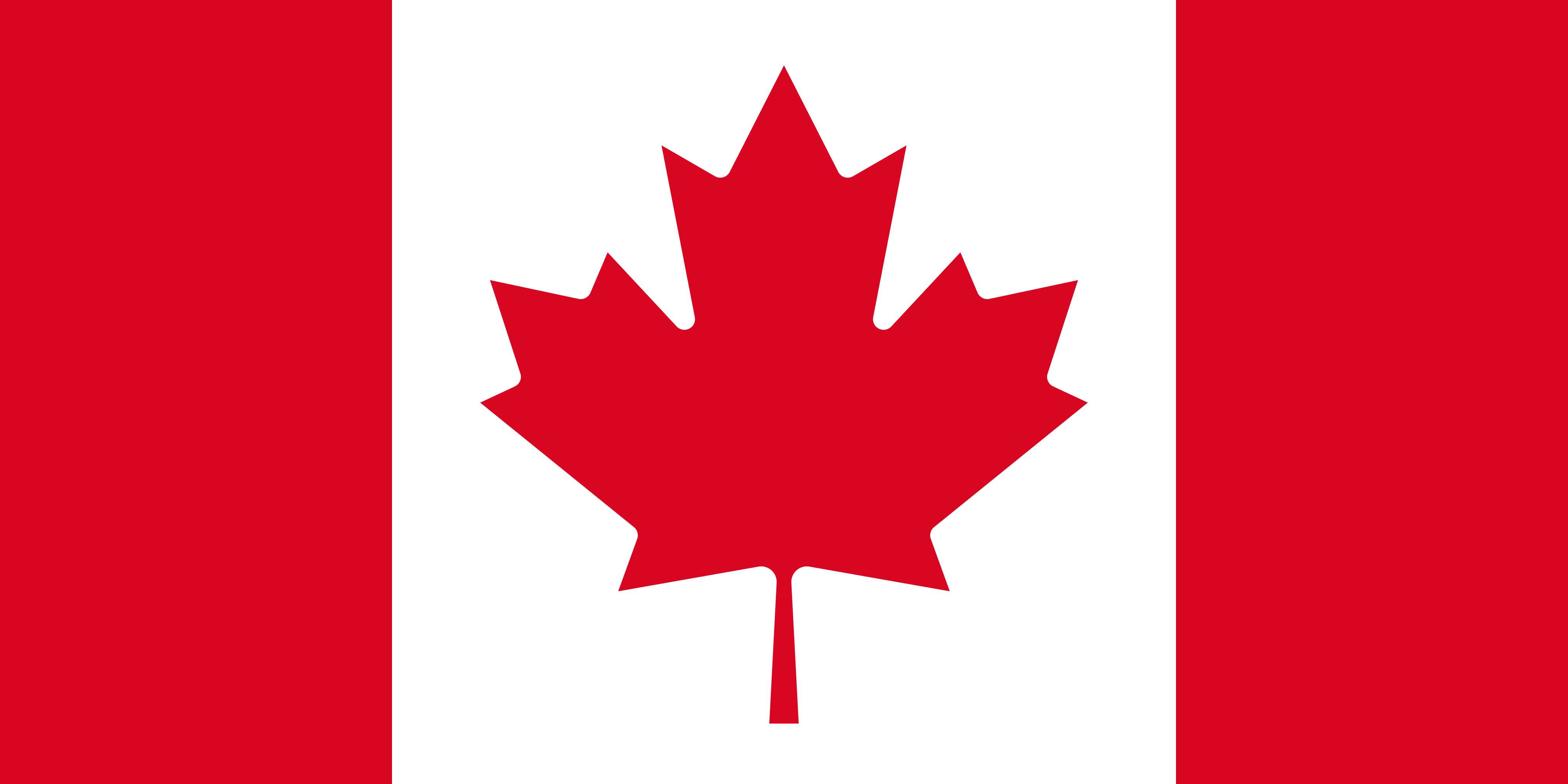
The national flag of Canada consists of a vertical red-white-red triband in a 1:2 ratio, with a central white square pale bearing a stylized 11-pointed red maple leaf.
Construction and geometry
Proportion & symmetry: The Flag of Canada uses a 1:2 height-to-width ratio (Royal Proclamation of 28 January 1965) on a rectangular field with mirror symmetry about its vertical centre line (the hoist and fly halves match). Canadian pale: red 1/4, white square 1/2, red 1/4 (1:2:1 ratio).
- Aspect ratio is 1:2 (width is twice the height).
- Divided vertically into red, white, and red in a 1:2:1 width ratio, making the central white field a perfect square (1x1 unit on a 2x1 grid).
- The 11-pointed maple leaf is centered within the white square with its stem resting near the bottom edge.
Colors and how they are specified
A color code is marked official only when the governing law, decree or official government specification itself gives it, and the source is quoted below the table. Where the law names a color without a code, or sets no shade at all, the table says so and the display hex is an approximation. Commonly used but unofficial codes are labelled as such. Unless the table names another source for it, a hex shown beside a Pantone code is Pantone's own published sRGB value for that code.
| Color | Shade name | Specification system | Code | Display hex |
|---|---|---|---|---|
| red | Red | statute-named | named in law, no code; commonly Pantone 032 (unofficial) | #EB2D37Hex: Federal Identity Program colour standard: FIP red RGB 235, 45, 55 (Pantone 032) |
| white | White | statute-named | named in law, no code | #FFFFFF |
- Red (statute-named): Royal Proclamation of the National Flag of Canada, 28 January 1965 (text as reproduced in G.F.G. Stanley, The Story of Canada's Flag, Appendix A) —
a red flag of the proportions two by length and one by width, containing in its centre a white square the width of the flag, bearing a single red maple leaf
- White (statute-named): Royal Proclamation of the National Flag of Canada, 28 January 1965 (text as reproduced in G.F.G. Stanley, The Story of Canada's Flag, Appendix A) —
containing in its centre a white square the width of the flag
Meaning and symbolism
Documented symbolism
The Royal Proclamation of 28 January 1965 describes the design only: a red flag twice as long as it is wide, with a white square in the centre bearing a single red maple leaf. It assigns no meanings to the colours or the leaf.
The Department of Canadian Heritage describes the maple leaf as having emerged in the 19th century as a symbol of Canadian identity and, for many, a shared symbol of pride, courage and loyalty.
Common interpretations
Red and white are widely used as Canada's colours. It was long believed that King George V designated them as national colours in the 1921 proclamation of the Royal Arms of Canada, but the Department of Canadian Heritage notes that the proclamation contains no such declaration.
The central white pale is often said to represent the vast snowy north, while the flanking red bands represent the Atlantic and Pacific oceans, mirroring the national motto 'A Mari Usque Ad Mare' ('From Sea to Sea').
History and design evolution
Prior to 1965, Canada flew the Canadian Red Ensign featuring the British Union Jack in the canton and the Canadian shield of arms in the fly. As national identity evolved after World War II, Prime Minister Lester B. Pearson launched the Great Flag Debate in 1964 to create a distinctive, inclusive national flag that did not favor English or French heraldic symbols.
A special multi-party parliamentary committee reviewed thousands of designs before selecting a proposal by George Stanley, Dean of Arts at the Royal Military College of Canada, based on the college's red-and-white banner. The original artwork based on Stanley's concept used a stylized 13-point maple leaf, which lost detail at a distance; graphic artist Jacques Saint-Cyr redrew it with 11 points, and the number and arrangement of the points are reported to have been chosen after wind-tunnel tests showed the design blurred least in high winds.
Queen Elizabeth II signed the Royal Proclamation on 28 January 1965, and the new flag was officially raised on Parliament Hill in Ottawa on 15 February 1965, a date now commemorated as National Flag of Canada Day. In vexillology, a central band occupying half the width of a vertical triband is now called a 'Canadian pale' after this flag.
Key historical milestones
- 1921Royal Arms of Canada: King George V proclaims the Royal Arms of Canada; the proclamation is often, but wrongly, said to have designated red and white as national colours.
- 1964Great Flag Debate: Parliament forms a committee to select a new national flag.
- 1965Royal Proclamation & Raising: Queen Elizabeth II proclaims the flag; it is raised on Parliament Hill on 15 February 1965.
Frequently confused with
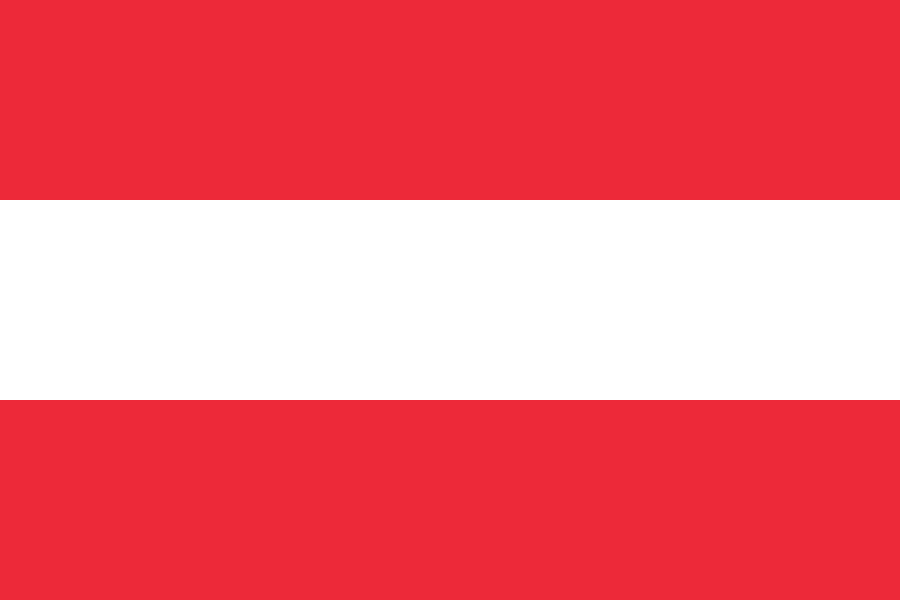
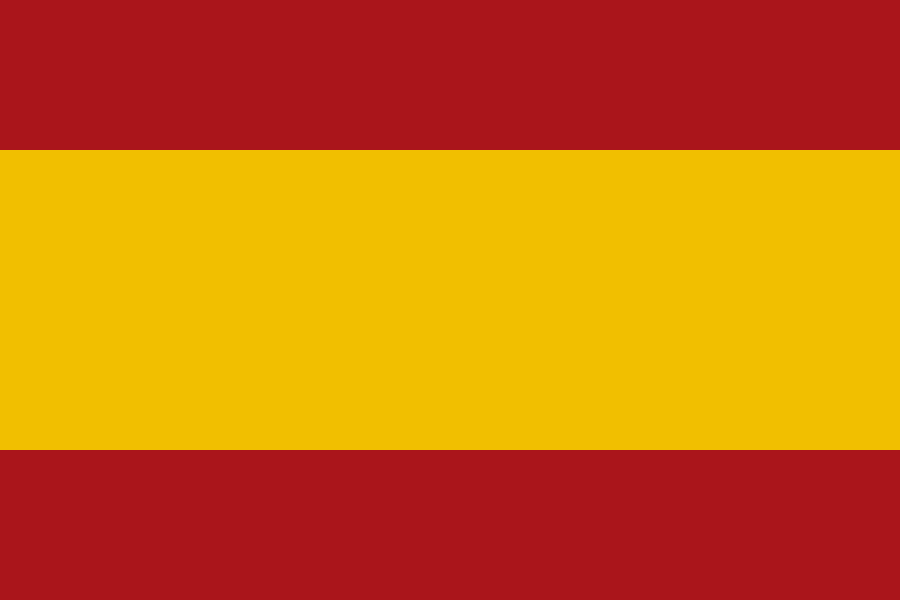
The Flag of Canada is commonly confused with or compared alongside the following catalog flags due to shared colors, stripe geometry, or central emblems:

Visually and structurally similar flags in this catalog
Ranked deterministically across layout family, orientation and shape (35%), color overlap and stripe order (25%), symbols (20%), aspect ratio (10%), and stripe/symmetry geometry (10%):



Sources and image-rights provenance
- Royal Proclamation of 28 January 1965 (National Flag of Canada) — Text reproduced in George F.G. Stanley, The Story of Canada's Flag, Appendix A
- The history of the National Flag of Canada
- Official symbols of Canada
SVG artwork provenance: Original FastFlags drawing generated by scripts/generate-wave1-batch2.ts from this record's ratio, layout and display colours; not an official construction sheet. (public-domain-statute, checked 2026-10-15, SHA-256 590d1a9706e7…).