
Flag of Hungary
Native & traditional name: Magyarország nemzeti lobogója
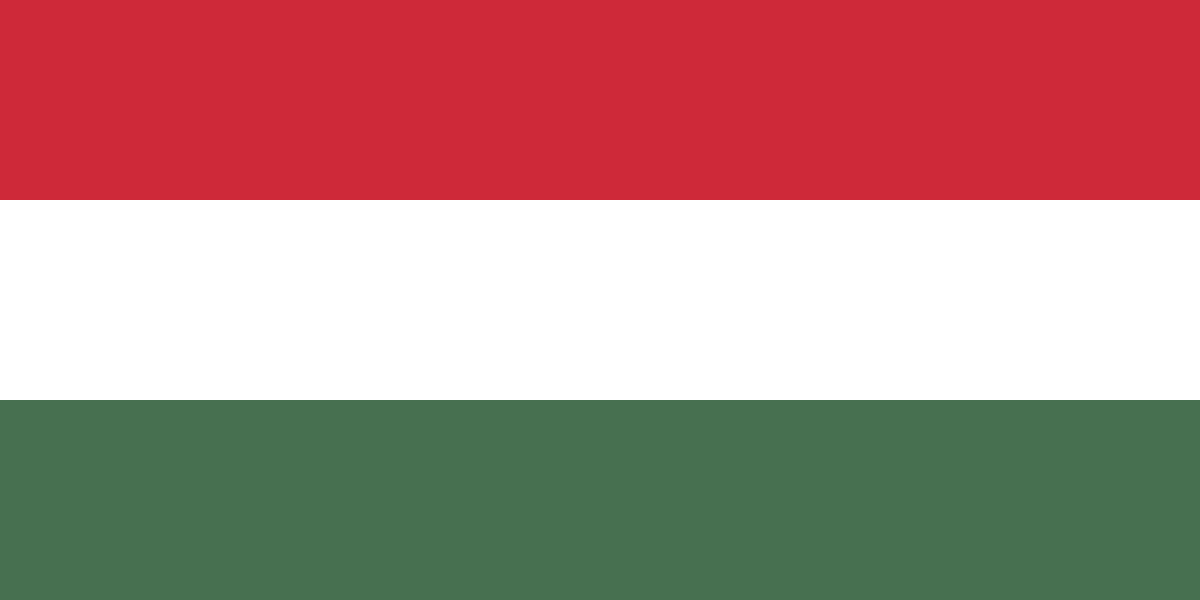
| Entity | Hungary (HU) |
|---|---|
| Type | Sovereign national flag (national, civil) |
| Proportion | 1:2 (1:2) |
| Primary colors | red, white, green |
| Main symbol | None (geometric bands) |
| Arrangement | horizontal tricolor (red · white · green) |
| Official adoption | 1957-05-23 |
| Region | Central Europe |
Plain-language visual description
The national flag of Hungary is a horizontal tricolor of three equal bands of red at the top, white in the middle, and green at the bottom in a 1:2 aspect ratio.
Construction and geometry
Proportion & symmetry: The Flag of Hungary uses a statutory 1:2 height-to-width ratio on a rectangular field with none mirror symmetry. Three equal horizontal stripes of red, white, and green in a 1:2 ratio.
Official colors and specification system
Rather than manufacturing false RGB precision where a statute specifies dyed cloth, Pantone, Munsell, or CIE coordinates, the table below records the governing color system alongside a calibrated display hex approximation.
| Color | Official shade name | Specification system | Statutory / standard code | Display hex |
|---|---|---|---|---|
| red | Piros (Red) | pantone | Pantone 18-1660 TCX | #CE2939 |
| white | Fehér (White) | statute-named | Named in statute | #FFFFFF |
| green | Zöld (Green) | pantone | Pantone 18-6320 TCX | #477050 |
Meaning and symbolism
Documented symbolism
Codified by the Fundamental Law of Hungary (2011), red symbolizes strength and valor, white represents faithfulness and fidelity, and green symbolizes hope.
The three colors derive from the medieval Hungarian coat of arms: red for the shield field, white for the double cross, and green for the triple mount.
Common interpretations
The tricolor format was inspired by the French republican flag during the 1848 Hungarian Revolution to symbolize civic liberty and constitutional independence.
History and design evolution
The red, white, and green horizontal tricolor of Hungary emerged from the fusion of traditional medieval heraldic colors with modern European republican ideals. The red and white tinctures derive from the ancient Árpád dynasty's coat of arms, which has featured alternating horizontal red and silver stripes since the late 12th century. The green element originated in the 15th-century depiction of three green hills (symbolizing the Tatra, Matra, and Fatra mountains) supporting the apostolic double cross in the royal Hungarian arms.
The combination of red, white, and green became prominent during the coronation ceremonies of King Matthias II in 1608 and King Leopold II in 1790. However, the horizontal tricolor format was directly inspired by the French revolutionary tricolor, symbolizing liberty and national unity during the Hungarian Reform Era of the 1830s.
During the Hungarian Revolution of 1848 against Habsburg rule, the revolutionary parliament formally adopted the tricolor by Law XXI of 1848. Following the suppression of the revolution, the flag was prohibited until the Austro-Hungarian Compromise (Ausgleich) of 1867. Various regimes—including the dual monarchy, the regency, and the post-war Communist state—placed different emblems and coats of arms in the central white band. Notably, during the anti-Soviet Revolution of 1956, Hungarians cut the Communist emblem out of the flag's center, leaving an iconic circular void. In 1957, the uncharged horizontal tricolor was restored as the statutory national flag, codified in the Fundamental Law of Hungary in 2011.
Key historical milestones
- 1848Hungarian Revolution: Tricolor adopted on 11 April 1848 as symbol of national freedom.
- 1867Compromise of 1867: Restored as state flag within the Dual Monarchy.
- 1956Revolution of 1956: Hungarians cut out the communist emblem, flying the plain tricolor.
- 2011Fundamental Law: Act CLI of 2011 reconfirms the 1:2 plain tricolor.
Frequently confused with
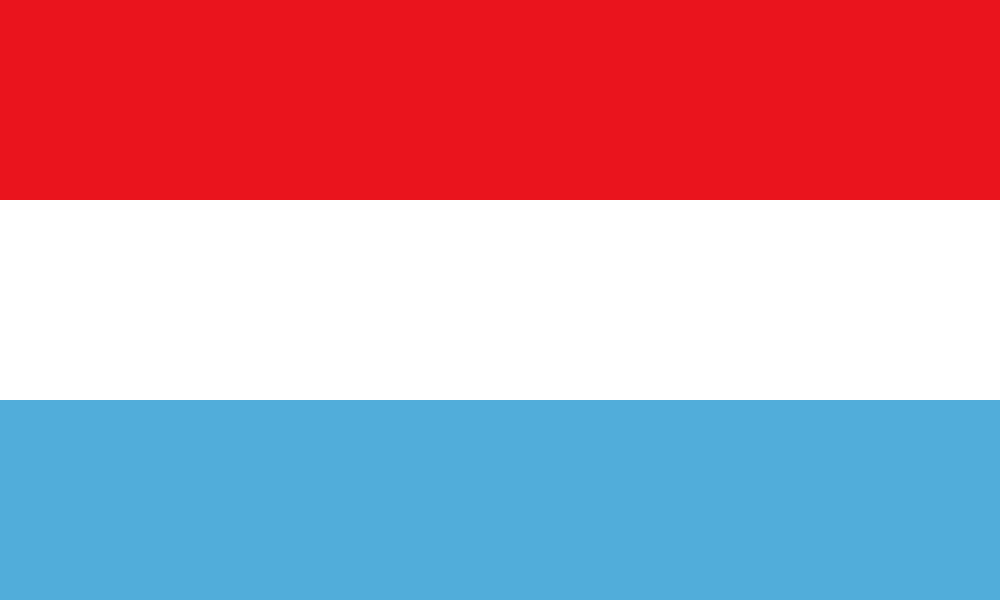
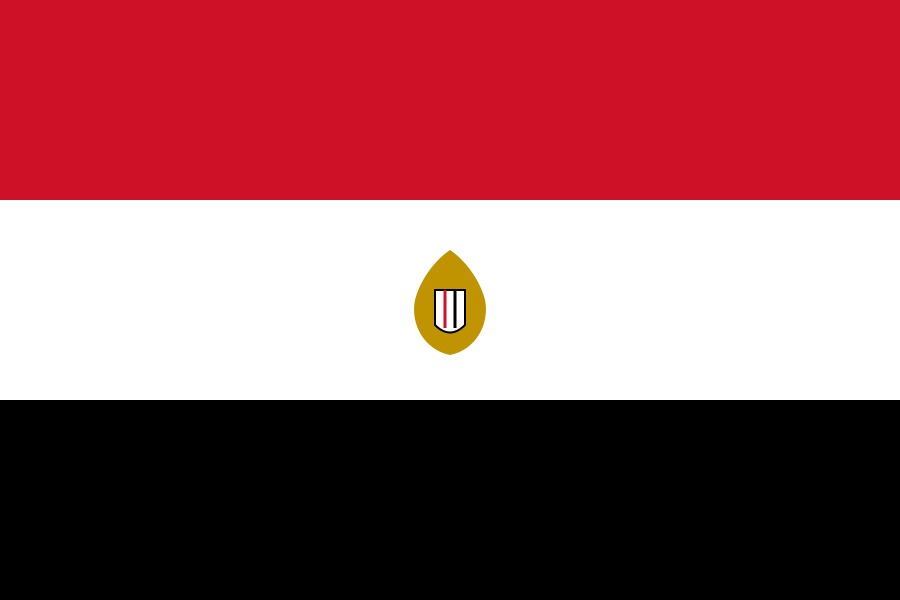
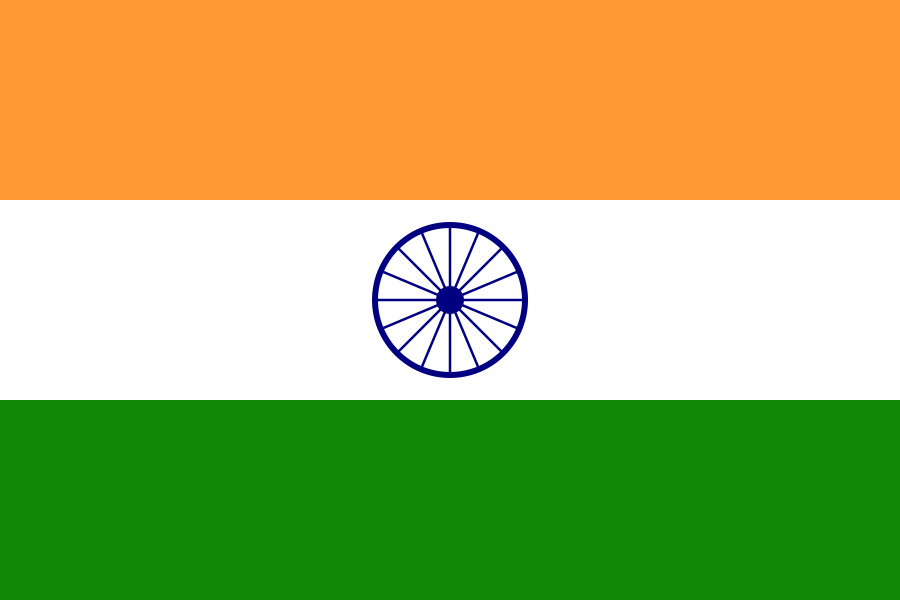
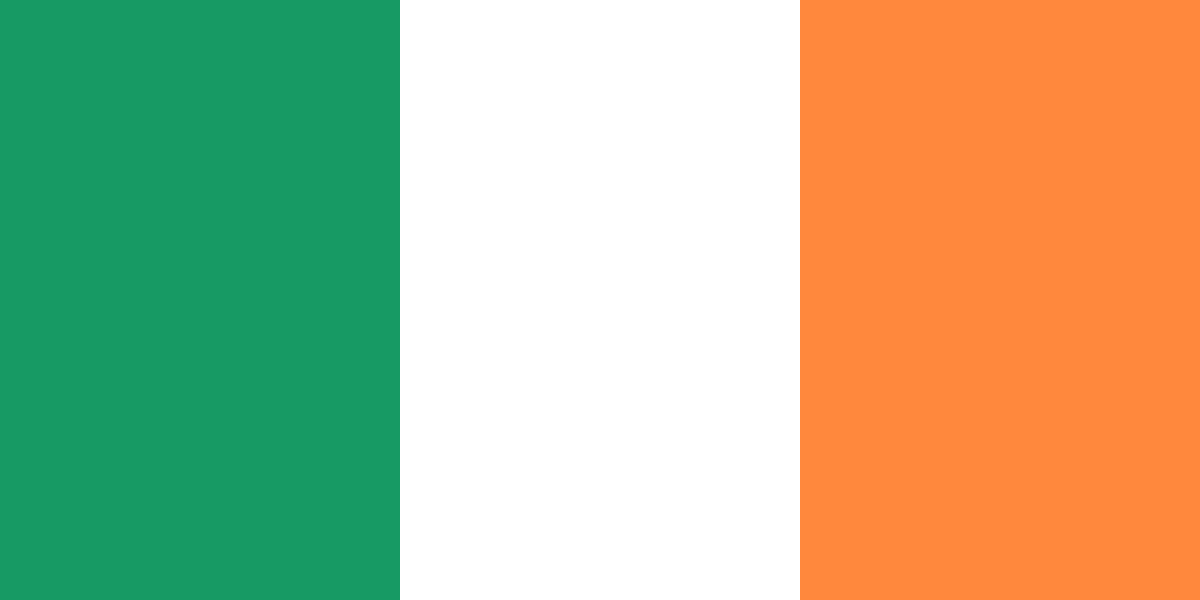
The Flag of Hungary is commonly confused with or compared alongside the following flags due to shared colors, stripe geometry, or central emblems:
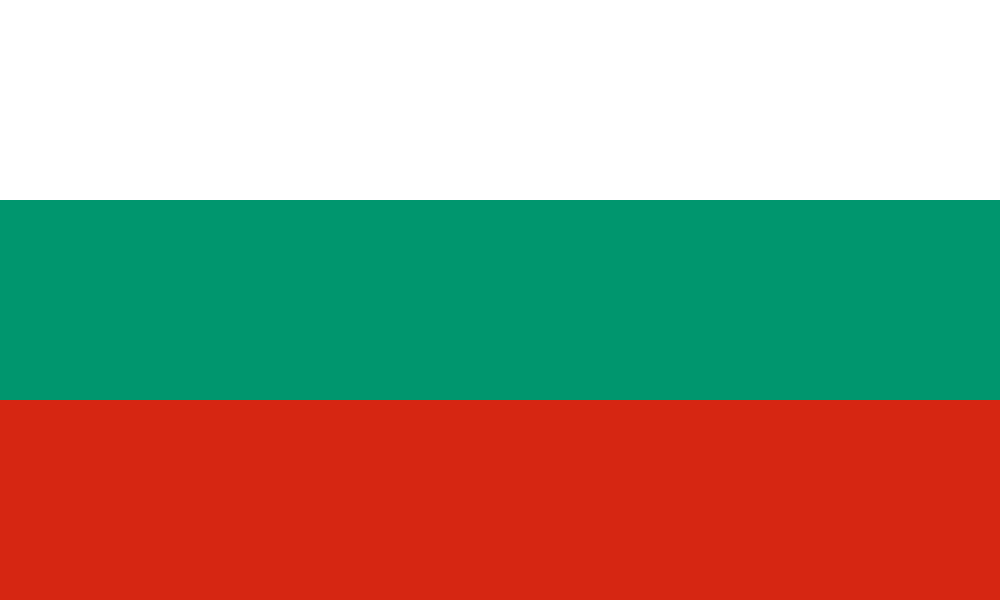
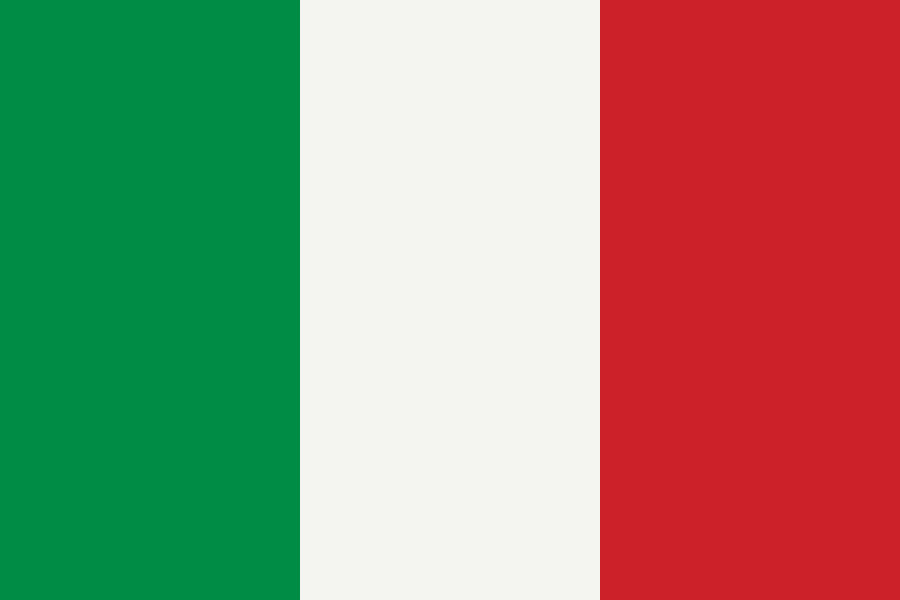
Visually and structurally similar flags
Ranked deterministically across layout family (35%), color overlap and stripe order (25%), symbols (20%), aspect ratio (10%), and stripe/symmetry geometry (10%):

Sources and image-rights provenance
- The Fundamental Law of Hungary (Article I)
- Flags and Arms Across the World — Cassell, pp. 88–89
SVG artwork provenance: Constructed from statutory specifications (public-domain-statute, verified 2026-10-14, SHA-256 b4a97bf7606b…).