
Flag of Côte d'Ivoire
Native & traditional name: Drapeau de la Côte d'Ivoire
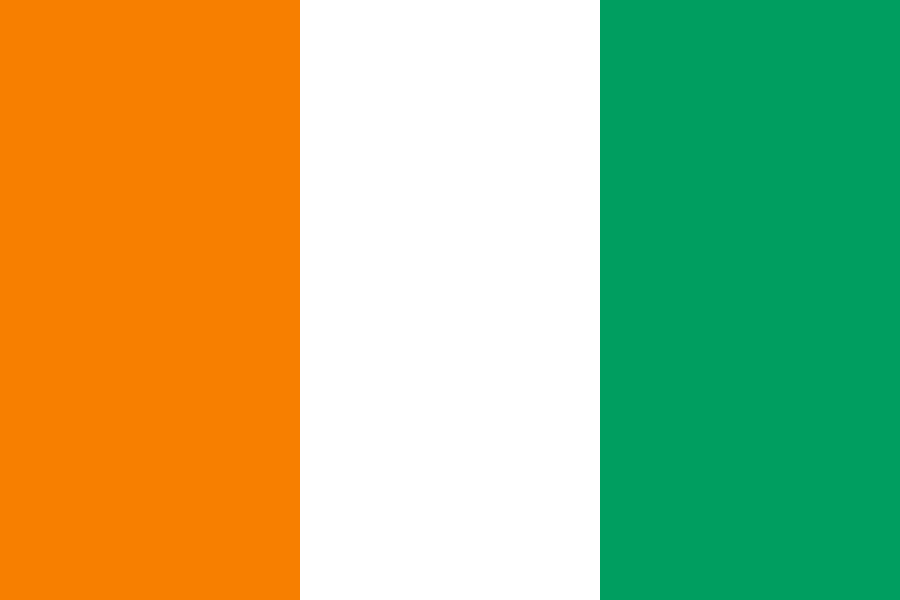
| Flag | Côte d'Ivoire (CI) |
|---|---|
| Type | National flag (national, civil, state) |
| Proportion | 2:3 (2:3) |
| Primary colors | orange, white, green |
| Main symbol | None (geometric bands) |
| Arrangement | vertical tricolor (orange · white · green) |
| Official adoption | 1959-12-03 — Adopted just prior to full independence and retained in Article 48 of the Ivorian Constitution |
| Region | Western Africa |
Plain-language visual description
The flag of Côte d'Ivoire is a 2:3 vertical tricolor composed of three equal bands of orange at the hoist, white in the center, and green at the fly.
Construction and geometry
Proportion & symmetry: The Flag of Côte d'Ivoire uses a statutory 2:3 height-to-width ratio on a rectangular field with horizontal mirror symmetry. 2:3 aspect ratio with three equal vertical bands: orange at the hoist, white in the center, and green at the fly.
- Constructed in a 2:3 aspect ratio with three equal vertical stripes (1:1:1). Orange is always at the hoist and green at the fly—the exact reverse of Ireland's band order.
Official colors and specification system
Rather than manufacturing false RGB precision where a statute specifies dyed cloth, Pantone, Munsell, or CIE coordinates, the table below records the governing color system alongside a calibrated display hex approximation.
| Color | Official shade name | Specification system | Statutory / standard code | Display hex |
|---|---|---|---|---|
| orange | Orange | statute-named | Named in statute | #F77F00 |
| white | White | statute-named | Named in statute | #FFFFFF |
| green | Green | statute-named | Named in statute | #009E60 |
Meaning and symbolism
Documented symbolism
In official Ivorian state explanations, the hoist orange stripe represents the savannas of the northern half of the country and national vitality, the central white stripe represents peace and unity across the nation, and the green fly stripe represents the coastal forests of the south and hope for a prosperous future.
Common interpretations
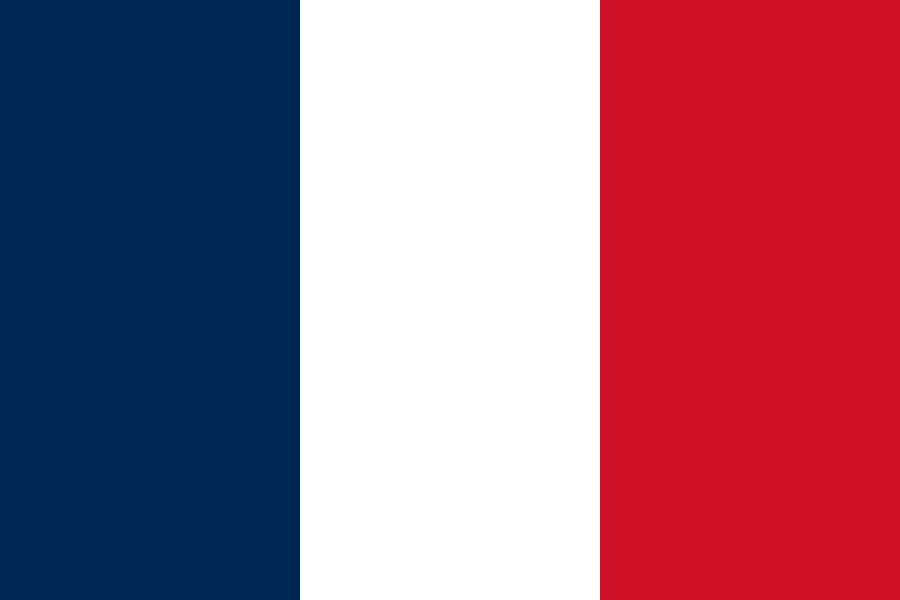
Because it uses the same three colors as Ireland's flag in reverse order, viewers often assume a historical connection between the two; in reality, Côte d'Ivoire modeled its layout on the French tricolor while selecting colors reflecting its own northern savanna and southern forest geography.
History and design evolution
As French West Africa moved toward decolonization under the 1958 French Community constitutional framework, Côte d'Ivoire became an autonomous republic within the Community in December 1958 and initially continued flying the French tricolor while parliamentary committees debated a distinct national emblem.
On 3 December 1959, the Legislative Assembly adopted Constitutional Law No. 59-240 establishing the orange, white, and green vertical tricolor in a 2:3 ratio, explained to parliament by Minister of State Jean Delafosse as a symbol uniting the northern savanna and southern forest regions. The flag was raised when full sovereignty was proclaimed in Abidjan on 7 August 1960 under President Félix Houphouët-Boigny.
Unlike neighbouring West African states that adopted the red, yellow, and green Pan-African palette of Ghana and Mali, Côte d'Ivoire deliberately chose orange, white, and green (a palette also used in a horizontal arrangement by fellow Council of the Entente member Niger) and has retained the flag without alteration across the 1960, 2000, and 2016 constitutions.
Key historical milestones
- 1959Adoption by the autonomous republic: Adopted on 3 December 1959 to represent the northern savannas, peace, and southern coastal forests.
- 1960Proclamation of independence: Raised as the sovereign national flag of the Republic of Côte d'Ivoire on 7 August 1960.
- 2016Third Republic Constitution: Article 48 reaffirms the orange, white, and green vertical tricolor as the national emblem.
Frequently confused with
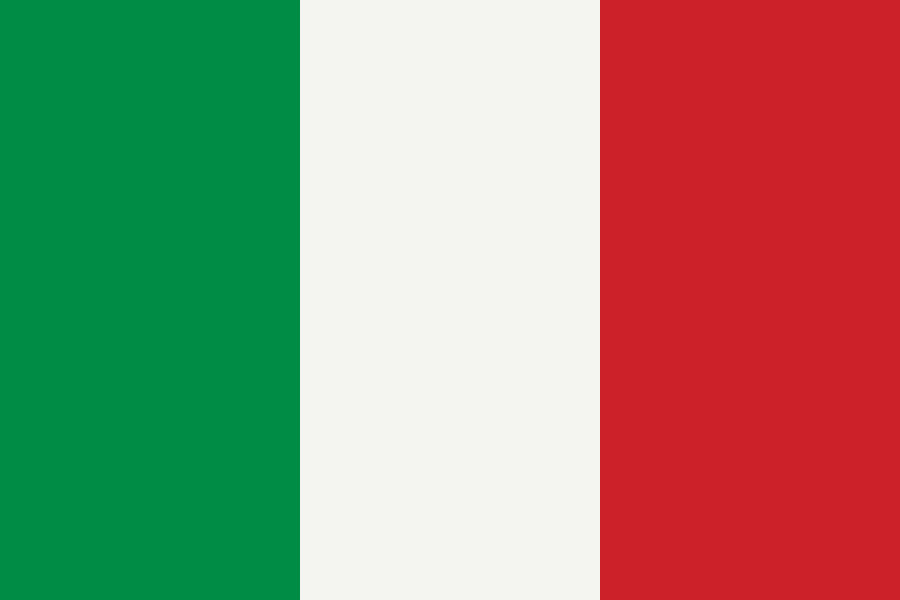
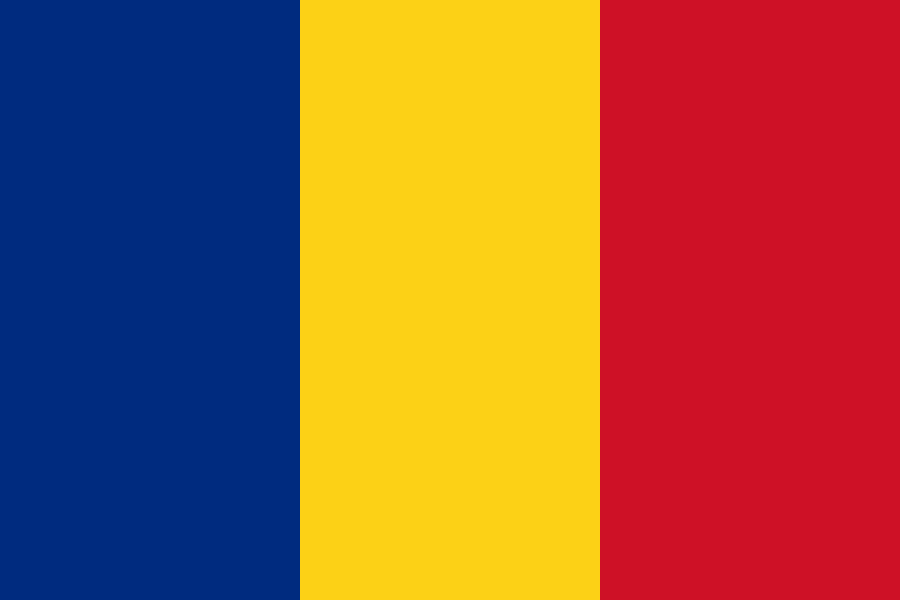
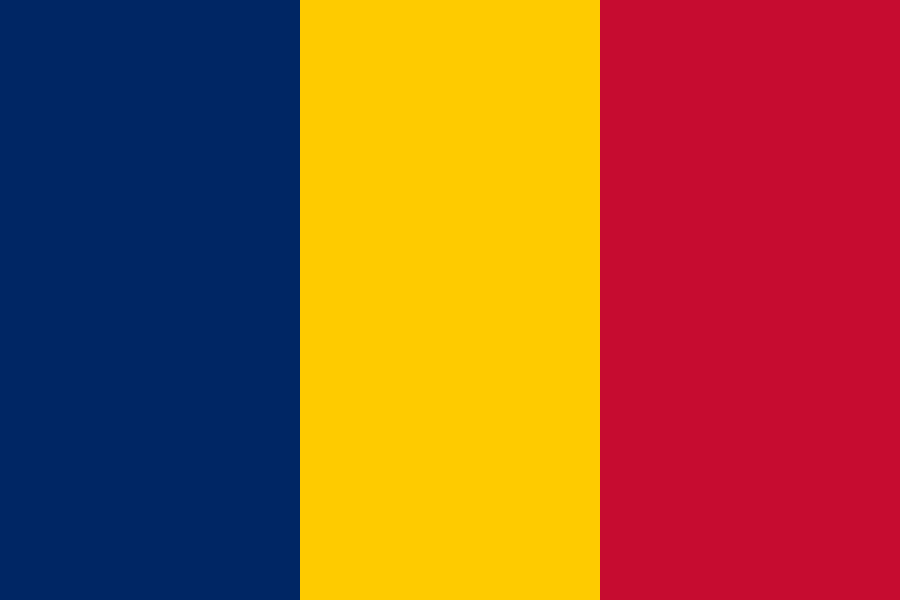
The Flag of Côte d'Ivoire is commonly confused with the following national flags due to shared colors, stripe geometry, or central emblems:
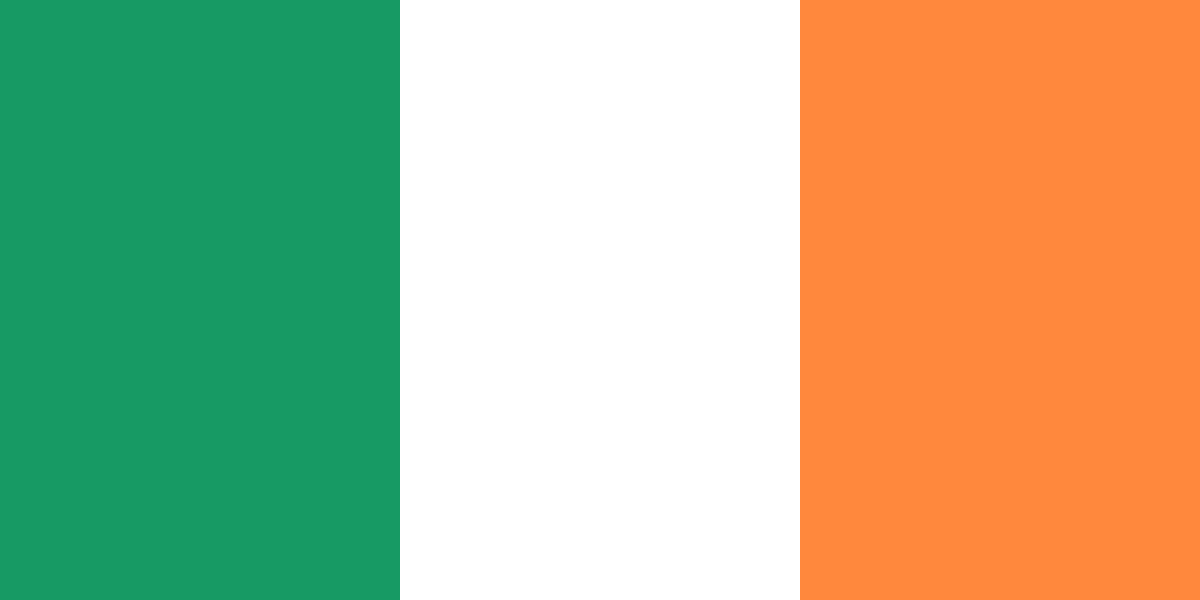
Visually and structurally similar flags
Ranked deterministically across layout family (35%), color overlap and stripe order (25%), symbols (20%), aspect ratio (10%), and stripe/symmetry geometry (10%):

Sources and image-rights provenance
- Présidence de la République de Côte d'Ivoire — Les Symboles de la République
- CIA World Factbook — Côte d'Ivoire Flag Description
SVG artwork provenance: Constructed from statutory specifications (public-domain-statute, verified 2026-10-13, SHA-256 704a3ddddbf9…).