
Flag of Ireland
Native & traditional name: Bratach na hÉireann
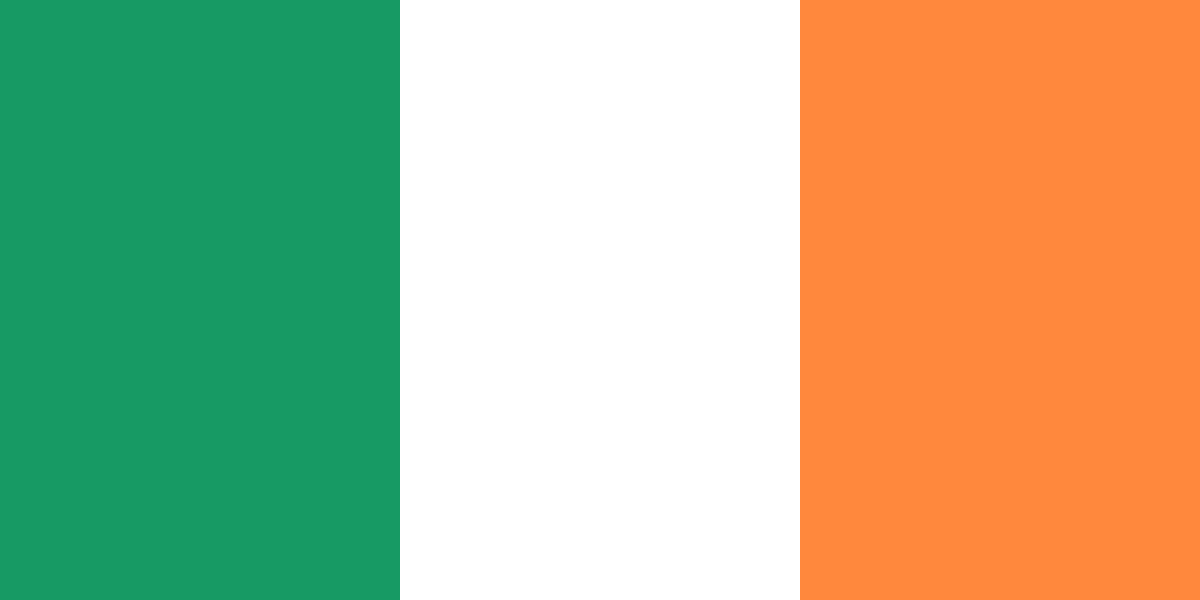
| Flag | Ireland (IE) |
|---|---|
| Type | National flag (national, civil, state, war) |
| Proportion | 1:2 (1:2) |
| Primary colors | green, white, orange |
| Main symbol | None (geometric bands) |
| Arrangement | vertical tricolor (green · white · orange) |
| Official adoption | 1937-12-29 — Constitutionalized under Article 7 of Bunreacht na hÉireann (first flown in Waterford by Thomas Francis Meagher in March 1848) |
| Region | Northern Europe |
Plain-language visual description
Ireland's national flag is a wide 1:2 rectangular vertical tricolor with three equal bands of green at the hoist, white in the center, and orange at the fly.
Construction and geometry
Proportion & symmetry: The Flag of Ireland uses a statutory 1:2 height-to-width ratio on a rectangular field with horizontal mirror symmetry. Length is twice the height (1:2), divided into three equal vertical pales of green at the hoist, white in the center, and orange at the fly.
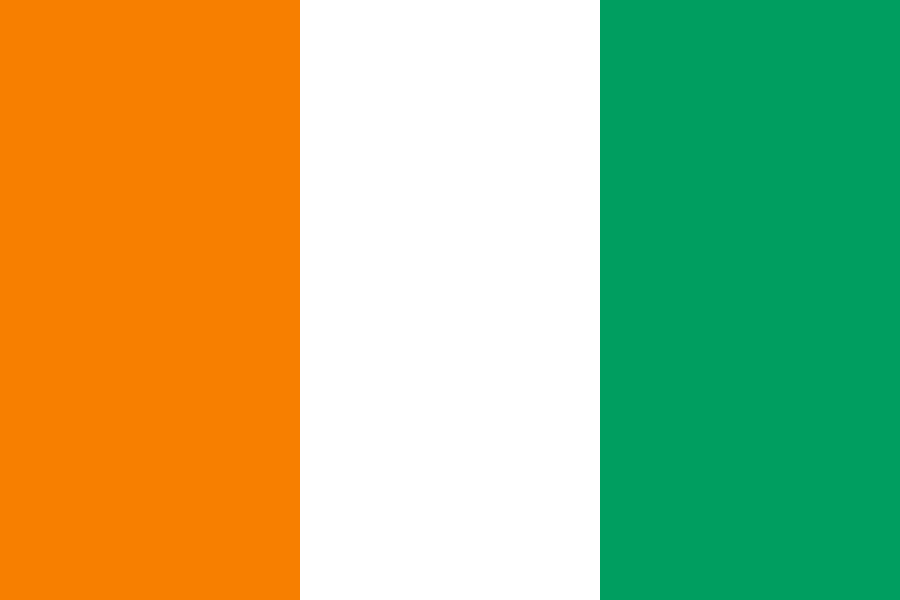
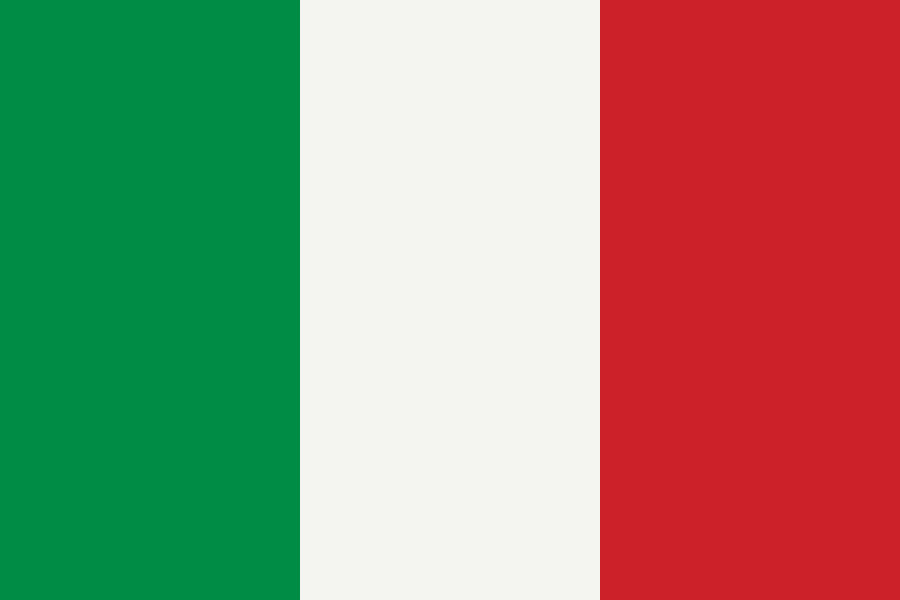
- The flag is twice as wide as it is tall (1:2 ratio), making it noticeably wider than the 2:3 vertical tricolors of Italy and Côte d'Ivoire.
- The green stripe must always be placed closest to the flagpole (hoist); reversing the order creates the color sequence of Côte d'Ivoire.
Official colors and specification system
Rather than manufacturing false RGB precision where a statute specifies dyed cloth, Pantone, Munsell, or CIE coordinates, the table below records the governing color system alongside a calibrated display hex approximation.
| Color | Official shade name | Specification system | Statutory / standard code | Display hex |
|---|---|---|---|---|
| green | Green | pantone | Pantone 347 C | #169B62 |
| white | White | statute-named | Named in statute | #FFFFFF |
| orange | Orange | pantone | Pantone 151 C | #FF883E |
Meaning and symbolism
Documented symbolism
As explained by Thomas Francis Meagher when presenting the flag in 1848 and reaffirmed in official Department of the Taoiseach protocol guidelines, green represents the older Gaelic and Roman Catholic tradition, orange represents the Protestant supporters of William of Orange, and the central white band signifies a lasting truce and peaceful union between the two communities.
Common interpretations
In casual usage the orange stripe is sometimes misdescribed as gold or yellow; Irish government protocol explicitly cautions against replacing orange with gold, as doing so alters the core reconciliation meaning of the flag.
History and design evolution
Inspired by the French Revolution of February 1848, Young Ireland leader Thomas Francis Meagher brought a silk green-white-orange tricolor presented by French women in Paris and flew it from the Wolfe Tone Confederate Club at 33 The Mall in Waterford on 7 March 1848 before presenting it to citizens in Dublin in April 1848 as an emblem of sectarian reconciliation.
Throughout the second half of the nineteenth century the green banner charged with a golden harp remained more widely used, until the tricolor was raised by Gearóid O'Sullivan over the General Post Office in Dublin during the Easter Rising of April 1916. From that moment the tricolor gained universal recognition as the national banner of the Irish independence movement.
It was flown by the Irish Republic (1919–1922) and the Irish Free State (1922–1937) before receiving formal constitutional status under Article 7 of Bunreacht na hÉireann (the Constitution of Ireland), which took effect on 29 December 1937.
Key historical milestones
- 1848First flown in Waterford: Thomas Francis Meagher introduces the green-white-orange tricolor as an emblem of peace between Catholic and Protestant traditions.
- 1916Easter Rising over the GPO: Flown above the General Post Office in Dublin, cementing its status as the national flag.
- 1937Constitutional recognition: Article 7 of the Constitution of Ireland formally establishes the green, white, and orange tricolor.
Frequently confused with
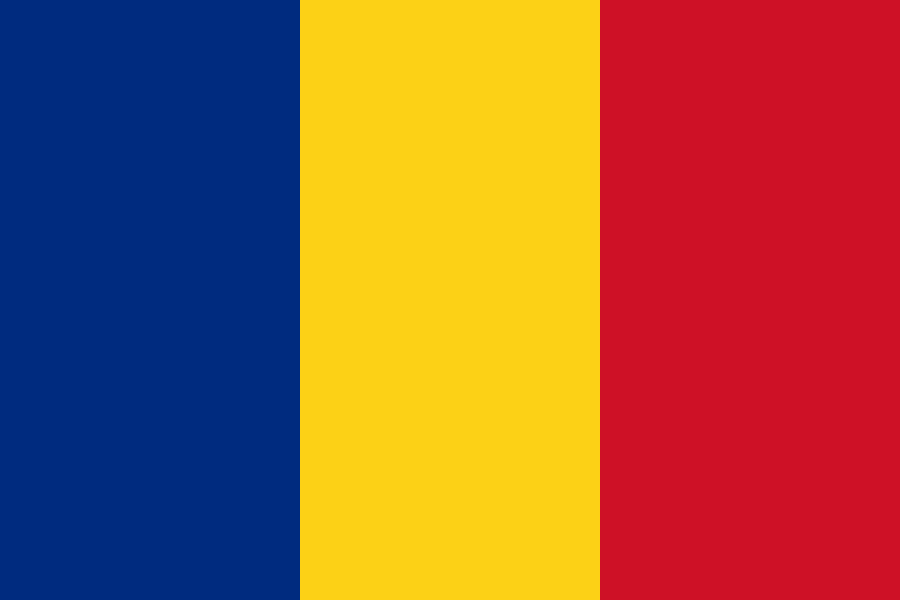
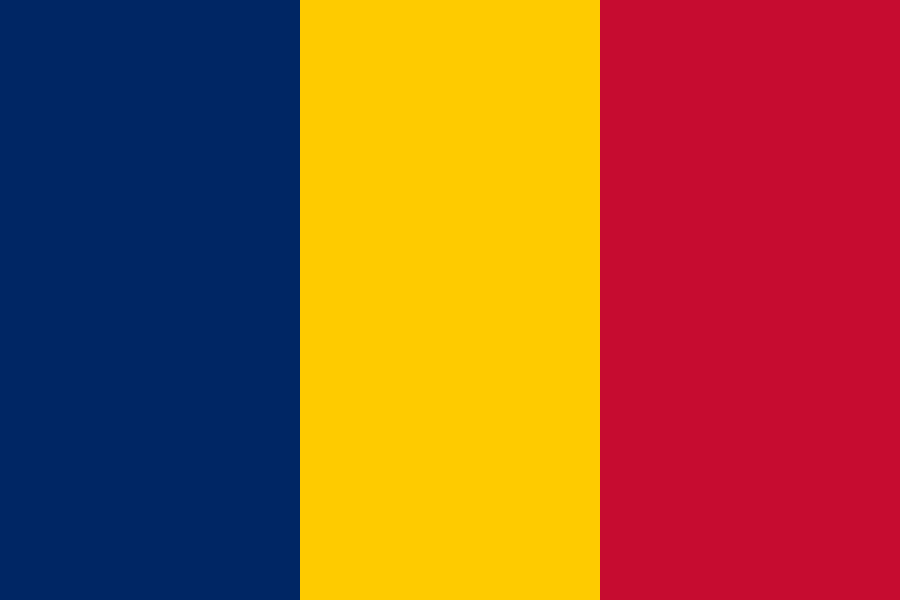
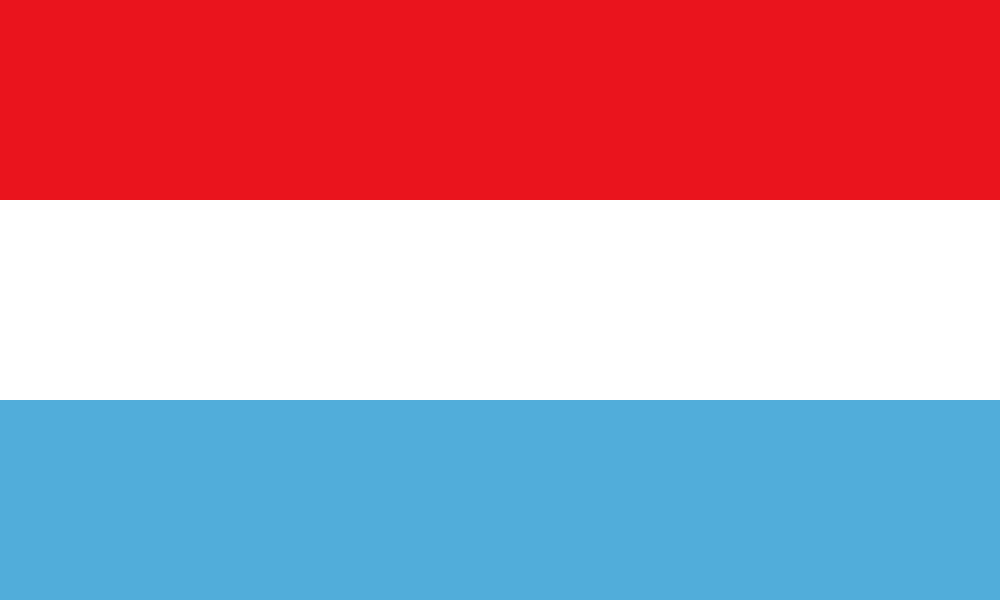
The Flag of Ireland is commonly confused with the following national flags due to shared colors, stripe geometry, or central emblems:
Visually and structurally similar flags
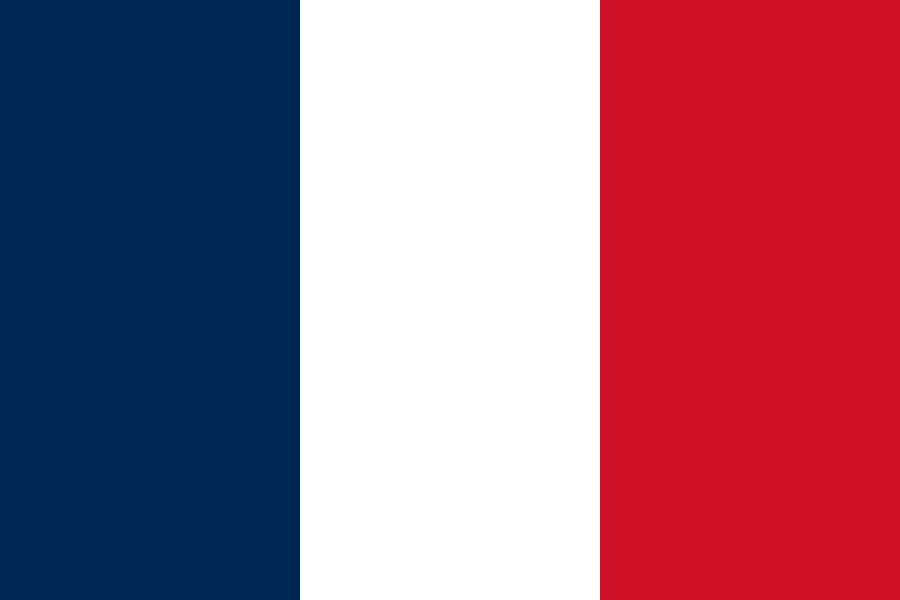
Ranked deterministically across layout family (35%), color overlap and stripe order (25%), symbols (20%), aspect ratio (10%), and stripe/symmetry geometry (10%):
Sources and image-rights provenance
- Department of the Taoiseach — The National Flag: Guidelines for Use
- Constitution of Ireland (Bunreacht na hÉireann), Article 7
SVG artwork provenance: Constructed from statutory specifications (public-domain-statute, verified 2026-10-13, SHA-256 53af419a8549…).