
Flag of Chad
Native & traditional name: Drapeau du Tchad / علم تشاد
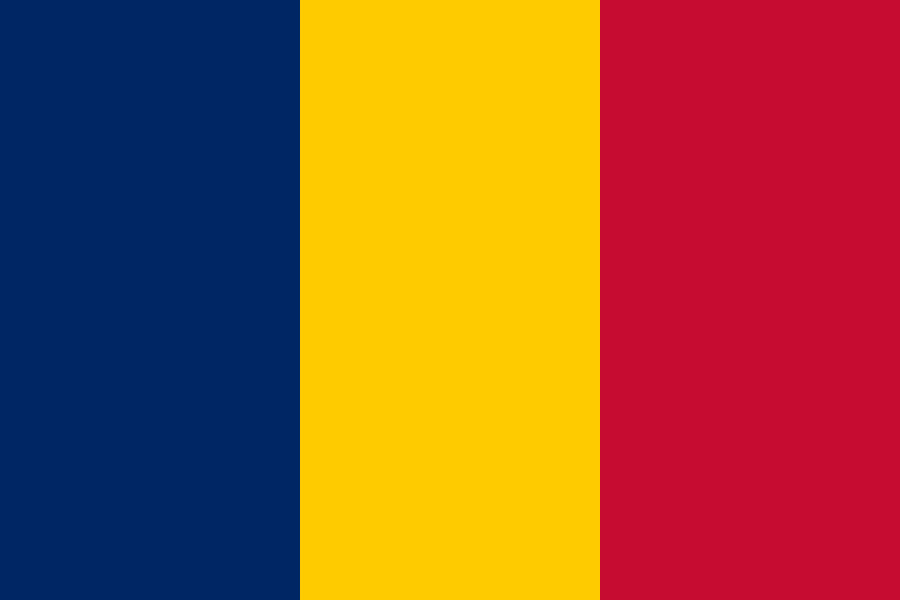
| Entity | Chad (TD) |
|---|---|
| Type | Sovereign national flag (national, civil, state, war) |
| Proportion | 2:3 (2:3) |
| Primary colors | blue, yellow, red |
| Main symbol | None (geometric bands) |
| Arrangement | vertical tricolor (blue · yellow · red) |
| Official adoption | 1959-11-06 — Approved by acclamation on 6 November 1959 (Flags of the World cites a Law No. 59/13, which it dates 11 June 1959), blending the French tricolor and Pan-African colors |
| Region | Middle Africa |
Plain-language visual description
The flag of Chad is a vertical tricolor of three equal stripes: dark blue at the hoist, golden yellow in the center, and red at the fly, conventionally made in 2:3 proportions.
Construction and geometry
Proportion & symmetry: The Flag of Chad uses a 2:3 height-to-width ratio (No ratio is fixed by law, FOTW noting that the ratio is unspecified; 2:3 is the conventional proportion) on a rectangular field with mirror symmetry about its horizontal centre line (the top and bottom halves match). Three equal vertical bands of dark blue (hoist), yellow, and red; no ratio is fixed by law and 2:3 is the conventional proportion.
- Usually made in 2:3 proportion (no ratio is fixed by law) with three equal vertical bands. Chad's hoist stripe is conventionally rendered in a darker blue (Album des Pavillons approximation Pantone 281 C) than Romania's blue, which Romanian law fixes as Pantone 280c (displayed #002B7F).
Colors and how they are specified
A color code is marked official only when the governing law, decree or official government specification itself gives it, and the source is quoted below the table. Where the law names a color without a code, or sets no shade at all, the table says so and the display hex is an approximation. Commonly used but unofficial codes are labelled as such. Unless the table names another source for it, a hex shown beside a Pantone code is Pantone's own published sRGB value for that code.
| Color | Shade name | Specification system | Code | Display hex |
|---|---|---|---|---|
| blue | Dark Blue | hex-approximation | no shade set by law; commonly Pantone 281 C (unofficial) | #00205B |
| yellow | Golden Yellow | hex-approximation | no shade set by law; commonly Pantone 116 C (unofficial) | #FFCD00 |
| red | Red | hex-approximation | no shade set by law; commonly Pantone 186 C (unofficial) | #C8102E |
- Dark Blue (not set by law): Album des Pavillons (French Navy, 2000) approximation; the same Pantone code appears in the Flags and Anthems Manual London 2012. Not an official specification: no Chadian colour specification is known.
- Golden Yellow (not set by law): Album des Pavillons (French Navy, 2000) approximation; the same Pantone code appears in the Flags and Anthems Manual London 2012. Not an official specification: no Chadian colour specification is known.
- Red (not set by law): Album des Pavillons (French Navy, 2000) approximation; the same Pantone code appears in the Flags and Anthems Manual London 2012. Not an official specification: no Chadian colour specification is known.
Meaning and symbolism
Documented symbolism
Chad's constitutional texts describe the flag only as a tricolour of blue, gold and red in equal vertical bands with blue at the staff, and assign no meanings to the colours. According to the vexillologist Whitney Smith, the blue that replaced the originally proposed green is said to stand for hope and the sky, yellow for the sun, and red for the unity of the nation.
Common interpretations
Observers frequently ask whether Chad copied Romania's flag; when Chad adopted its plain blue-yellow-red tricolor in November 1959, Romania's flag carried a large communist coat of arms in the center, so the two flags did not look identical until Romania removed its emblem thirty years later in December 1989.
Reference works such as the CIA World Factbook state that blue symbolizes the sky, hope and the relatively well-watered south, gold the sun and the northern desert, and red progress, unity and sacrifice; these meanings are not set out in Chadian law.
History and design evolution
When the Republic of Chad was proclaimed within the French Community on 28 November 1958 it had no flag of its own, and the French Tricolour continued to fly. On 30 June 1959 a legislative commission recommended a vertical green, yellow, and red tricolour, but because the Mali Federation (Senegal and the Sudanese Republic) had already adopted that design, blue, recalling the French tricolour, was substituted for green.
The revised blue, yellow, and red tricolour was approved by acclamation on 6 November 1959 (Flags of the World cites a Law No. 59/13, which it dates 11 June 1959) and was raised at full independence on 11 August 1960. At that time Romania's flag featured the People's Republic coat of arms in the middle of the yellow band, so the two flags were easily told apart.
After Romania dropped its central coat of arms in December 1989, the two flags became virtually indistinguishable except for a subtle difference in the shade of blue. In 2004 Romanian media reported that Chad was planning to ask the United Nations to look into the issue; Romania's president said his country would not give up its flag, and both nations have retained their historic flags.
Key historical milestones
- 1959Adoption of the blue-yellow-red tricolour: Chad approves the vertical blue, yellow, and red tricolor on 6 November 1959.
- 1960Sovereign independence: Flown as the national flag upon Chad's independence on 11 August 1960.
- 1989Onset of Romania overlap: Romania removes its central state emblem in December 1989, making the two national flags near-identical.
Frequently confused with
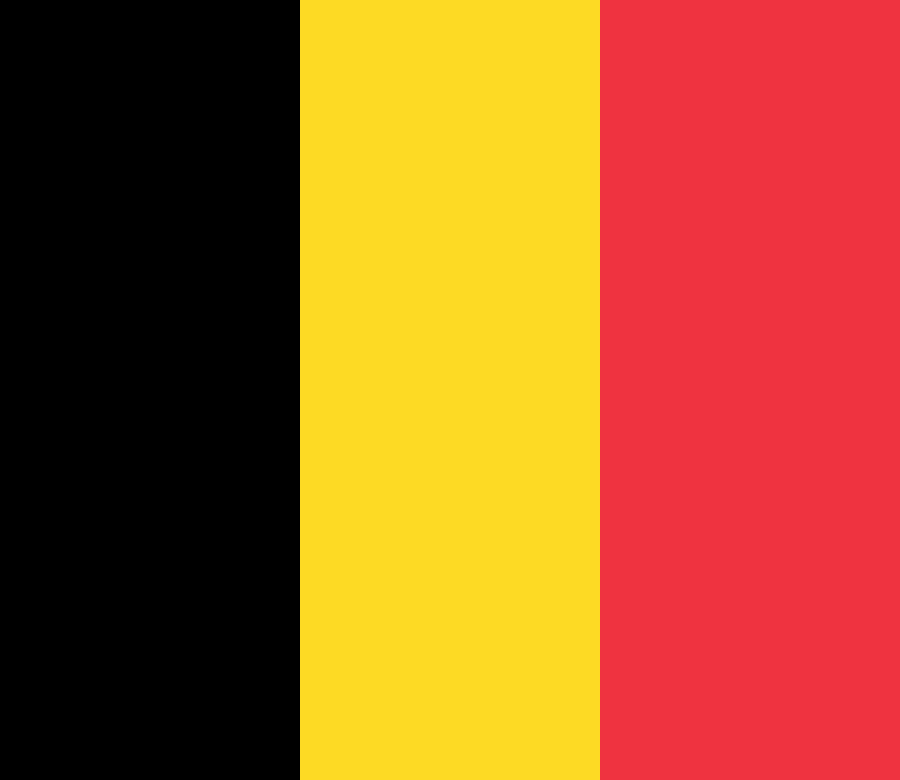
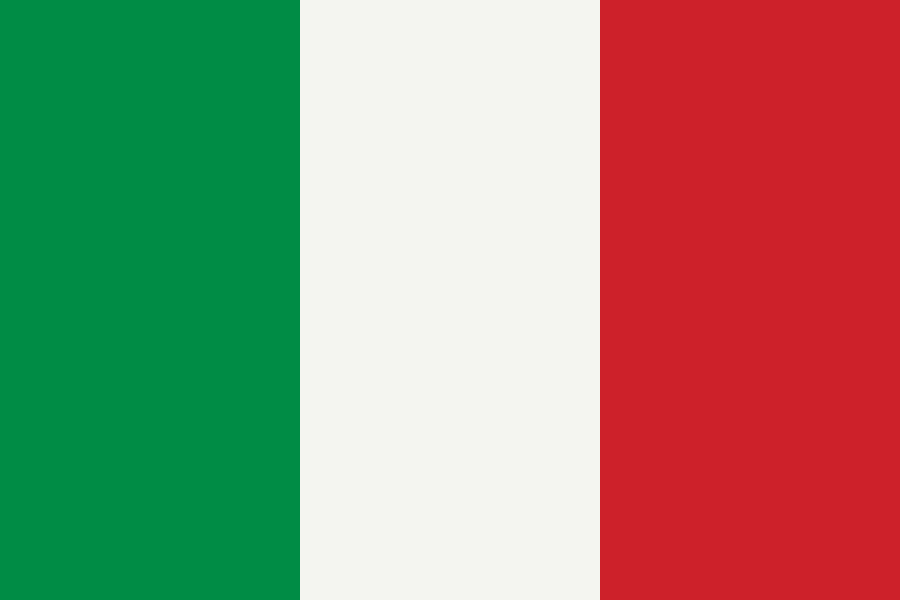
The Flag of Chad is commonly confused with or compared alongside the following catalog flags due to shared colors, stripe geometry, or central emblems:
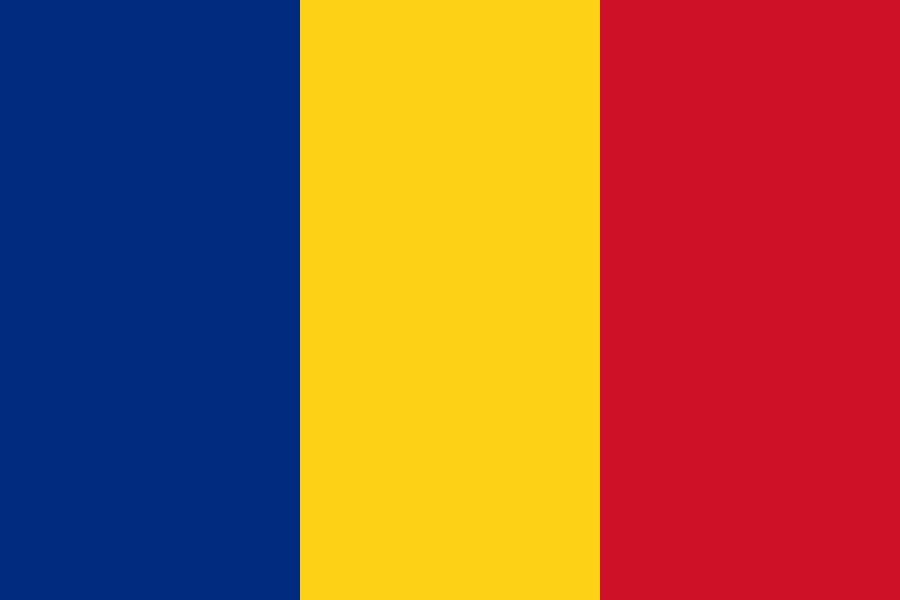
Visually and structurally similar flags in this catalog
Ranked deterministically across layout family, orientation and shape (35%), color overlap and stripe order (25%), symbols (20%), aspect ratio (10%), and stripe/symmetry geometry (10%):

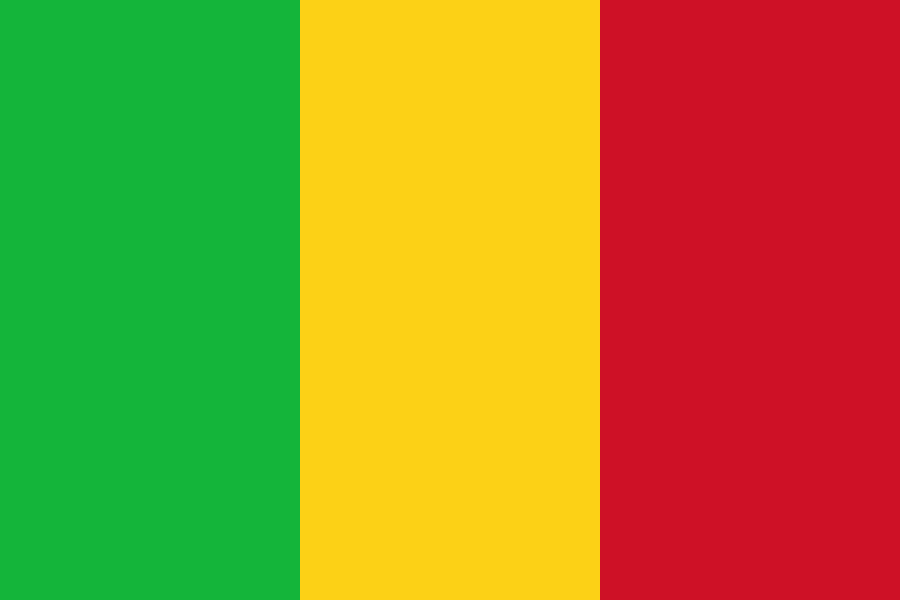
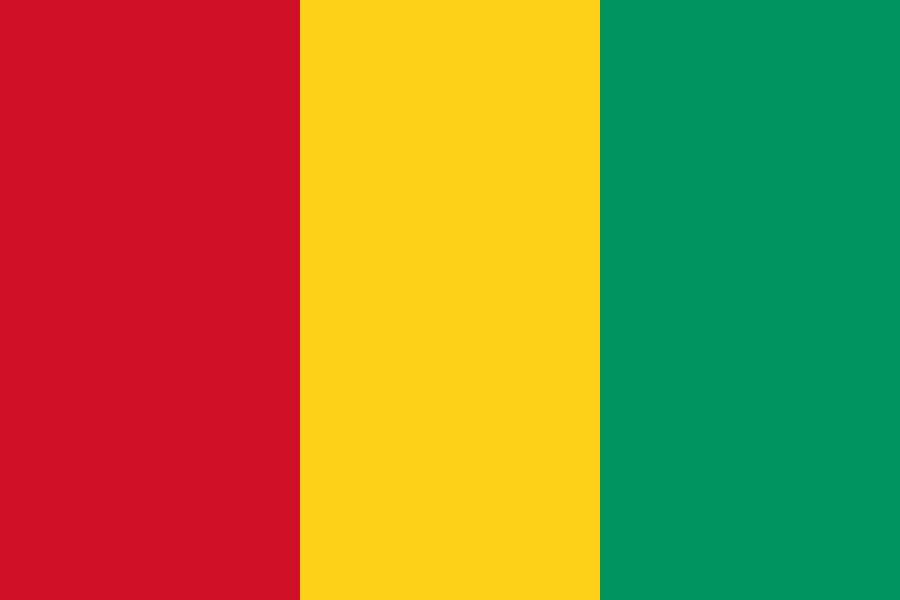
Sources and image-rights provenance
- CIA World Factbook — Chad Flag Description (archived; the Factbook has been discontinued)
- Whitney Smith — Flag of Chad (Encyclopædia Britannica)
SVG artwork provenance: Original FastFlags drawing generated by scripts/generate-seed-svg-assets.ts from this record's ratio, layout and display colours; not an official construction sheet. (public-domain-statute, checked 2026-10-15, SHA-256 90b33a1de68c…).