
Flag of the Netherlands
Native & traditional name: De Nederlandse vlag

| Flag | Netherlands (NL) |
|---|---|
| Type | National flag (national, civil, state, war) |
| Proportion | 2:3 (2:3) |
| Primary colors | red, white, blue |
| Main symbol | None (geometric bands) |
| Arrangement | horizontal tricolor (red · white · blue) |
| Official adoption | 1937-02-19 — Royal Decree No. 93 of Queen Wilhelmina confirming bright vermilion, white, and cobalt blue (evolving from the 1572 Prinsenvlag) |
| Region | Western Europe |
Plain-language visual description
The flag of the Netherlands is a 2:3 rectangular horizontal tricolor of three equal stripes: bright vermilion red on top, white in the middle, and cobalt blue on the bottom.
Construction and geometry
Proportion & symmetry: The Flag of the Netherlands uses a statutory 2:3 height-to-width ratio on a rectangular field with vertical mirror symmetry. 2:3 rectangle divided into three equal horizontal bands of bright vermilion (top), white (middle), and cobalt blue (bottom).
- Width-to-length ratio is 2:3 with three equal horizontal stripes.
- Dutch Standard NEN 3055 (1958) defines the shades as bright vermilion (helder vermiljoen), bright white, and dark cobalt blue—noticeably darker and shorter than Luxembourg's 3:5 flag with sky blue.
Official colors and specification system
Rather than manufacturing false RGB precision where a statute specifies dyed cloth, Pantone, Munsell, or CIE coordinates, the table below records the governing color system alongside a calibrated display hex approximation.
| Color | Official shade name | Specification system | Statutory / standard code | Display hex |
|---|---|---|---|---|
| red | Bright Vermilion (Helder vermiljoen) | cielab | NEN 3055 (XYZ: X=16.3, Y=9.2, Z=2.9) | #AE1C28 |
| white | Bright White (Helder wit) | cielab | NEN 3055 | #FFFFFF |
| blue | Cobalt Blue (Kobaltblauw) | cielab | NEN 3055 (XYZ: X=7.8, Y=6.8, Z=26.7) | #21468B |
Meaning and symbolism
Documented symbolism
Derived from the sixteenth-century livery colors of William the Silent, Prince of Orange (originally orange, white, and blue in the Prinsenvlag), the Dutch horizontal tricolor is the oldest republican tricolor flag in continuous use and the progenitor of both the Russian and French tricolor traditions.
Common interpretations
Several accounts explain the seventeenth-century shift from orange to bright red as a result of natural yellow-orange madder and weld dyes fading toward red in salt air at sea, combined with political preferences of the States General during the First Stadtholderless Period.
History and design evolution
During the Dutch Revolt against Spanish Habsburg rule in 1572, the Sea Beggars (Watergeuzen) flew an orange, white, and blue horizontal tricolor known as the Prinsenvlag ('Prince's Flag'), derived from the heraldic livery colors of William I, Prince of Orange. By the 1630s a red-white-blue variant called the Statenvlag ('States Flag') increasingly replaced the orange stripe on Dutch naval and merchant vessels.
In 1664 the States General formally adopted the red-white-blue Statenvlag for the navy, and after the French Revolution inspired vertical and horizontal tricolors across Europe, the Batavian Republic confirmed the red-white-blue horizontal flag in 1796, followed by the Kingdom of the Netherlands in 1815.
In the 1930s political controversy arose over whether the top stripe should be orange or red; Queen Wilhelmina settled the matter permanently with the shortest Royal Decree in Dutch history on 19 February 1937: 'The colors of the flag of the Kingdom of the Netherlands are bright vermilion, white and cobalt blue.'
Key historical milestones
- 1572Prinsenvlag in the Dutch Revolt: Sea Beggars fly the orange-white-blue tricolor of William of Orange at the capture of Brielle.
- 1664Statenvlag naval standardization: Red-white-blue replaces orange-white-blue as the official flag of the States General.
- 1937Royal Decree No. 93: Queen Wilhelmina legally fixes the colors as bright vermilion, white, and cobalt blue.
Frequently confused with
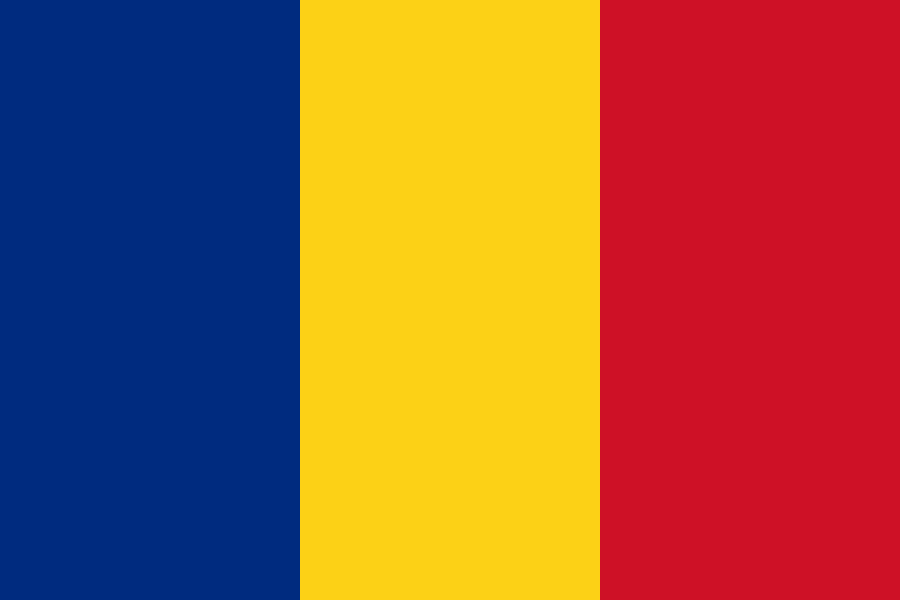
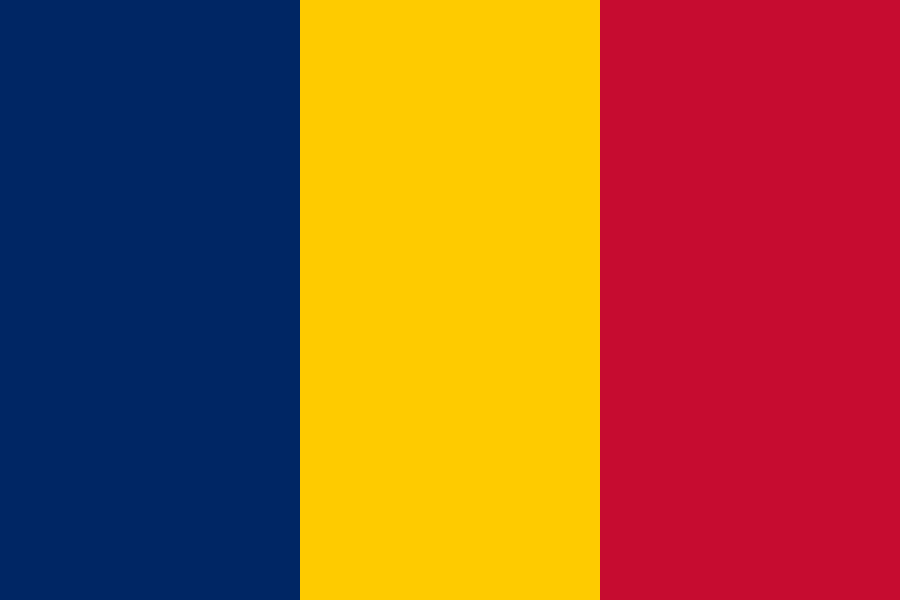
The Flag of the Netherlands is commonly confused with the following national flags due to shared colors, stripe geometry, or central emblems:
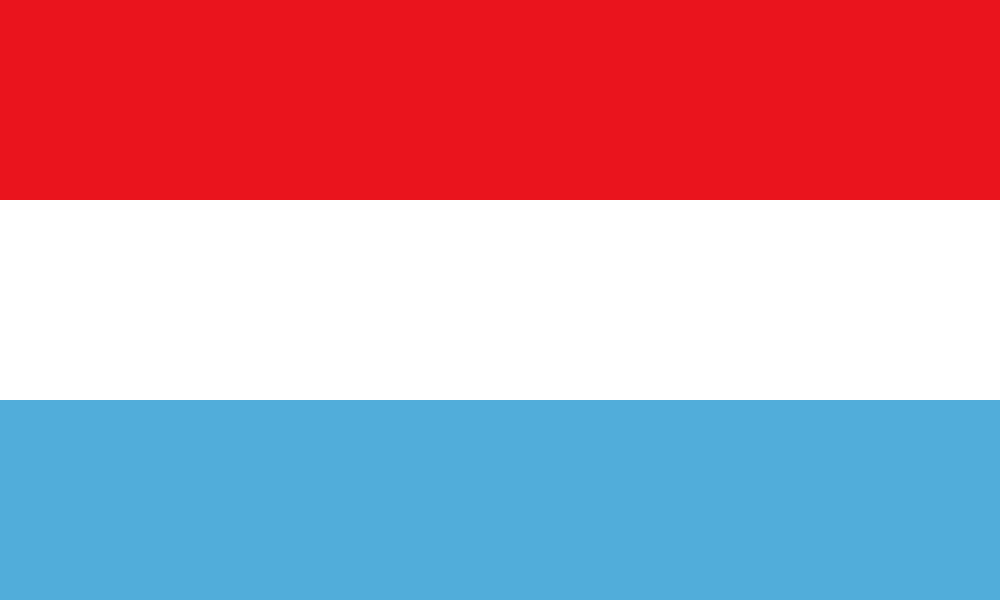
Visually and structurally similar flags
Ranked deterministically across layout family (35%), color overlap and stripe order (25%), symbols (20%), aspect ratio (10%), and stripe/symmetry geometry (10%):
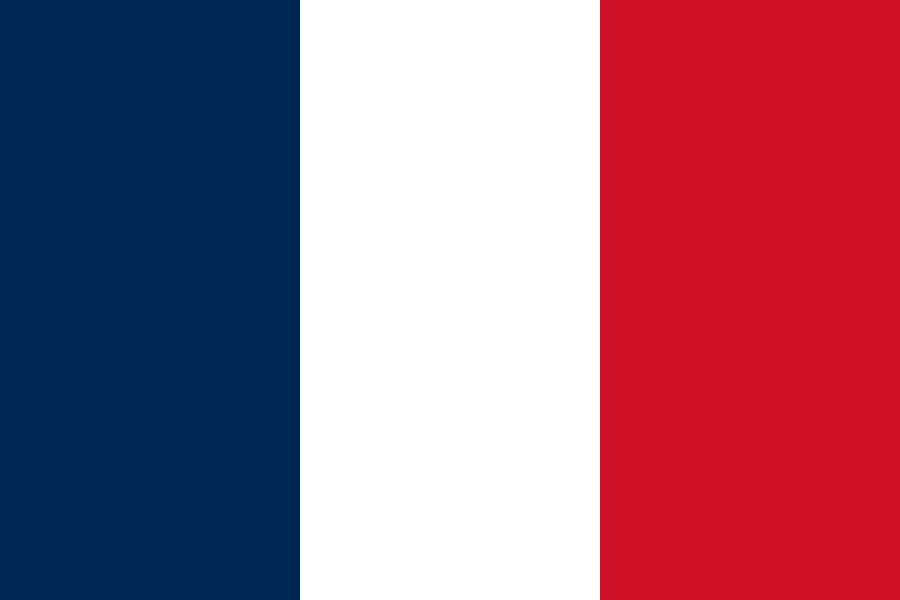
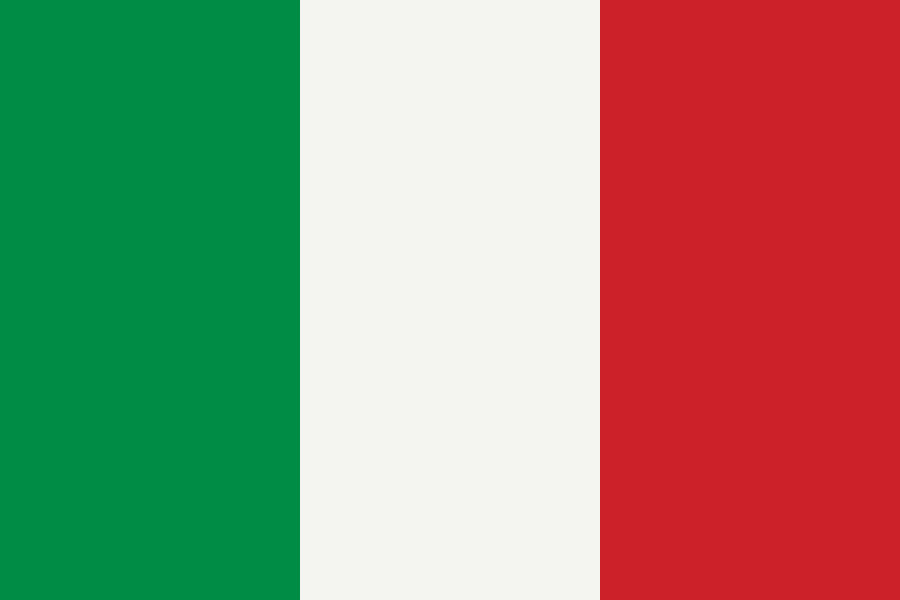
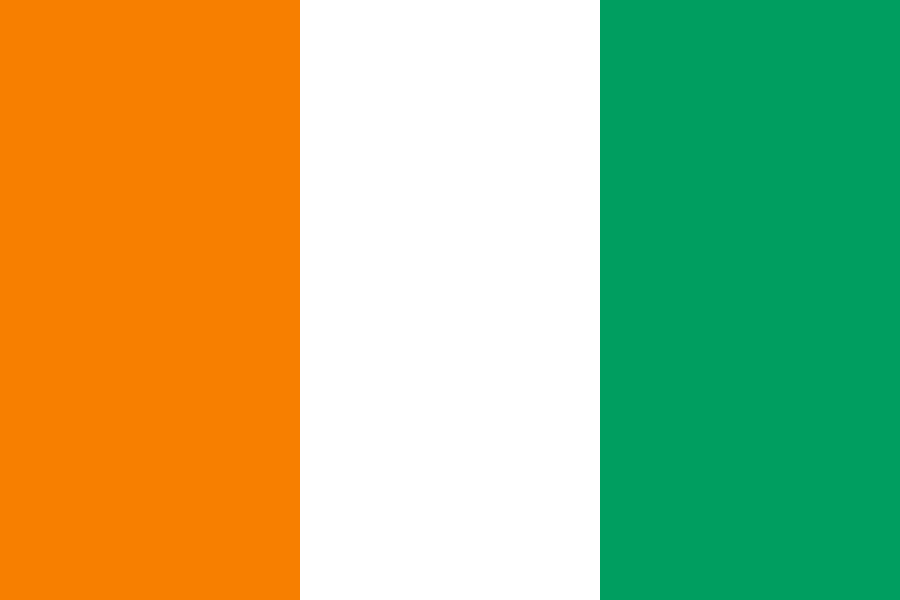
Sources and image-rights provenance
- Royal House of the Netherlands — The Dutch Flag
- Government of the Netherlands — Flag Protocol and Royal Decree of 19 February 1937
SVG artwork provenance: Constructed from statutory specifications (public-domain-statute, verified 2026-10-13, SHA-256 42d868bd102e…).