
Flag of Italy
Native & traditional name: Il Tricolore

| Entity | Italy (IT) |
|---|---|
| Type | Sovereign national flag (national, civil, state) |
| Proportion | 2:3 (2:3) |
| Primary colors | green, white, red |
| Main symbol | None (geometric bands) |
| Arrangement | vertical tricolor (green · white · red) |
| Official adoption | 1946-06-19 — Current republican plain tricolor adopted in 1946 and codified in Article 12 of the 1948 Italian Constitution (originating in Cispadane Republic on 1797-01-07) |
| Region | Southern Europe |
Plain-language visual description
Italy's national flag is a 2:3 rectangular vertical tricolor of equal bands of fern green at the hoist, bright white in the center, and scarlet red at the fly.
Construction and geometry
Proportion & symmetry: The Flag of Italy uses a 2:3 height-to-width ratio (Conventional proportion; Article 12 of the Constitution fixes only three vertical bands of equal size and does not set a ratio) on a rectangular field with mirror symmetry about its horizontal centre line (the top and bottom halves match). Three equal vertical bands of green (hoist), white, and red.
- Article 12 of the 1948 Italian Constitution sets the layout as three vertical bands of equal dimensions; it does not fix a ratio, and 2:3 is the conventional proportion.
- After earlier circulars of 2002 and 2003, a Prime Minister's Office circular of 2 June 2004, confirmed by Article 31 of the annex to the Prime Ministerial decree (DPCM) of 14 April 2006, fixed the colours as Pantone textile codes on polyester bunting: green 17-6153 (Fern Green), white 11-0601 (Bright White) and red 18-1662 (Flame Scarlet).
Colors and how they are specified
A color code is marked official only when the governing law, decree or official government specification itself gives it, and the source is quoted below the table. Where the law names a color without a code, or sets no shade at all, the table says so and the display hex is an approximation. Commonly used but unofficial codes are labelled as such. Unless the table names another source for it, a hex shown beside a Pantone code is Pantone's own published sRGB value for that code.
| Color | Shade name | Specification system | Code | Display hex |
|---|---|---|---|---|
| green | Fern Green (Verde felce) | pantone | 17-6153 (official) | #008C45Hex: Pantone's published sRGB for 17-6153 TCX (the decree gives the Pantone textile code without a suffix) |
| white | Bright White (Bianco brillante) | pantone | 11-0601 (official) | #F4F9FFHex: Pantone's published sRGB for 11-0601 TCX (the decree gives the Pantone textile code without a suffix) |
| red | Flame Scarlet (Rosso scarlatto) | pantone | 18-1662 (official) | #CD212AHex: Pantone's published sRGB for 18-1662 TCX (the decree gives the Pantone textile code without a suffix) |
- Fern Green (Verde felce) (pantone): DPCM 14 April 2006 (Disposizioni generali in materia di cerimoniale e di precedenza tra le cariche pubbliche), Annex, Art. 31(1), Gazzetta Ufficiale n. 174 of 28 July 2006 —
I toni cromatici dei colori della bandiera della Repubblica, indicati dall'art. 12 della Costituzione, sono definiti dalla circolare della Presidenza del Consiglio dei Ministri del 2 giugno 2004, UCE 3.3.1/14545/1, con i seguenti codici Pantone tessile, su tessuto stamina (fiocco) di poliestere: Verde 17-6153 Bianco 11-0601 Rosso 18-1662.
- Bright White (Bianco brillante) (pantone): DPCM 14 April 2006 (Disposizioni generali in materia di cerimoniale e di precedenza tra le cariche pubbliche), Annex, Art. 31(1), Gazzetta Ufficiale n. 174 of 28 July 2006 —
I toni cromatici dei colori della bandiera della Repubblica, indicati dall'art. 12 della Costituzione, sono definiti dalla circolare della Presidenza del Consiglio dei Ministri del 2 giugno 2004, UCE 3.3.1/14545/1, con i seguenti codici Pantone tessile, su tessuto stamina (fiocco) di poliestere: Verde 17-6153 Bianco 11-0601 Rosso 18-1662.
- Flame Scarlet (Rosso scarlatto) (pantone): DPCM 14 April 2006 (Disposizioni generali in materia di cerimoniale e di precedenza tra le cariche pubbliche), Annex, Art. 31(1), Gazzetta Ufficiale n. 174 of 28 July 2006 —
I toni cromatici dei colori della bandiera della Repubblica, indicati dall'art. 12 della Costituzione, sono definiti dalla circolare della Presidenza del Consiglio dei Ministri del 2 giugno 2004, UCE 3.3.1/14545/1, con i seguenti codici Pantone tessile, su tessuto stamina (fiocco) di poliestere: Verde 17-6153 Bianco 11-0601 Rosso 18-1662.
Meaning and symbolism
Documented symbolism
Neither Article 12 of the Constitution nor the 2006 ceremonial decree assigns a meaning to the colours; they fix only the green-white-red order, the equal vertical bands and the textile shades. Historically, the colours are traced to the Lombard Legion banner of 1796: white and red from the ancient municipal arms of Milan and green from the uniforms of the Milanese civic militia, in a layout inspired by the French revolutionary tricolour.
Common interpretations
A popular interpretation reads green as Italy's meadows and countryside, white as the snows of its mountains, and red as the blood shed by Italian soldiers; another links the three colours to the theological virtues of hope, faith, and charity (love). Neither reading has an official basis.
History and design evolution
The Italian green-white-red tricolor was adopted for the standards of the Lombard Legion in Milan in October 1796 (the legion's first tricolour flag was presented in November 1796) and was proclaimed the official state flag of the Cispadane Republic in Reggio Emilia on 7 January 1797 on the proposal of deputy Giuseppe Compagnoni—a date still celebrated annually in Italy as Festa del Tricolore.
During the nineteenth-century Risorgimento, the tricolor became the unifying symbol of Italian national unification across separate kingdoms and duchies from Venice to Sicily. In March 1848 King Charles Albert of Piedmont-Sardinia adopted the tricolor defaced with the blue-bordered Savoyard coat of arms on the central white stripe, which became the national flag of the unified Kingdom of Italy in 1861.
Following the June 1946 institutional referendum that abolished the monarchy and established the Italian Republic, the Savoyard shield was removed by presidential decree on 19 June 1946, leaving the clean three-band design enshrined in Article 12 of the 1948 Constitution.
Key historical milestones
- 1797Cispadane Republic adoption: Adopted as a sovereign state flag in Reggio Emilia on 7 January 1797.
- 1861Kingdom of Italy flag: The green-white-red tricolor with the House of Savoy arms becomes the flag of unified Italy.
- 1946Republican plain tricolor: The royal shield is removed in June 1946 and the plain tricolor is codified in the 1948 Constitution.
Frequently confused with
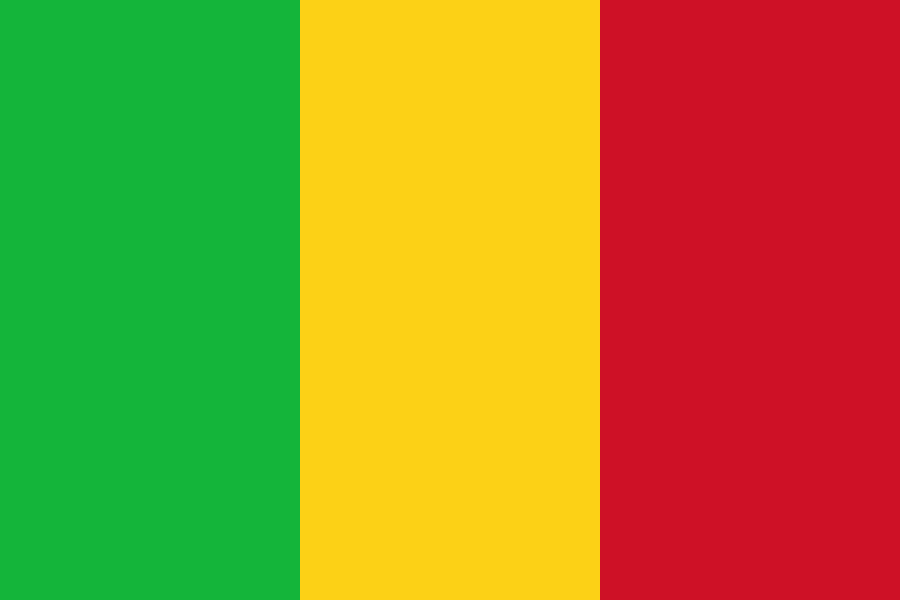
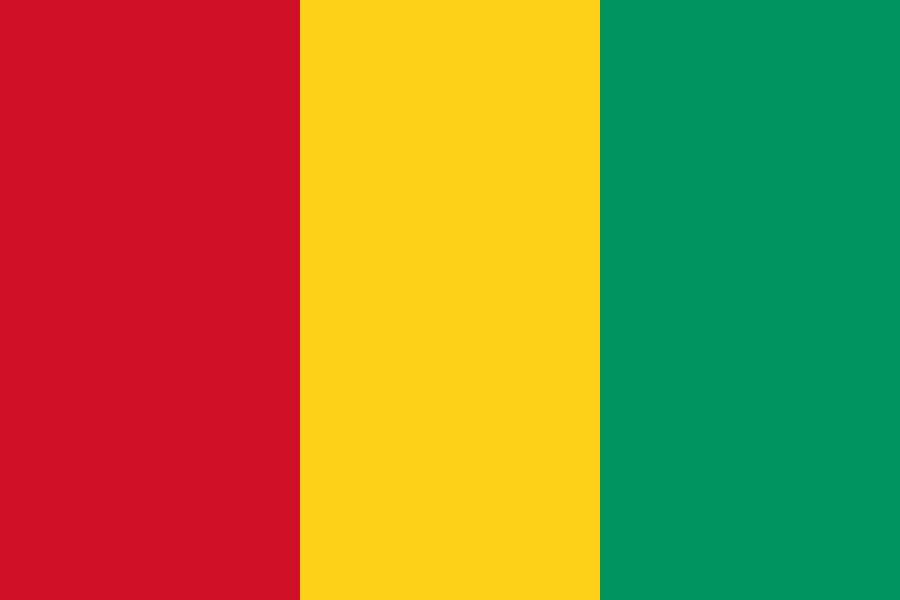
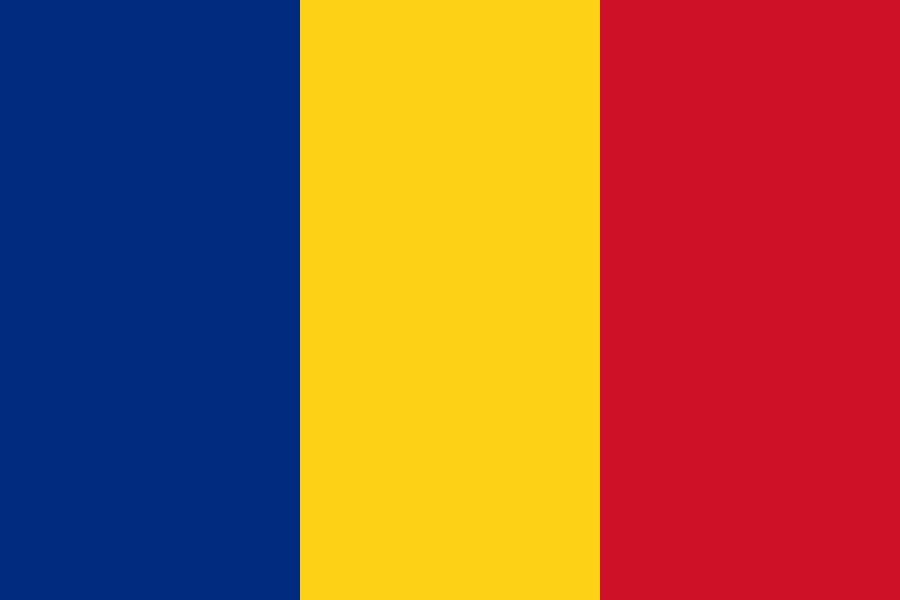
The Flag of Italy is commonly confused with or compared alongside the following catalog flags due to shared colors, stripe geometry, or central emblems:

Visually and structurally similar flags in this catalog
Ranked deterministically across layout family, orientation and shape (35%), color overlap and stripe order (25%), symbols (20%), aspect ratio (10%), and stripe/symmetry geometry (10%):


Sources and image-rights provenance
- DPCM 14 aprile 2006, Disposizioni generali in materia di cerimoniale e di precedenza tra le cariche pubbliche, Annex Art. 31 (Gazzetta Ufficiale n. 174, 28 July 2006)
- Constitution of the Italian Republic (1948), Article 12
SVG artwork provenance: Original FastFlags drawing generated by scripts/generate-seed-svg-assets.ts from this record's ratio, layout and display colours; not an official construction sheet. (public-domain-statute, checked 2026-10-15, SHA-256 4b6525c10bb6…).