
Flag of Cuba
Native & traditional name: La Estrella Solitaria (Bandera de Cuba)
| Entity | Cuba (CU) |
|---|---|
| Type | Sovereign national flag (national, civil, state) |
| Proportion | 1:2 (1:2) |
| Primary colors | blue, white, red |
| Main symbol | triangle, star |
| Arrangement | horizontal hoist triangle (blue · white · blue · white · blue) |
| Official adoption | 1902-05-20 |
| Region | Caribbean |
Plain-language visual description
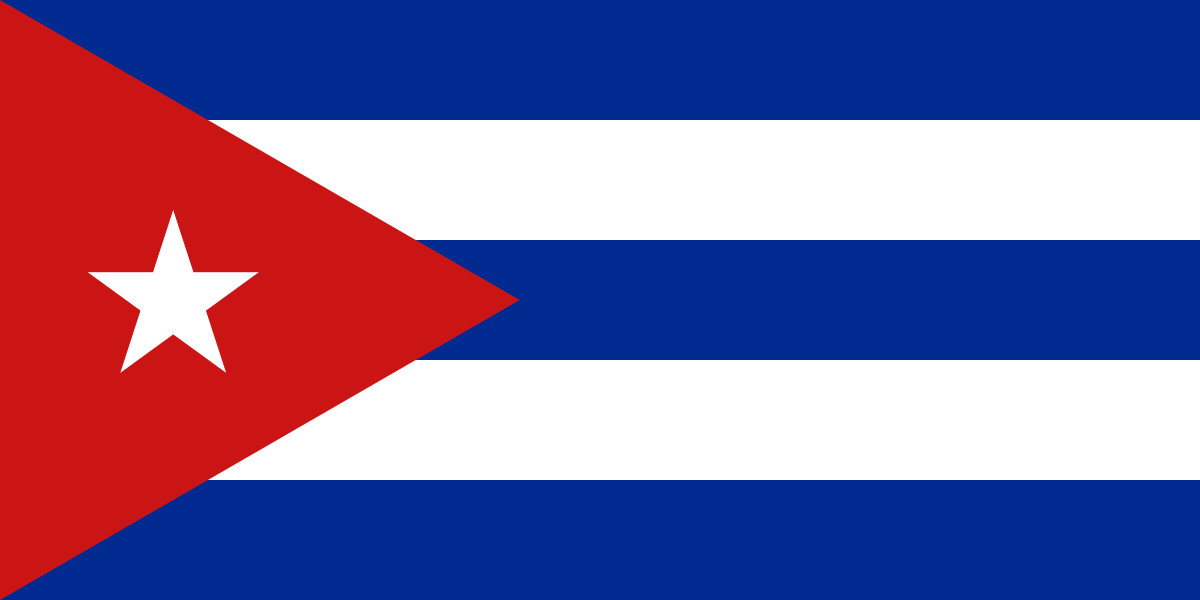
The national flag of Cuba consists of five alternating horizontal stripes of blue and white (three blue, two white) in a 1:2 aspect ratio, overlaid at the hoist by a red equilateral triangle bearing a centered white five-pointed star.
Construction and geometry
Proportion & symmetry: The Flag of Cuba uses a statutory 1:2 height-to-width ratio on a rectangular field with horizontal mirror symmetry. 1:2 ratio; five equal horizontal stripes (3 blue, 2 white) with a red equilateral triangle at the hoist containing a centered white five-pointed star.
- Aspect ratio is 1:2.
- Five equal horizontal stripes (three blue, two white).
- Equilateral red triangle at the hoist (side length = hoist height; horizontal reach = √3/2 ≈ 0.866 of hoist height), with a white five-pointed star of diameter 3/10 of hoist height centered at the triangle's centroid.
Official colors and specification system
Rather than manufacturing false RGB precision where a statute specifies dyed cloth, Pantone, Munsell, or CIE coordinates, the table below records the governing color system alongside a calibrated display hex approximation.
| Color | Official shade name | Specification system | Statutory / standard code | Display hex |
|---|---|---|---|---|
| blue | Turquí Blue (Azul Turquí) | pantone | Pantone 280 C | #002A8F |
| white | White (Blanco) | statute-named | Named in statute | #FFFFFF |
| red | Crimson Red (Rojo) | pantone | Pantone 186 C | #CB1515 |
Meaning and symbolism
Documented symbolism
Under Law No. 128 on National Symbols and the original 1849 specification by Narciso López and Miguel Teurbe Tolón, the three blue stripes represent the three military departments into which colonial Cuba was divided (Occidental, Central, and Oriental), while the two white stripes represent the purity and justice of the independence ideal.
The red equilateral triangle symbolizes the French revolutionary and Masonic triad of liberty, equality, and fraternity, as well as the blood necessary to win sovereignty; the lone white five-pointed star (La Estrella Solitaria) stands for absolute national independence.
Common interpretations
Designed in New York City in 1849, the flag was duplicated with inverted colors (red stripes and a blue triangle) in 1895 by Puerto Rican exiles in the same revolutionary circle, creating the famous Cuba–Puerto Rico sister pair.
History and design evolution
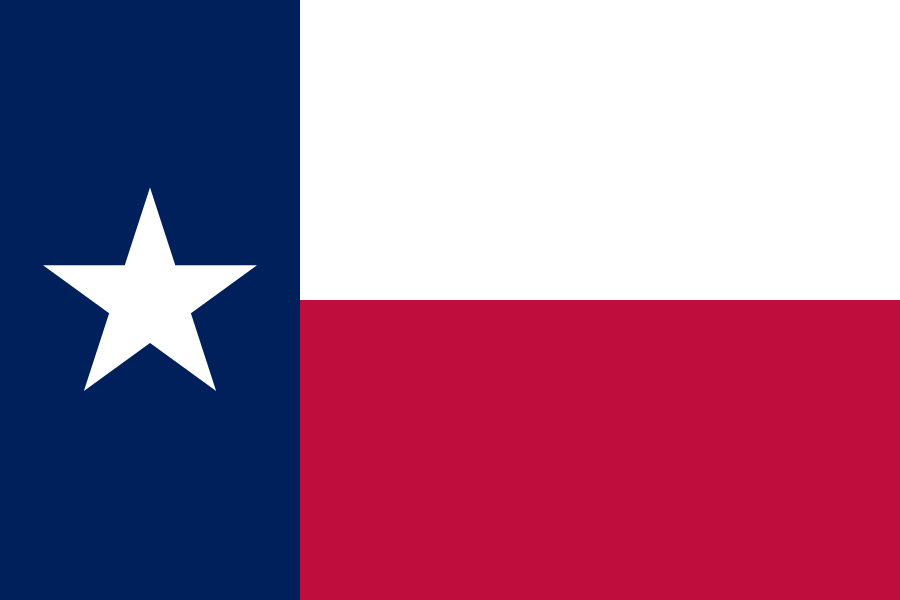
In June 1849, Venezuelan-born general Narciso López, living in exile in New York City while organizing expeditions to end Spanish rule in Cuba, sketched a flag for Cuban independence inspired by the Republic of Texas and United States flags. Exiled Cuban poet Miguel Teurbe Tolón drafted the final geometric specification, and Emilia Teurbe Tolón sewed the first cloth prototype by hand.
López and his soldiers first raised the flag on Cuban soil at the capture of Cárdenas on 19 May 1850. During the Ten Years' War against Spain, the April 1869 Constitutional Assembly at Guáimaro selected López's 1849 design over Carlos Manuel de Céspedes's La Demajagua banner as the official national flag of the Republic in Arms, while hanging Céspedes's flag permanently in the parliamentary chamber.
Following the Spanish–American War and the end of the US military occupation, La Estrella Solitaria was officially hoisted over the Morro Castle in Havana on 20 May 1902 as the national flag of the independent Republic of Cuba, and its 1:2 aspect ratio and Turquí blue shade were codified by presidential decree in 1906.
Key historical milestones
- 1849New York Design: Narciso López and Miguel Teurbe Tolón design La Estrella Solitaria in New York City.
- 1850Raised at Cárdenas: First flown in Cuba on 19 May 1850.
- 1902Republic of Cuba: Officially raised as the national flag of independent Cuba on 20 May 1902.
Frequently confused with
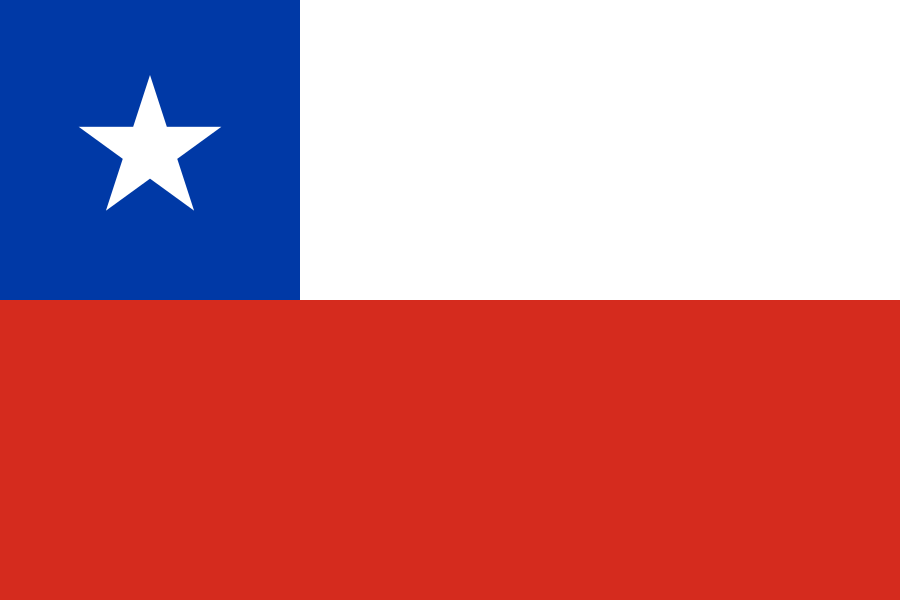
The Flag of Cuba is commonly confused with or compared alongside the following flags due to shared colors, stripe geometry, or central emblems:
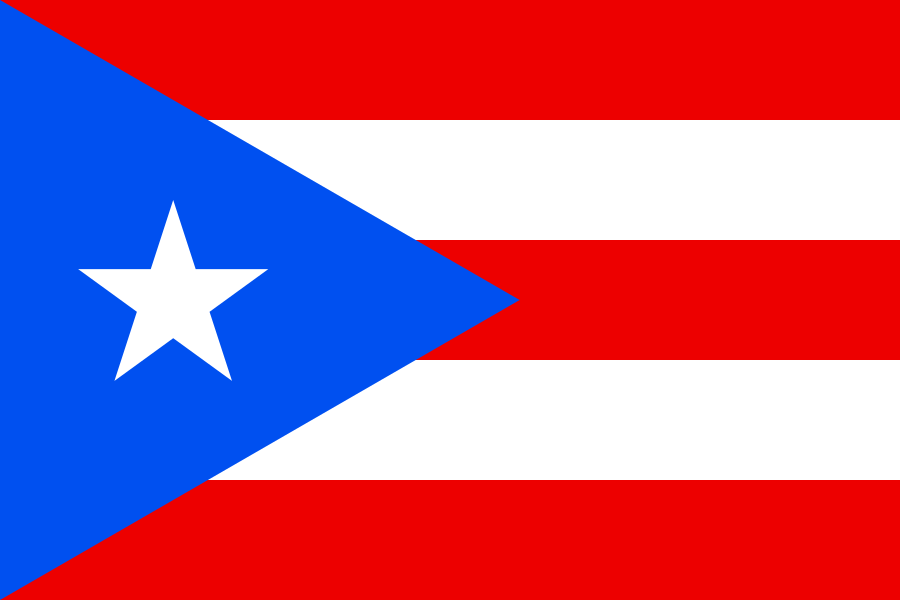
Visually and structurally similar flags
Ranked deterministically across layout family (35%), color overlap and stripe order (25%), symbols (20%), aspect ratio (10%), and stripe/symmetry geometry (10%):



Sources and image-rights provenance
SVG artwork provenance: Constructed from statutory specifications (public-domain-statute, verified 2026-10-13, SHA-256 40c2b710771a…).