
Flag of Greece
Native & traditional name: Σημαία της Ελλάδας (Galanolefki)
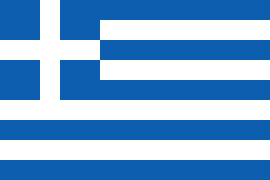
| Entity | Greece (GR) |
|---|---|
| Type | Sovereign national flag (national, civil) |
| Proportion | 2:3 (2:3) |
| Primary colors | blue, white |
| Main symbol | cross |
| Arrangement | horizontal canton (blue · white · blue · white · blue · white · blue · white · blue) |
| Official adoption | 1978-12-22 |
| Region | Southern Europe |
Plain-language visual description
The national flag of Greece consists of nine alternating horizontal stripes of blue and white, with a blue square canton in the upper hoist bearing an equilateral white cross, in a 2:3 aspect ratio.
Construction and geometry
Proportion & symmetry: The Flag of Greece uses a statutory 2:3 height-to-width ratio on a rectangular field with none mirror symmetry. Nine horizontal stripes (5 blue, 4 white); canton is a square covering 5 stripes height.
Official colors and specification system
Rather than manufacturing false RGB precision where a statute specifies dyed cloth, Pantone, Munsell, or CIE coordinates, the table below records the governing color system alongside a calibrated display hex approximation.
| Color | Official shade name | Specification system | Statutory / standard code | Display hex |
|---|---|---|---|---|
| blue | Blue (Kyanó) | pantone | Pantone 286 C | #0D5EAF |
| white | White (Lefkó) | statute-named | Named in statute | #FFFFFF |
Meaning and symbolism
Documented symbolism
Law 851/1978 establishes the design. The white cross in the blue canton represents Greek Orthodoxy, the traditional Christian faith of the nation.
The nine stripes alternate five blue and four white, reflecting the national colors adopted during the 1821 War of Independence.
Common interpretations
The nine stripes are popularly held to represent the nine syllables of the revolutionary war cry 'Eleftheria i Thanatos' ('Freedom or Death'), and the blue and white symbolize the Aegean Sea and Mediterranean sky.
History and design evolution
The national flag of Greece, known in Greek as the Galanolefki ('blue-and-white'), was established during the Greek War of Independence against the Ottoman Empire in the early 1820s. Before independence, various revolutionary commanders had used regional flags featuring eagles, phoenixes, saints, and mottos. To establish national unity and project a cohesive international identity, the First National Assembly of Epidaurus convened in January 1822 and decreed that the national colors of Greece would be cyan blue and white, banishing all factional banners.
On March 15, 1822, the Provisional Government issued Decree No. 540, establishing two official flags: a white cross on a blue field for land usage, and a flag with nine alternating blue and white stripes with a blue canton bearing a white cross for maritime naval forces and merchant shipping. According to popular Greek tradition, the nine stripes represent the nine syllables of the revolutionary war cry 'Eleftheria i Thanatos' ('Freedom or Death'), while others associate them with the nine letters of 'Eleftheria' ('Freedom') or the nine Muses of antiquity.
For over a century and a half, Greece maintained a dual-flag system: the plain cross flag was used on domestic government buildings and soil, while the striped naval ensign flew at sea and at Greek diplomatic missions abroad. Under Law 851/1978, passed by the Hellenic Parliament on December 21, 1978, the striped maritime ensign was declared the sole, universal national flag of the Hellenic Republic on land and sea, standardizing its proportions at 2:3.
Key historical milestones
- 1822Epidaurus Assembly: Adopts blue and white as the revolutionary national colors in January 1822.
- 1978Law 851/1978: Designates the nine-stripe flag with cross canton as sole national flag.
Frequently confused with
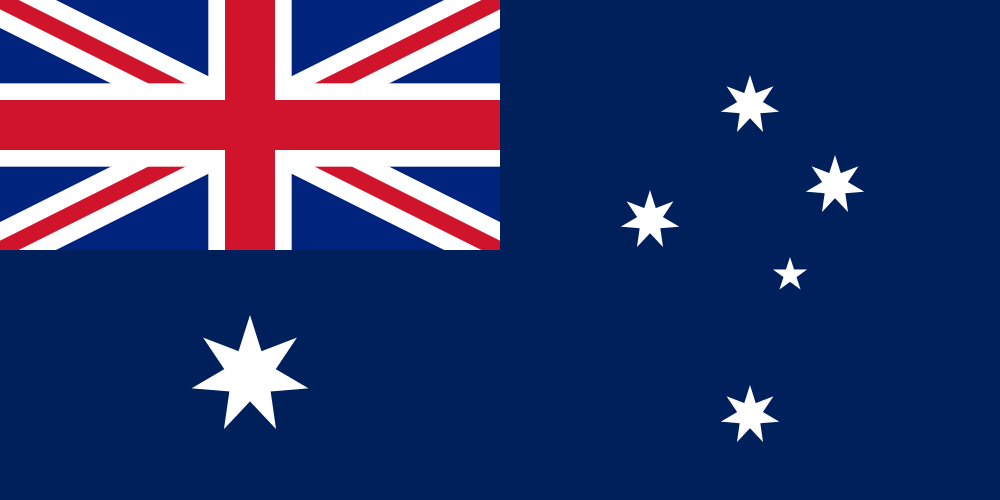
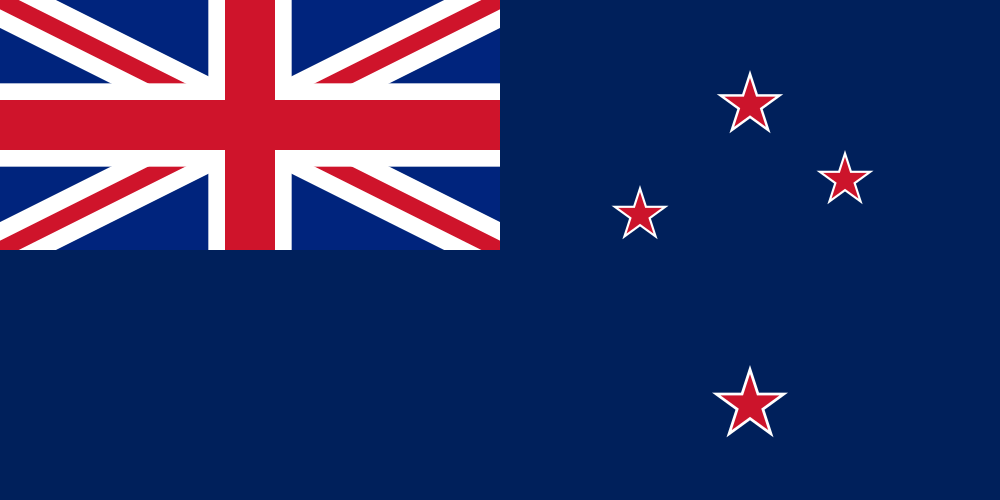
The Flag of Greece is commonly confused with or compared alongside the following flags due to shared colors, stripe geometry, or central emblems:
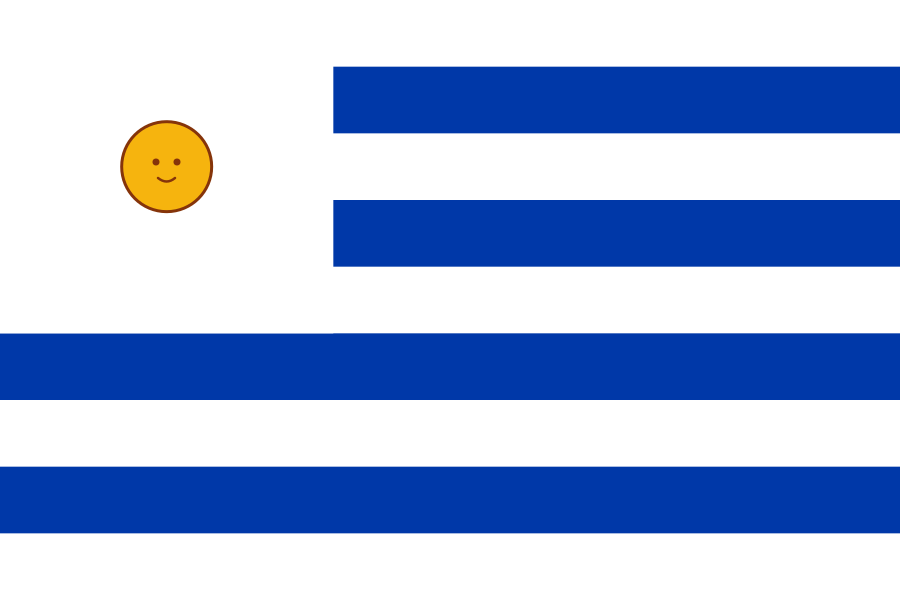
Visually and structurally similar flags
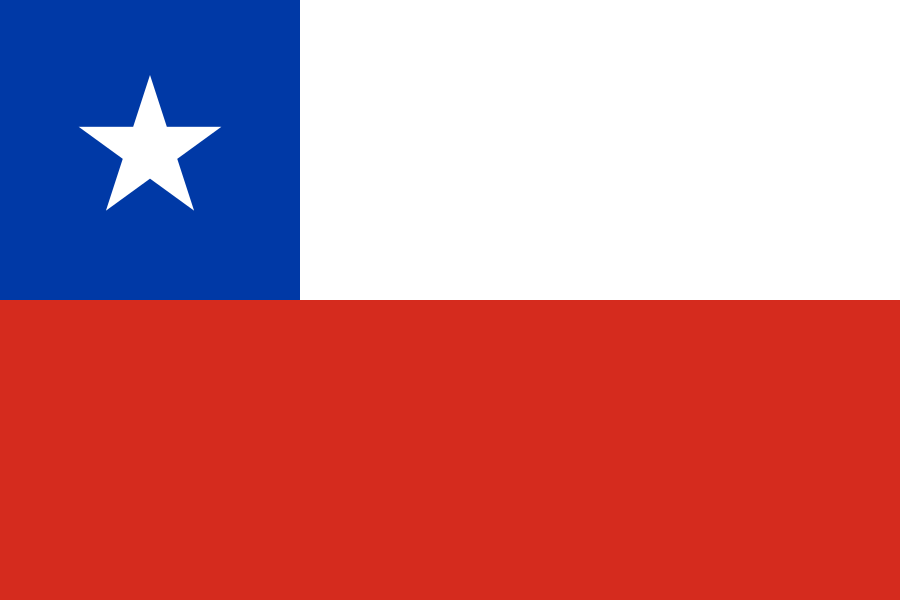
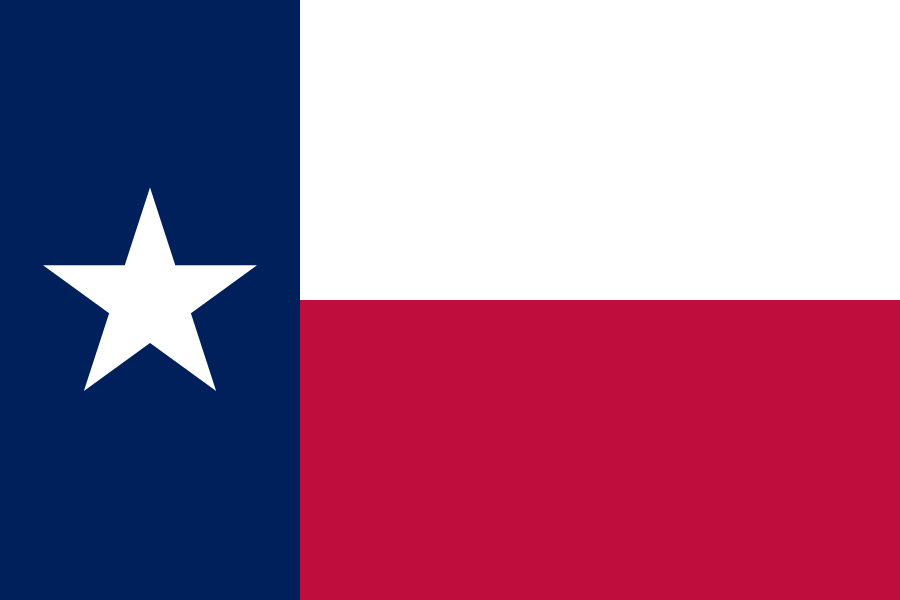
Ranked deterministically across layout family (35%), color overlap and stripe order (25%), symbols (20%), aspect ratio (10%), and stripe/symmetry geometry (10%):
Sources and image-rights provenance
- Law 851/1978 on the National Flag — Government Gazette FEK A' 233/1978
- Complete Flags of the World — p. 160
SVG artwork provenance: Constructed from statutory specifications (public-domain-statute, verified 2026-10-14, SHA-256 9cea6e09d391…).