
Flag of Uruguay
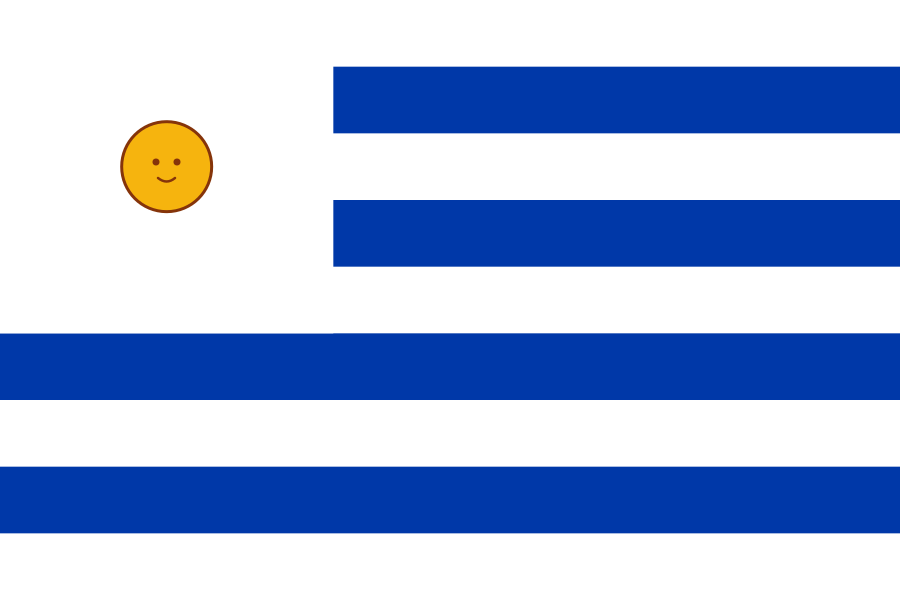
Native & traditional name: Pabellón Nacional
| Entity | Uruguay (UY) |
|---|---|
| Type | Sovereign national flag (national, civil) |
| Proportion | 2:3 (2:3) |
| Primary colors | white, blue, yellow |
| Main symbol | other |
| Arrangement | horizontal canton (white · blue · white · blue · white · blue · white · blue · white) |
| Official adoption | 1830-07-11 |
| Region | South America |
Plain-language visual description
The national flag of Uruguay features nine alternating horizontal stripes of white and blue in a 2:3 aspect ratio, with a white square canton in the upper hoist bearing the golden Sun of May.
Construction and geometry
Proportion & symmetry: The Flag of Uruguay uses a statutory 2:3 height-to-width ratio on a rectangular field with none mirror symmetry. Nine horizontal stripes (5 white, 4 blue); canton square equal to 5 stripes.
Official colors and specification system
Rather than manufacturing false RGB precision where a statute specifies dyed cloth, Pantone, Munsell, or CIE coordinates, the table below records the governing color system alongside a calibrated display hex approximation.
| Color | Official shade name | Specification system | Statutory / standard code | Display hex |
|---|---|---|---|---|
| white | Blanco (White) | statute-named | Named in statute | #FFFFFF |
| blue | Azul (Blue) | pantone | Pantone 286 C | #0038A8 |
| yellow | Oro (Gold) | pantone | Pantone 123 C | #F6B40E |
Meaning and symbolism
Documented symbolism
The Law of 11 July 1830 establishes the nine horizontal stripes to represent the original nine departments of Uruguay.
The golden Sun of May honors the May Revolution of 1810 that initiated the struggle for independence across the Río de la Plata.
Common interpretations
The blue and white colors symbolize freedom, republican dignity, and the maritime heritage of the Atlantic and Río de la Plata estuaries.
History and design evolution
The national flag of Uruguay, known as the Pabellón Nacional, traces its vexillological lineage to the struggles for independence in the Río de la Plata region and the political philosophy of national hero José Gervasio Artigas. During the 1810s, Artigas led the Orientales (the people of the Eastern Bank of the Uruguay River) under a flag of blue and white stripes crossed by a red diagonal bend, symbolizing federalist freedom against centralist control.
In 1825, after a period of Portuguese and Brazilian annexation as the Cisplatina province, a group of thirty-three revolutionary patriots known as the Treinta y Tres Orientales landed on the coast carrying a tricolor of blue, white, and red inscribed with 'Libertad o Muerte' ('Liberty or Death'). Following the British-mediated Treaty of Montevideo in 1828, which recognized the independence of the Oriental Republic of Uruguay, the General Constituent and Legislative Assembly convened to design a national banner.
On December 18, 1828, the Assembly established a national flag composed of white with nine azure horizontal stripes, representing the nine original departments of the newly formed republic, with a white canton bearing a golden sun. However, flying nineteen narrow stripes proved cumbersome and difficult to distinguish at distance. On July 11, 1830, lawmaker Joaquín Suárez proposed a simplification that was enacted into law: the number of stripes was reduced from nineteen to nine (four blue stripes alternating on a white field), with the radiant Sun of May (Sol de Mayo) featuring sixteen alternating straight and wavy rays placed in the upper hoist canton, creating the enduring 2:3 national standard.
Key historical milestones
- 1828First Flag Law: Suárez's initial 19-stripe flag is adopted on 16 December 1828.
- 1830Nine-Stripe Revision: Law of 11 July 1830 standardizes the nine-stripe flag with the Sun of May.
Frequently confused with
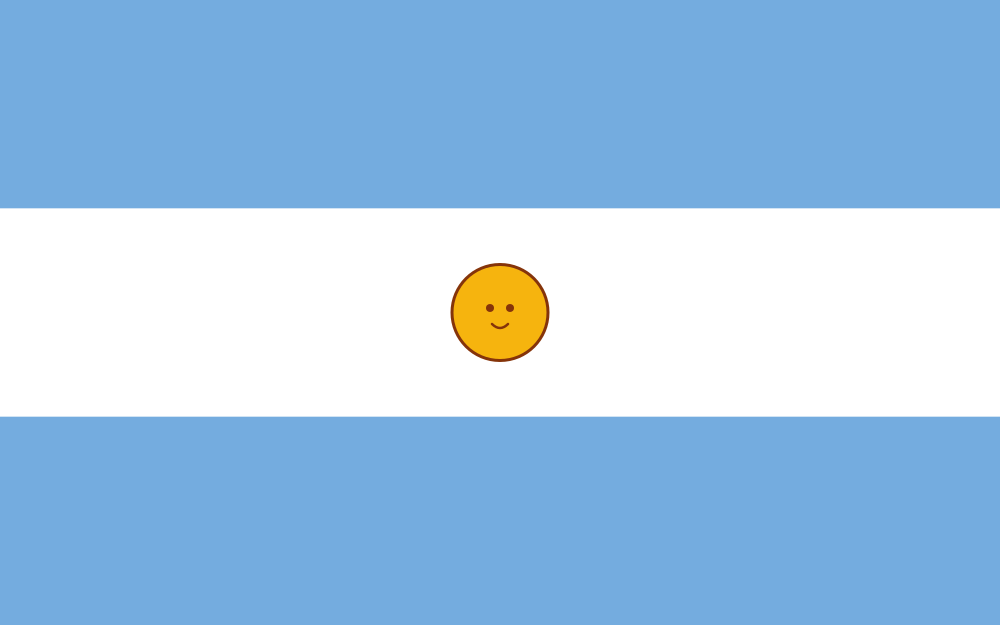
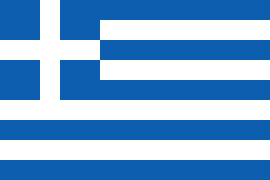
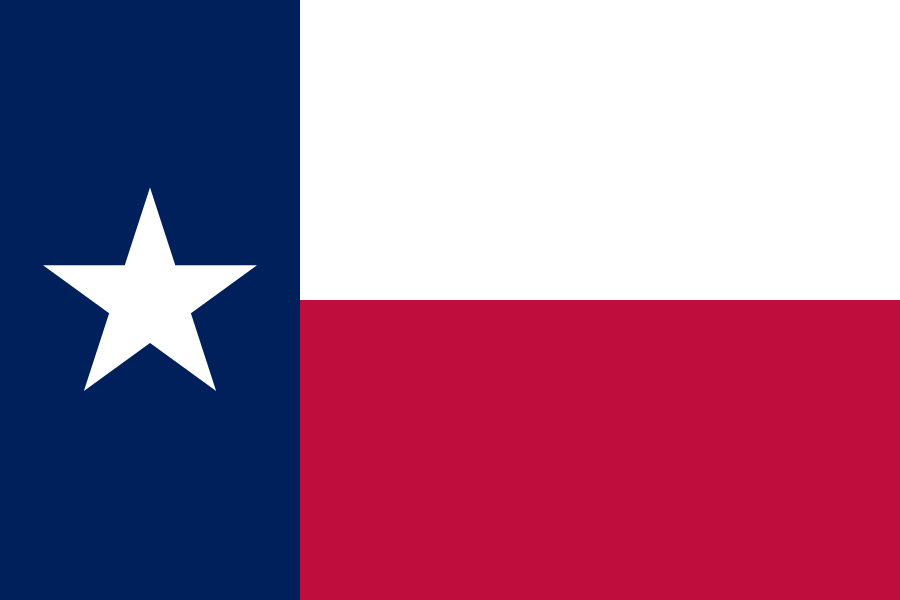
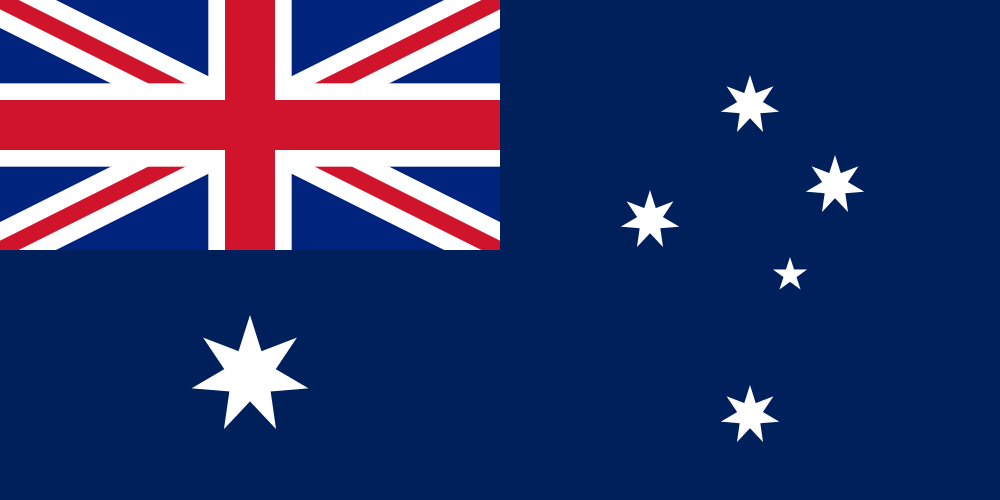
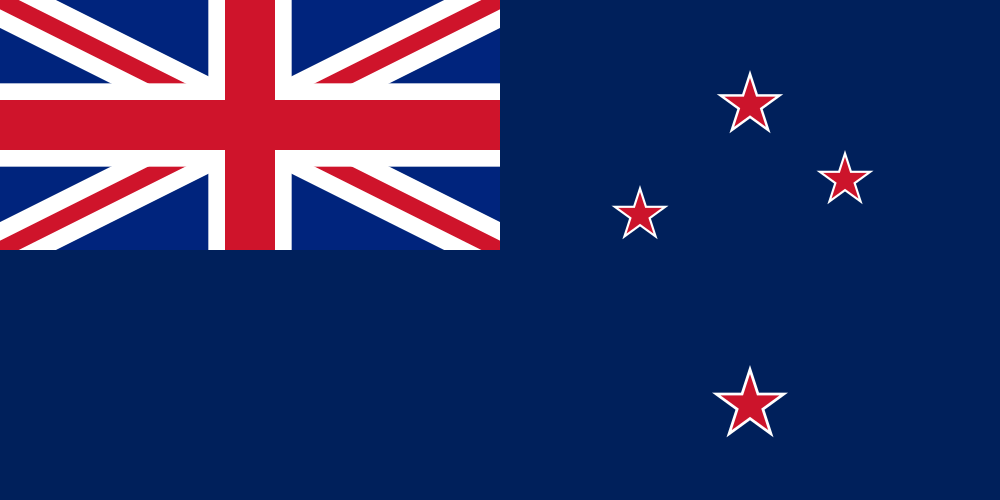
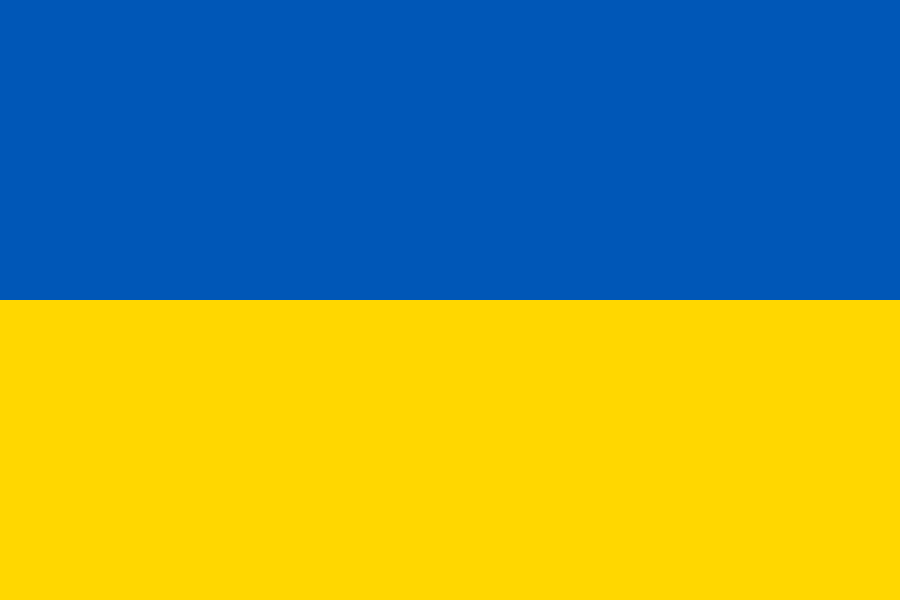
The Flag of Uruguay is commonly confused with or compared alongside the following flags due to shared colors, stripe geometry, or central emblems:
Visually and structurally similar flags
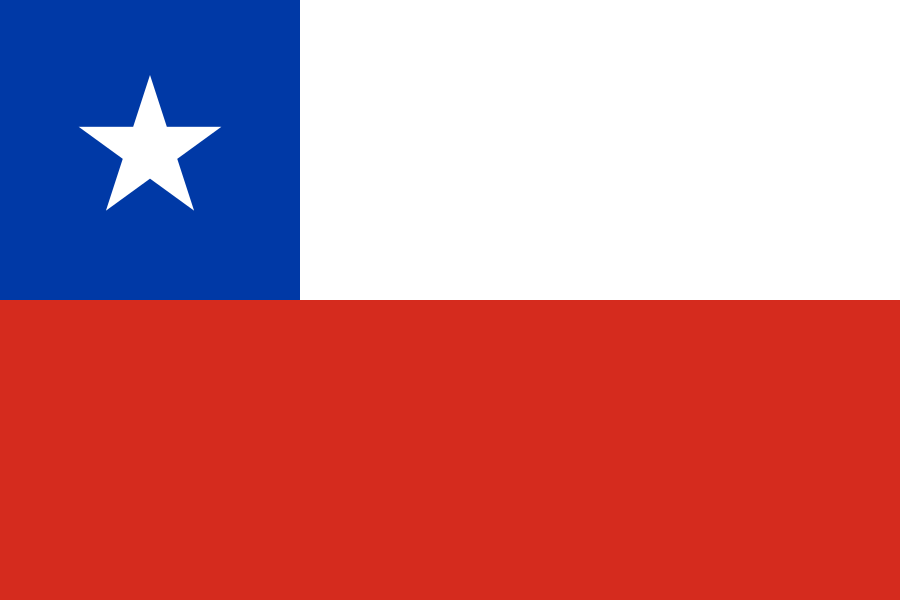
Ranked deterministically across layout family (35%), color overlap and stripe order (25%), symbols (20%), aspect ratio (10%), and stripe/symmetry geometry (10%):
Sources and image-rights provenance
- Ley de 11 de julio de 1830 — Registro Cívico del Uruguay
- Flags Through the Ages and Across the World — McGraw-Hill, pp. 288–289
SVG artwork provenance: Constructed from statutory specifications (public-domain-statute, verified 2026-10-14, SHA-256 2542fba462e6…).