
Flag of New Zealand
Native & traditional name: Te haki o Aotearoa
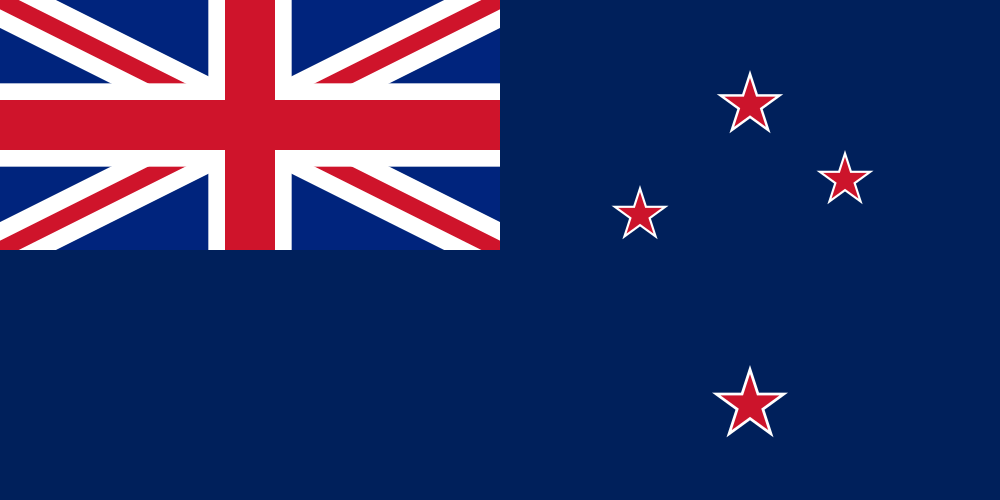
| Entity | New Zealand (NZ) |
|---|---|
| Type | Sovereign national flag (national, civil) |
| Proportion | 1:2 (1:2) |
| Primary colors | blue, red, white |
| Main symbol | star (×4) |
| Arrangement | horizontal canton |
| Official adoption | 1902-06-12 |
| Region | Australia and New Zealand |
Plain-language visual description
The national flag of New Zealand is a defaced British Blue Ensign in a 1:2 ratio, featuring the Union Jack in the canton and the Southern Cross constellation of four red five-pointed stars outlined in white in the fly.
Construction and geometry
Proportion & symmetry: The Flag of New Zealand uses a statutory 1:2 height-to-width ratio on a rectangular field with none mirror symmetry. Defaced British Blue Ensign (1:2 ratio) with four red stars fimbriated white.
Official colors and specification system
Rather than manufacturing false RGB precision where a statute specifies dyed cloth, Pantone, Munsell, or CIE coordinates, the table below records the governing color system alongside a calibrated display hex approximation.
| Color | Official shade name | Specification system | Statutory / standard code | Display hex |
|---|---|---|---|---|
| blue | Royal Navy Blue | pantone | Pantone 280 C | #00205B |
| red | Union Flag Red | pantone | Pantone 186 C | #CC142B |
| white | White | statute-named | Named in statute | #FFFFFF |
Meaning and symbolism
Documented symbolism
The New Zealand Ensign Act 1901 defines the flag: the Union Jack in the canton acknowledges British ties, while the Southern Cross (Crux) represents New Zealand's South Pacific geography.
The stars are red with white borders (fimbriations), complying with heraldic rules and ensuring high contrast.
Common interpretations
Unlike Australia, New Zealand omits the small fifth star (Epsilon Crucis), creating a simplified four-star asterism that matches navigation traditions.
History and design evolution
The national flag of New Zealand, known in Māori as Te Hakituatahi o Aotearoa, developed from naval maritime regulations enacted during the 19th-century British colonial period. Prior to the adoption of the current flag, New Zealand flew the flag of the United Tribes of New Zealand (adopted in 1834) and subsequently the British Union Jack following the signing of the Treaty of Waitangi in 1840.
Under the British Colonial Naval Defence Act 1865, all colonial government vessels were required to fly a Blue Ensign defaced with the colony's specific seal or badge. Initially, New Zealand flew the letters 'NZ' in red outline in the fly. In 1869, First Lieutenant Albert Hastings Markham of the Royal Navy vessel HMS Rosario submitted a refined proposal to Governor Sir George Bowen: replacing the lettering with the four primary stars of the Southern Cross constellation (Crux), rendered in red with white fimbriations to stand out vividly against the dark blue field.
Governor Bowen approved Markham's design for maritime usage in October 1869. Over the following three decades, the Southern Cross Blue Ensign gained widespread affection on land as a symbol of New Zealand identity, especially during the Second Boer War. In 1902, Premier Richard Seddon introduced the New Zealand Ensign Act, which was passed by the colonial parliament and signed into law by King Edward VII on March 24, 1902, establishing the design as the statutory national flag. In 2015–2016, New Zealand held a historic two-stage national referendum to consider changing the flag to an alternative silver fern design, but citizens voted decisively (56.6% to 43.2%) to retain the historic 1902 flag.
Key historical milestones
- 1869Markham Design: Designed for colonial government vessels in October 1869.
- 1902Ensign Act Assented: King Edward VII assents to the New Zealand Ensign Act on 12 June 1902.
- 2016Flag Referendum: New Zealanders vote to retain the 1902 flag.
Frequently confused with
The Flag of New Zealand is commonly confused with or compared alongside the following flags due to shared colors, stripe geometry, or central emblems:
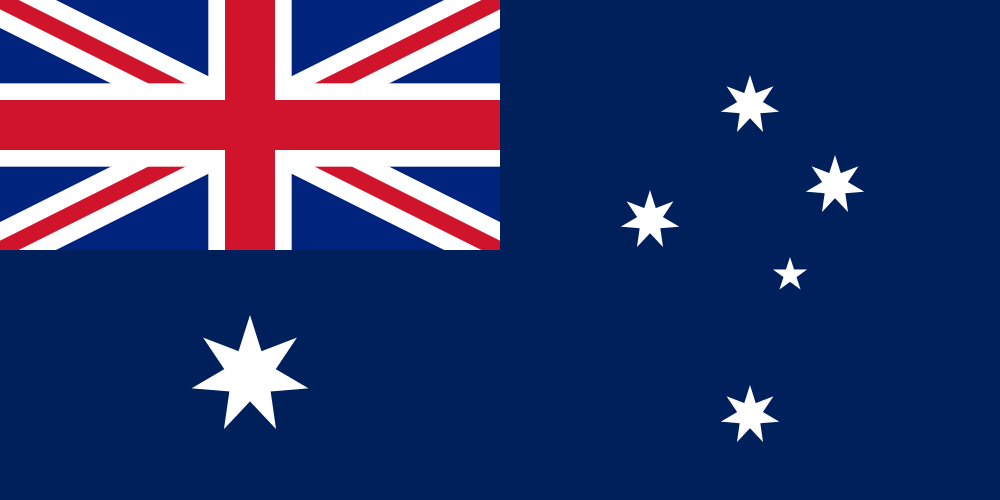
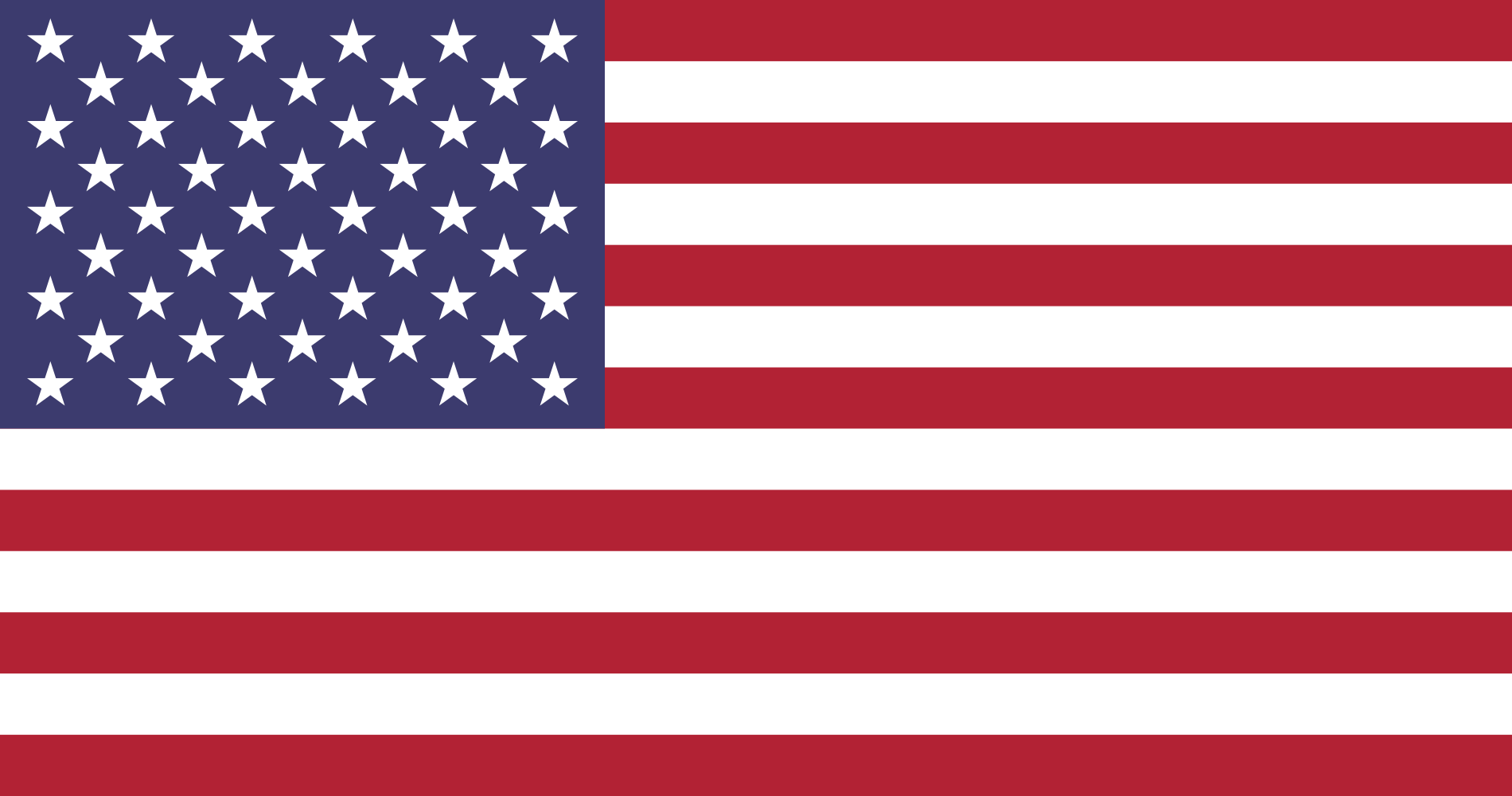
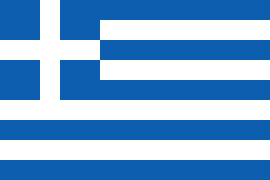
Visually and structurally similar flags
Ranked deterministically across layout family (35%), color overlap and stripe order (25%), symbols (20%), aspect ratio (10%), and stripe/symmetry geometry (10%):



Sources and image-rights provenance
- New Zealand Ensign Act 1901 — New Zealand Acts As Enacted
- Flags, Emblems, and Names Protection Act 1981
SVG artwork provenance: Constructed from statutory specifications (public-domain-statute, verified 2026-10-14, SHA-256 9f79810fa763…).