
Flag of Australia
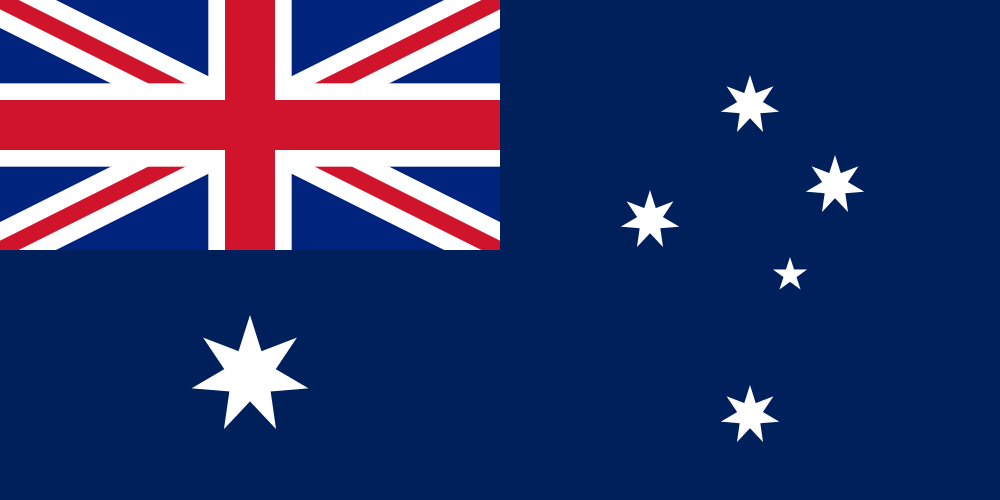
Native & traditional name: Australian National Flag
| Entity | Australia (AU) |
|---|---|
| Type | Sovereign national flag (national, civil) |
| Proportion | 1:2 (1:2) |
| Primary colors | blue, white, red |
| Main symbol | star, star (×5) |
| Arrangement | horizontal canton |
| Official adoption | 1954-02-14 |
| Region | Australia and New Zealand |
Plain-language visual description
The national flag of Australia is a defaced British Blue Ensign in a 1:2 ratio, featuring the Union Jack in the canton, a large seven-pointed Commonwealth Star in the lower hoist, and the five-star Southern Cross constellation in the fly.
Construction and geometry
Proportion & symmetry: The Flag of Australia uses a statutory 1:2 height-to-width ratio on a rectangular field with none mirror symmetry. Defaced British Blue Ensign (1:2 ratio) with Commonwealth Star and Southern Cross.
Official colors and specification system
Rather than manufacturing false RGB precision where a statute specifies dyed cloth, Pantone, Munsell, or CIE coordinates, the table below records the governing color system alongside a calibrated display hex approximation.
| Color | Official shade name | Specification system | Statutory / standard code | Display hex |
|---|---|---|---|---|
| blue | Federal Blue | pantone | Pantone 280 C | #00205B |
| white | White | statute-named | Named in statute | #FFFFFF |
| red | Federal Red | pantone | Pantone 185 C | #CF142B |
Meaning and symbolism
Documented symbolism
The Flags Act 1953 codifies the components: the Union Jack honors historical British heritage; the seven-pointed Commonwealth Star represents the six states and Australia's territories; and the Southern Cross reflects its Southern Hemisphere location.
The Southern Cross comprises four 7-pointed stars and one smaller 5-pointed star (Epsilon Crucis).
Common interpretations
The dark blue field is popularly associated with the oceans surrounding the island continent and the clear skies above it.
History and design evolution
The national flag of Australia was born from the federation of the six British colonies into the Commonwealth of Australia on January 1, 1901. Following federation, the Commonwealth government announced a worldwide public competition to design a national flag, offering a substantial prize of £200 (later augmented to £250 with commercial backing). The competition attracted 32,823 entries, submitted by designers ranging from children to seasoned mariners.
On September 3, 1901, Prime Minister Edmund Barton announced that five virtually identical entries had shared first prize: Annie Dorrington, Ivor Evans, Lesley Hawkins, Egbert Nuttall, and William Stevens. The winning design was a British Blue Ensign charged with the Union Jack in the canton, a large six-pointed Commonwealth Star in the lower hoist, and the five stars of the Southern Cross constellation in the fly. The flag was first officially flown on September 3, 1901, over the Royal Exhibition Building in Melbourne, a date now observed nationwide as Australian National Flag Day.
In 1903, King Edward VII approved minor modifications to the stars, streamlining them to simplify manufacturing. In 1908, the Australian government altered the Commonwealth Star from six points to seven: six points representing the six federating states, and the seventh point representing Papua and all future Australian territories. Although the Red Ensign was widely flown by private citizens on land during the early 20th century, Prime Minister Robert Menzies formally codified the Blue Ensign as the preeminent national flag for all Australians through the passage of the Flags Act 1953, signed into law by Queen Elizabeth II in 1954.
Key historical milestones
- 1901Design Competition: First flown in Melbourne on 3 September 1901.
- 1908Seventh Point Added: Commonwealth Star point count increased from 6 to 7.
- 1953Flags Act 1953: Formally codified as the national flag for all Australians.
Frequently confused with
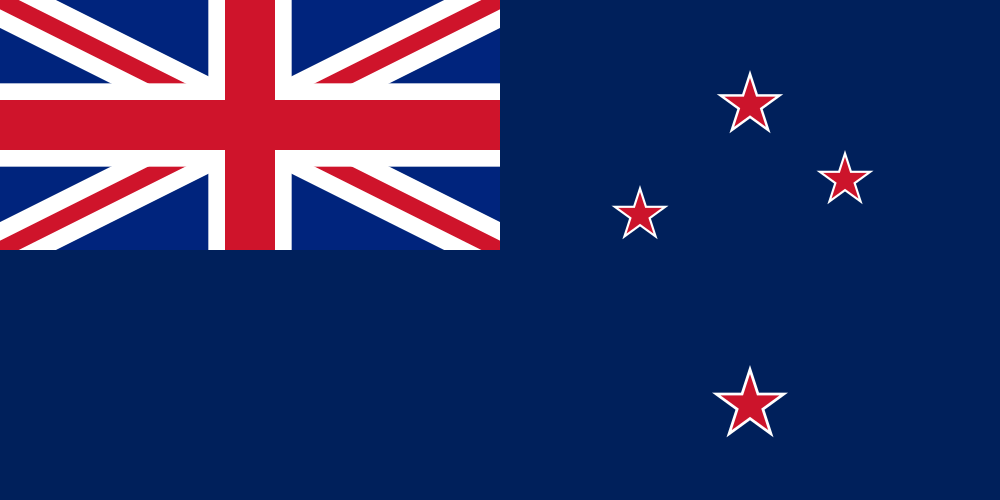
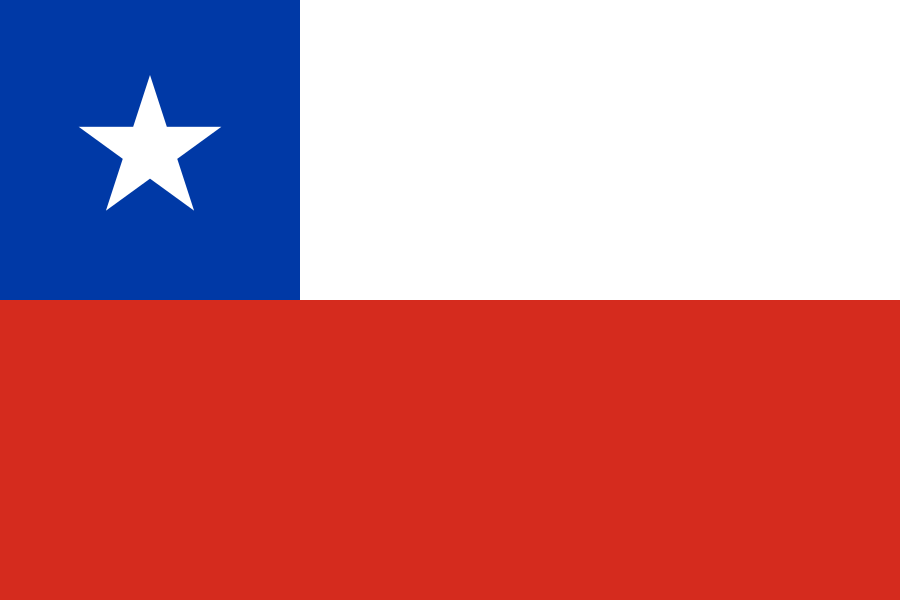
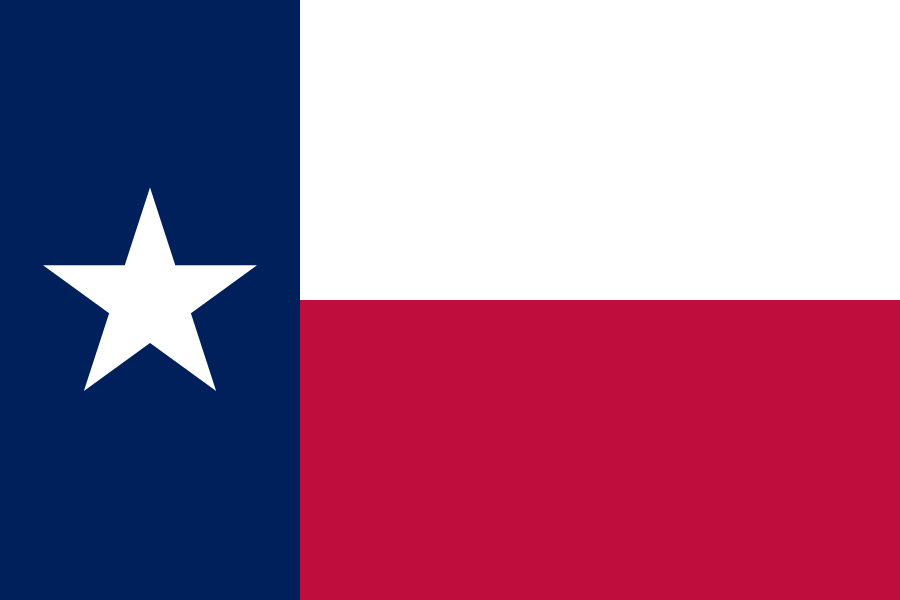
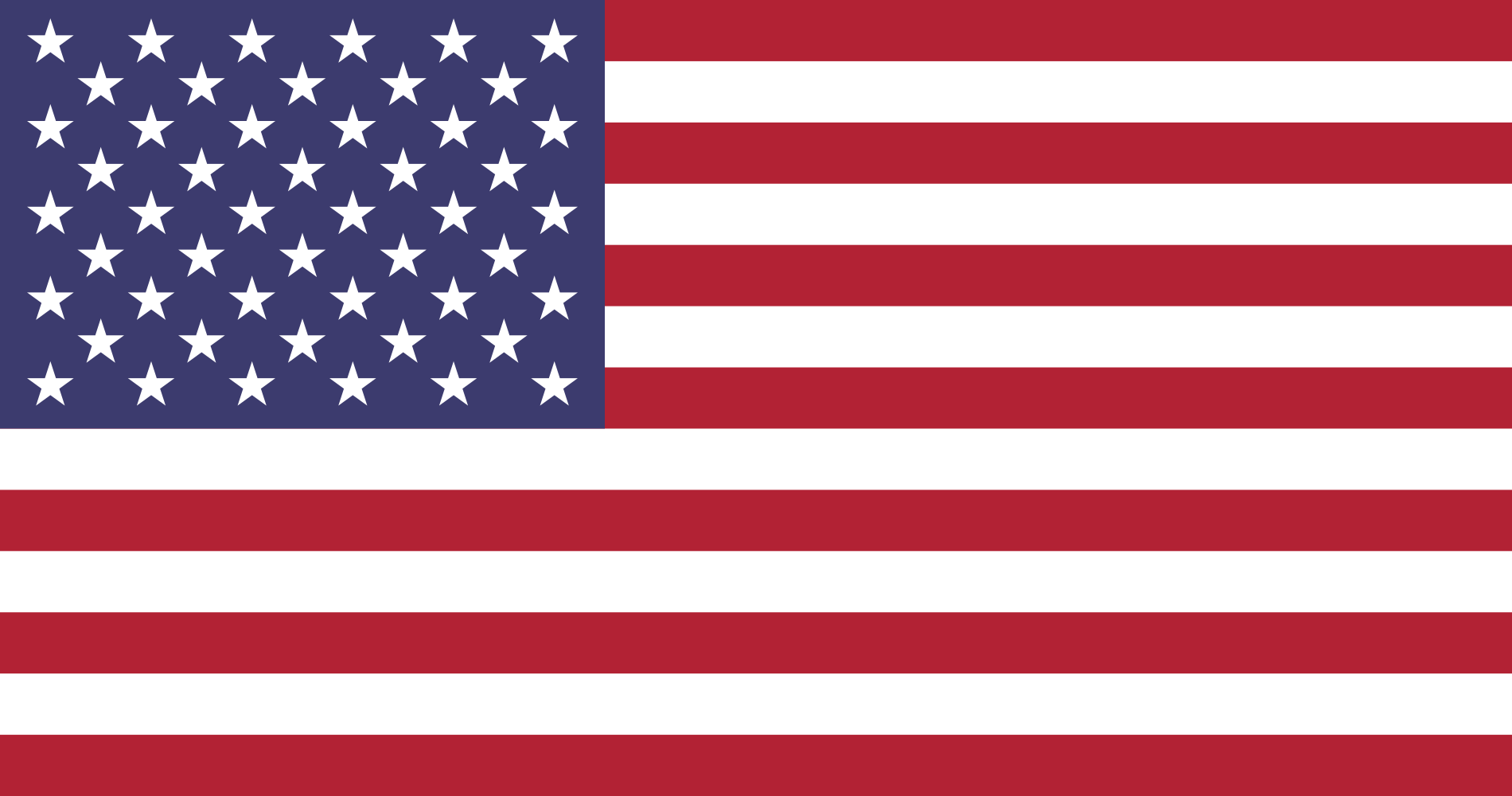
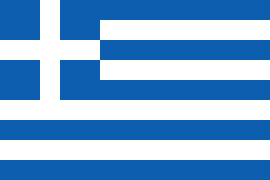
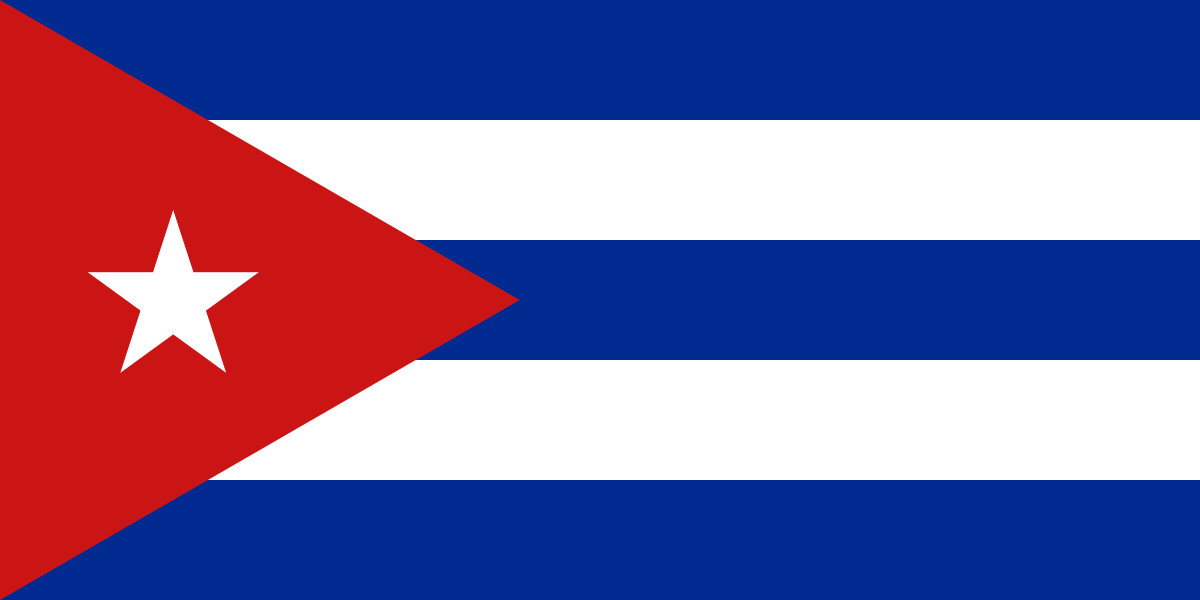
The Flag of Australia is commonly confused with or compared alongside the following flags due to shared colors, stripe geometry, or central emblems:
Visually and structurally similar flags
Ranked deterministically across layout family (35%), color overlap and stripe order (25%), symbols (20%), aspect ratio (10%), and stripe/symmetry geometry (10%):
Sources and image-rights provenance
SVG artwork provenance: Constructed from statutory specifications (public-domain-statute, verified 2026-10-14, SHA-256 9b37d011b054…).