
Prinsenvlag (Prince's Flag of the Dutch Republic)
Native & traditional name: Prinsenvlag (Oranje, Blanje, Bleu)
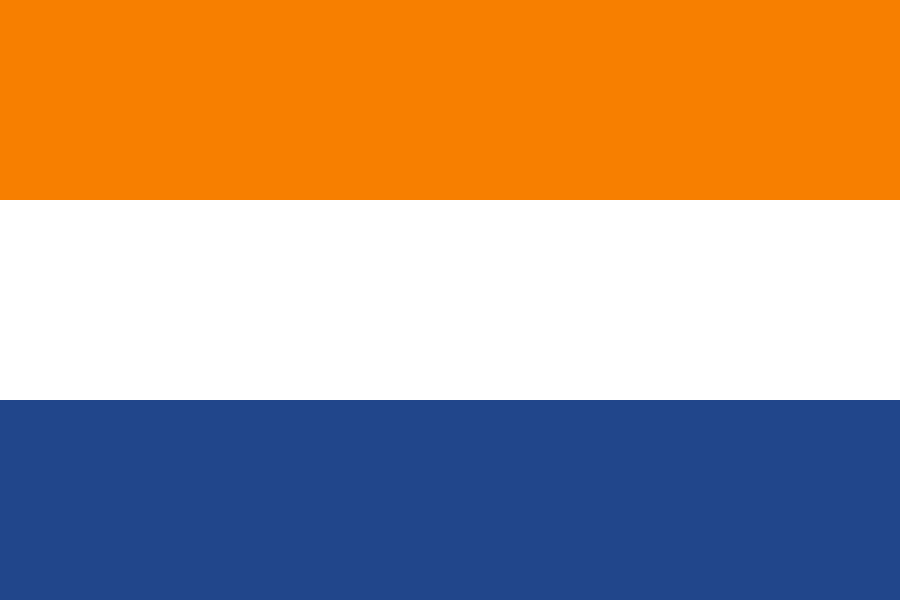
| Entity | Dutch Republic (c. 1572–1652) (NL) |
|---|---|
| Parent state | Netherlands |
| Type | Historical national / naval flag (historical, naval-ensign) |
| Proportion | 2:3 (2:3) |
| Primary colors | orange, white, blue |
| Main symbol | None (geometric bands) |
| Arrangement | horizontal tricolor (orange · white · blue) |
| Official adoption | 1572-04-01 |
| Superseded / abolished | 1937-02-19 |
| Region | Western Europe |
Plain-language visual description
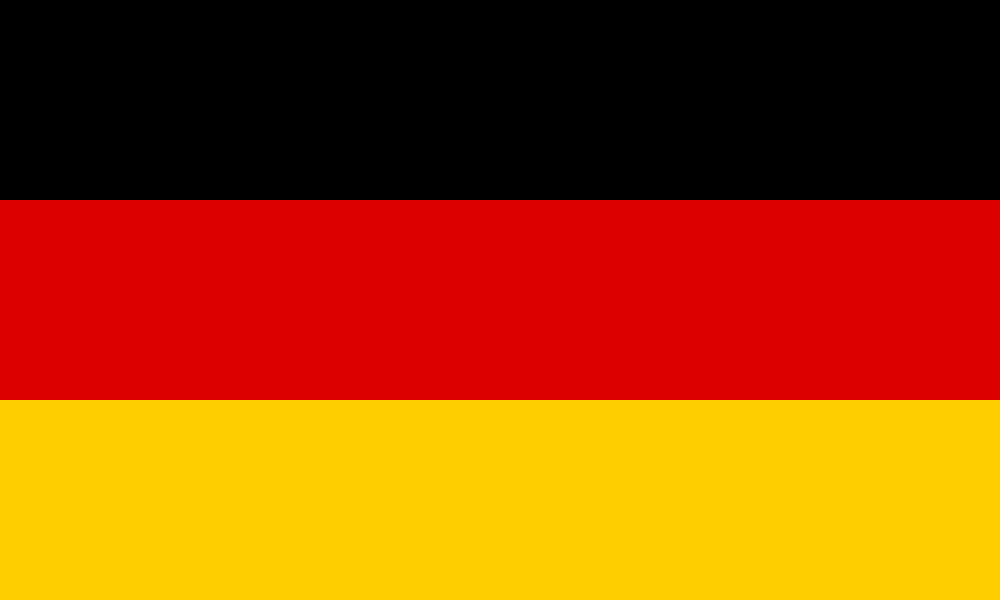
The historical Prinsenvlag ('Prince's Flag') of the Dutch Republic consists of three equal horizontal stripes of orange at the top, white in the middle, and Nassau blue at the bottom in a 2:3 aspect ratio.
Construction and geometry
Proportion & symmetry: The Prinsenvlag (Prince's Flag of the Dutch Republic) uses a statutory 2:3 height-to-width ratio on a rectangular field with vertical mirror symmetry. Three equal horizontal stripes of orange, white, and blue—the earliest documented national tricolor in world vexillology.
- Aspect ratio is 2:3.
- Three equal horizontal stripes of orange (top), white (middle), and Nassau blue (bottom).
Official colors and specification system
Rather than manufacturing false RGB precision where a statute specifies dyed cloth, Pantone, Munsell, or CIE coordinates, the table below records the governing color system alongside a calibrated display hex approximation.
| Color | Official shade name | Specification system | Statutory / standard code | Display hex |
|---|---|---|---|---|
| orange | Orange (Oranje) | statute-named | Named in statute | #F77F00 |
| white | White (Blanje) | statute-named | Named in statute | #FFFFFF |
| blue | Nassau Blue (Bleu) | statute-named | Named in statute | #21468B |
Meaning and symbolism
Documented symbolism
The three colors combine the heraldic livery of William I, Prince of Orange-Nassau (William the Silent), leader of the Dutch Revolt against Philip II of Spain: orange from the sovereign Principality of Orange in southern France, and white and blue from the horn and shield of the House of Nassau.
Known in 16th-century Dutch verse as 'Oranje, Blanje, Bleu,' the Prinsenvlag is recognized by vexillologists as the earliest three-color striped national banner and the progenitor of the modern tricolor layout.
Common interpretations
As the orange dye faded toward red in salt air and as republican ('States') factions sought an emblem less tied to the House of Orange during the First Stadtholderless Period (1650–1672), the top stripe transitioned to bright vermilion red (the Statenvlag).
History and design evolution
When the Sea Beggars (Watergeuzen) captured the port of Brielle on 1 April 1572 at the start of the Eighty Years' War, they carried banners in the orange, white, and blue livery of William of Orange. By 1579, when the Union of Utrecht founded the Dutch Republic, the horizontal orange-white-blue Prinsenvlag was standardized across the Dutch navy and the Dutch East and West India Companies.
Under the Prinsenvlag, Dutch vessels established trading posts in New Amsterdam (whose modern New York City flag still uses the orange-white-blue colors) and the Cape of Good Hope. Beginning in the 1630s, red-white-blue flags increasingly replaced orange-white-blue at sea, and in 1652 the States General banned the name Prinsenvlag in favor of the red-white-blue Statenvlag.
Although both orange-top and red-top flags coexisted in royalist circles during the 18th and 19th centuries, Queen Wilhelmina settled the matter permanently by signing Royal Decree No. 93 on 19 February 1937, declaring bright vermilion red, white, and cobalt blue the sole colors of the Kingdom of the Netherlands (with an orange pennant flown above the flag on royal birthdays).
Key historical milestones
- 1572Capture of Brielle: Sea Beggars fly the orange-white-blue livery colors of William the Silent on 1 April 1572.
- 1652Transition to Statenvlag: The red-white-blue Statenvlag supersedes the orange-white-blue Prinsenvlag in the Dutch Navy.
- 1937Royal Decree No. 93: Queen Wilhelmina formally codifies red, white, and blue as the national colors on 19 February 1937.
Frequently confused with
The Prinsenvlag (Prince's Flag of the Dutch Republic) is commonly confused with or compared alongside the following flags due to shared colors, stripe geometry, or central emblems:

Visually and structurally similar flags
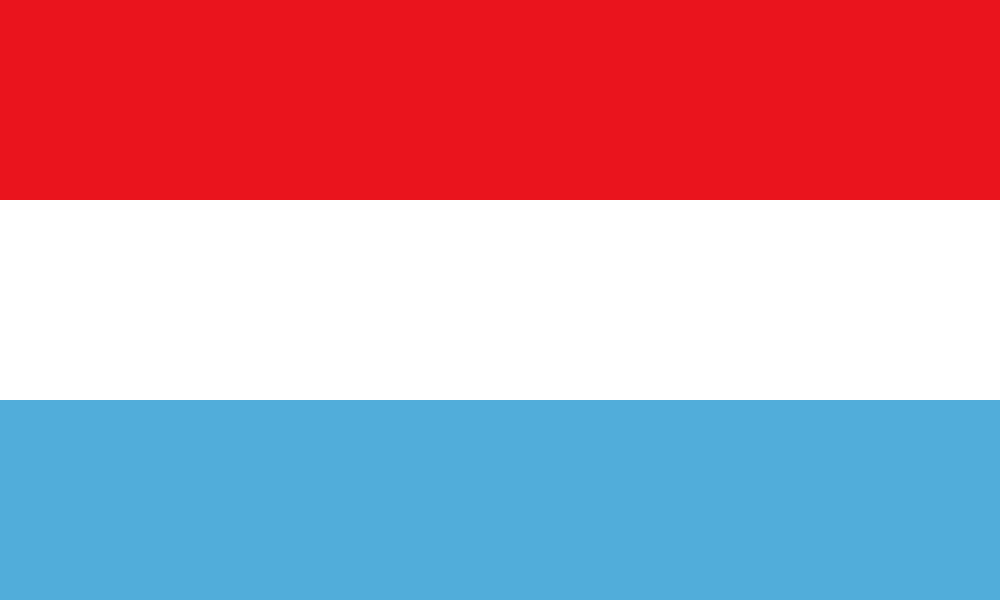
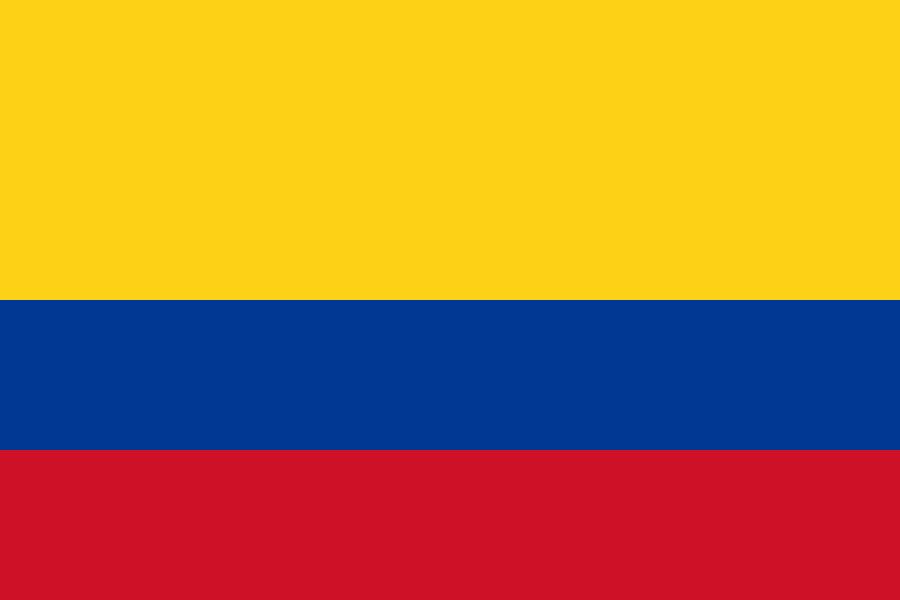
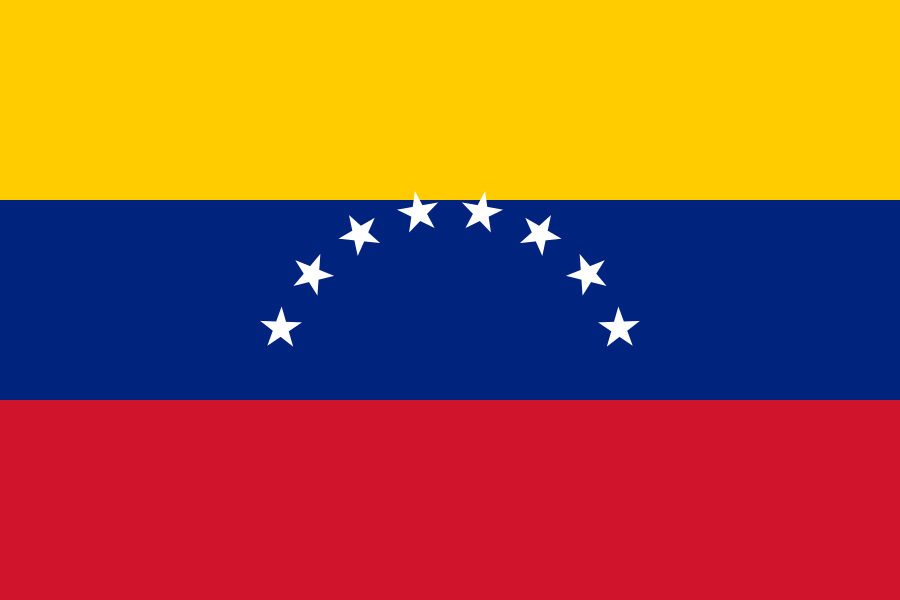
Ranked deterministically across layout family (35%), color overlap and stripe order (25%), symbols (20%), aspect ratio (10%), and stripe/symmetry geometry (10%):

Sources and image-rights provenance
- History of the Dutch Flag and Royal Decree of 19 February 1937
- Flags Through the Ages and Across the World — McGraw-Hill, pp. 162–165
SVG artwork provenance: Constructed from statutory specifications (public-domain-statute, verified 2026-10-13, SHA-256 270aede1c89f…).