
Flag of Mali
Native & traditional name: Drapeau du Mali
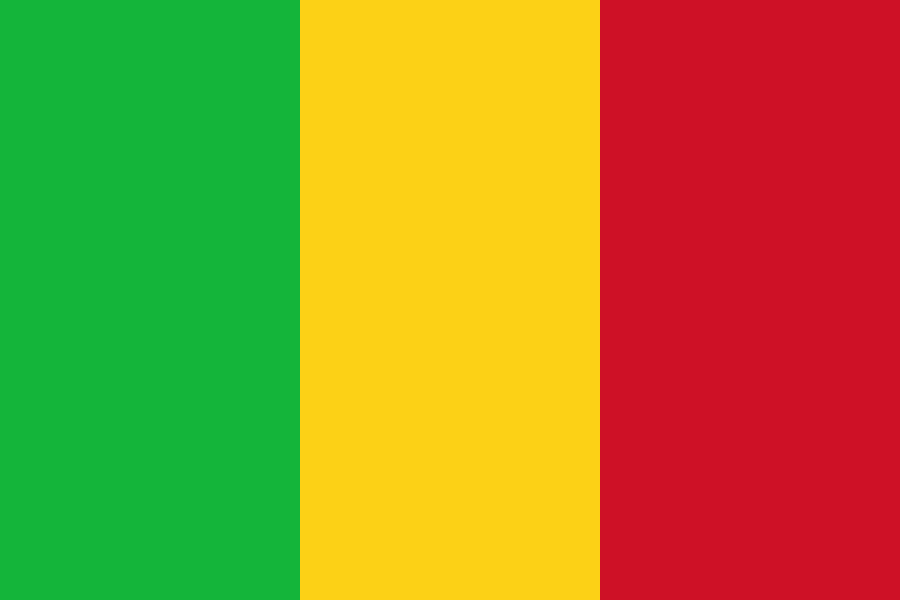
| Entity | Mali (ML) |
|---|---|
| Type | Sovereign national flag (national, civil, state) |
| Proportion | 2:3 (2:3) |
| Primary colors | green, yellow, red |
| Main symbol | None (geometric bands) |
| Arrangement | vertical tricolor (green · yellow · red) |
| Official adoption | 1961-03-01 |
| Region | Western Africa |
Plain-language visual description
The national flag of Mali is a vertical tricolor of three equal bands of green at the hoist, gold (yellow) in the center, and red at the fly in a 2:3 aspect ratio.
Construction and geometry
Proportion & symmetry: The Flag of Mali uses a statutory 2:3 height-to-width ratio on a rectangular field with horizontal mirror symmetry. Three equal vertical stripes of green (hoist), gold (center), and red (fly).
- Aspect ratio is 2:3.
- Three equal vertical stripes of green (hoist), gold (center), and red (fly).
Official colors and specification system
Rather than manufacturing false RGB precision where a statute specifies dyed cloth, Pantone, Munsell, or CIE coordinates, the table below records the governing color system alongside a calibrated display hex approximation.
| Color | Official shade name | Specification system | Statutory / standard code | Display hex |
|---|---|---|---|---|
| green | Green (Vert) | pantone | Pantone 354 C (protocol approximation) | #14B53A |
| yellow | Gold / Yellow (Or) | pantone | Pantone 116 C (protocol approximation) | #FCD116 |
| red | Red (Rouge) | pantone | Pantone 186 C (protocol approximation) | #CE1126 |
Meaning and symbolism
Documented symbolism
Article 25 of the Constitution of Mali and Law No. 61-26 define the three Pan-African colors: green stands for hope, nature, and the fertility of the land; gold represents purity and Mali's mineral wealth; and red symbolizes the blood shed by patriots for national independence.
By combining the Ethiopian Pan-African palette (green, gold, red) with the vertical three-band geometry of the French tricolor, Mali's flag links West African solidarity across former French Sudan and neighboring republics.
Common interpretations
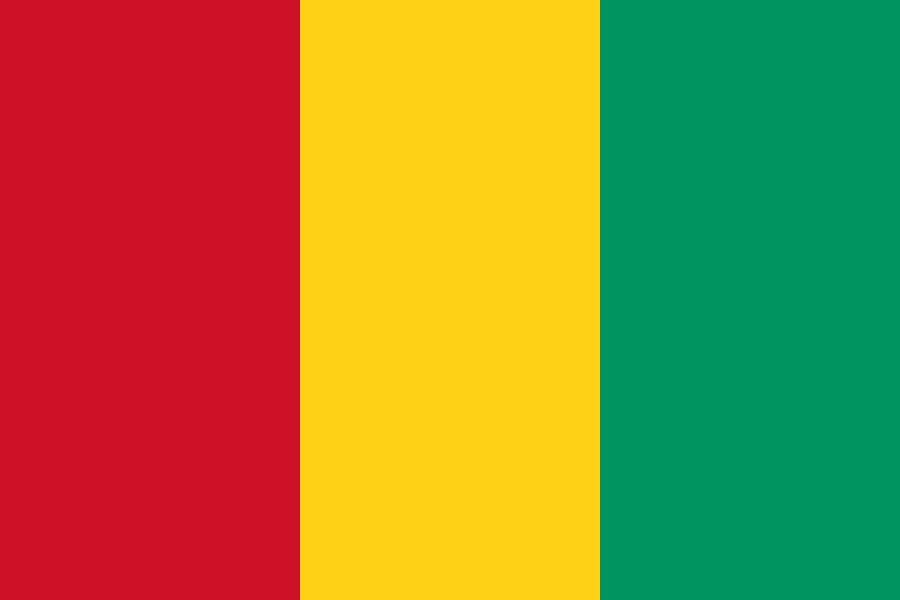
Because Guinea adopted the exact same three colors in reverse order (red-yellow-green) in 1958, observers distinguish Mali by remembering 'M-G' (Mali starts with Green at the hoist; Guinea starts with Red).
History and design evolution
On 4 April 1959, French Sudan and Senegal united to form the autonomous Mali Federation within the French Community. Their federal flag consisted of a vertical green-gold-red tricolor charged in the center of the gold stripe with a black stylized human figure with raised arms known as a kanaga, a traditional Dogon mask motif representing the link between heaven and earth.
After the Mali Federation gained full independence from France on 20 June 1960 and Senegal withdrew two months later in August 1960, French Sudan continued alone as the sovereign Republic of Mali under President Modibo Keïta. On 1 March 1961, under Law No. 61-26 of 20 January 1961, the National Assembly of Mali removed the black kanaga emblem from the center stripe in response to objections from Islamic leaders across the country who opposed the depiction of a human figure on the national emblem.
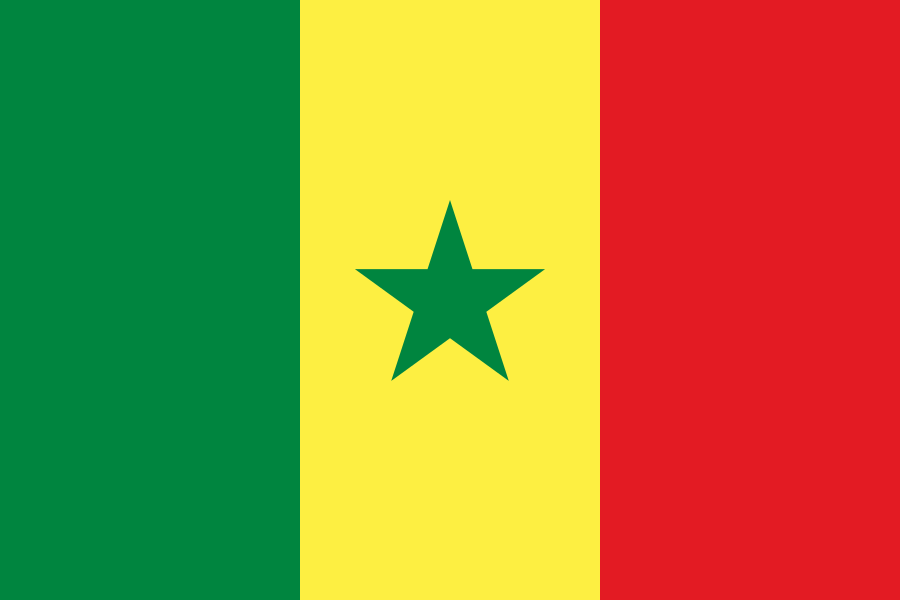
Since 1 March 1961, the plain green-gold-red vertical tricolor has remained unchanged across Mali's constitutional transitions, standing as an exact mirror image of neighboring Guinea's red-yellow-green tricolor and differing from Senegal's flag solely by the absence of Senegal's central green five-pointed star.
Key historical milestones
- 1959Mali Federation Flag: Green-gold-red vertical tricolor with a black central kanaga figure is adopted on 4 April 1959.
- 1960Independence: The Republic of Mali retains the federation flag upon independence in September 1960.
- 1961Kanaga Removed: Law No. 61-26 removes the central kanaga figure on 1 March 1961, leaving the plain tricolor.
Frequently confused with
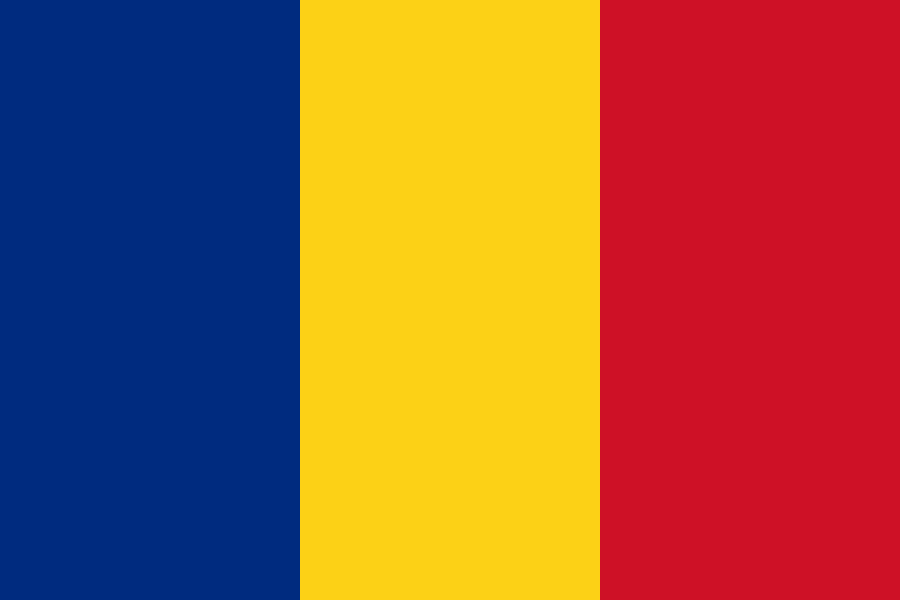
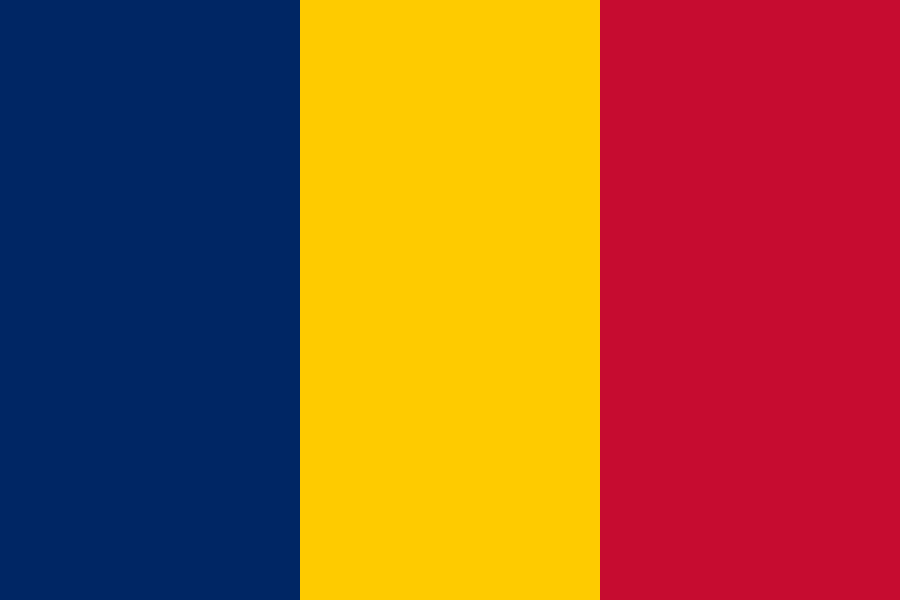
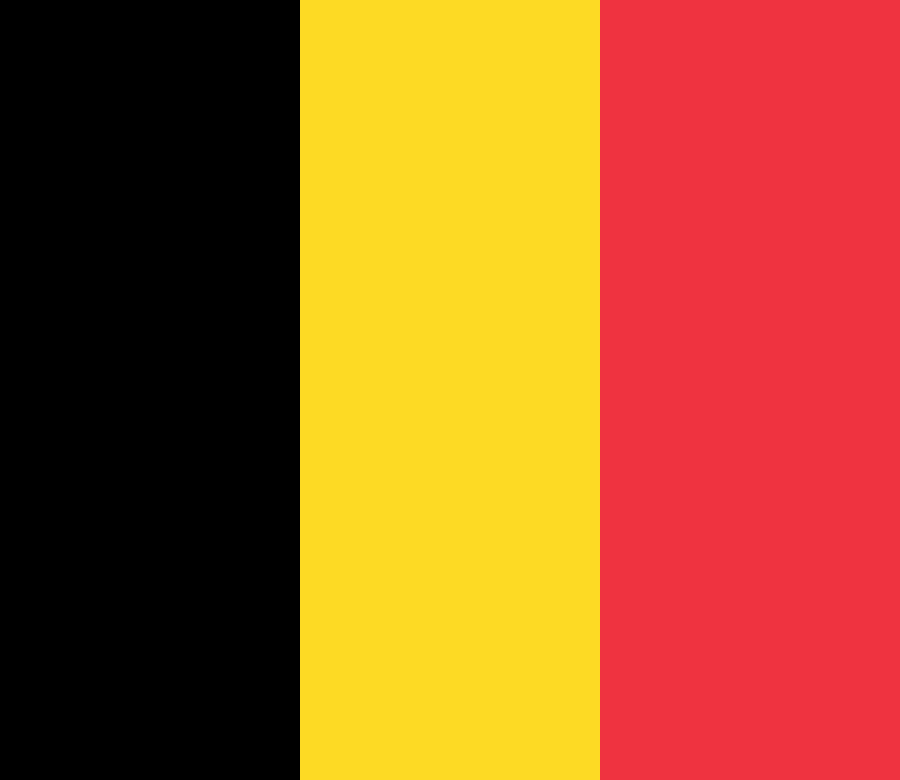
The Flag of Mali is commonly confused with or compared alongside the following flags due to shared colors, stripe geometry, or central emblems:
Visually and structurally similar flags
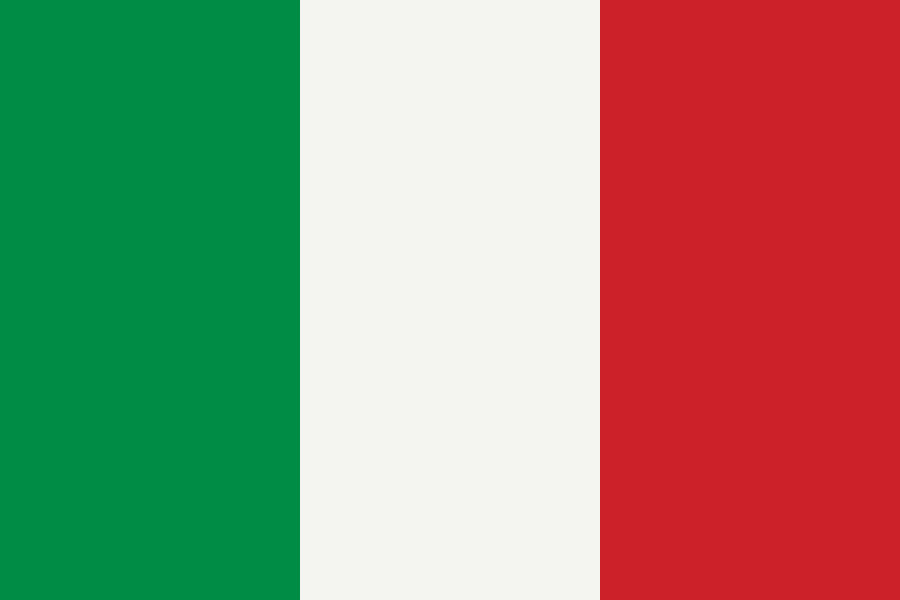
Ranked deterministically across layout family (35%), color overlap and stripe order (25%), symbols (20%), aspect ratio (10%), and stripe/symmetry geometry (10%):
Sources and image-rights provenance
- Law No. 61-26 of 20 January 1961 & Constitution of Mali, Article 25
- World Factbook: Mali Flag Description
SVG artwork provenance: Constructed from statutory specifications (public-domain-statute, verified 2026-10-13, SHA-256 acf6381eafa0…).