
Flag of Guinea
Native & traditional name: Drapeau de la Guinée
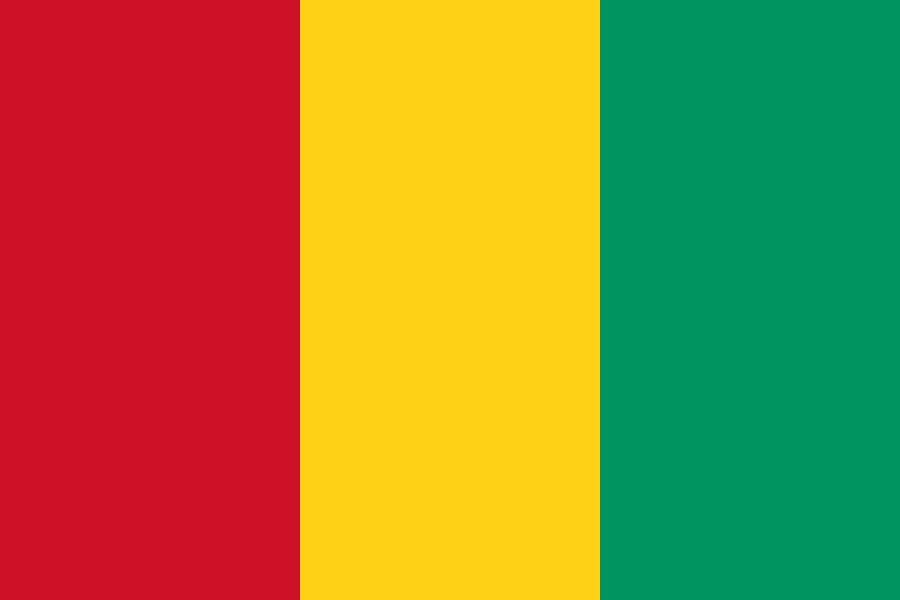
| Entity | Guinea (GN) |
|---|---|
| Type | Sovereign national flag (national, civil, state) |
| Proportion | 2:3 (2:3) |
| Primary colors | red, yellow, green |
| Main symbol | None (geometric bands) |
| Arrangement | vertical tricolor (red · yellow · green) |
| Official adoption | 1958-11-10 |
| Region | Western Africa |
Plain-language visual description
The national flag of Guinea is a vertical tricolor of three equal bands of red at the hoist, yellow in the center, and green at the fly in a 2:3 aspect ratio.
Construction and geometry
Proportion & symmetry: The Flag of Guinea uses a statutory 2:3 height-to-width ratio on a rectangular field with horizontal mirror symmetry. Three equal vertical bands of red (hoist), yellow (center), and green (fly)—the exact mirror reverse of Mali.
- Aspect ratio is 2:3.
- Three equal vertical bands: red at the hoist, yellow in the center, and green at the fly.
Official colors and specification system
Rather than manufacturing false RGB precision where a statute specifies dyed cloth, Pantone, Munsell, or CIE coordinates, the table below records the governing color system alongside a calibrated display hex approximation.
| Color | Official shade name | Specification system | Statutory / standard code | Display hex |
|---|---|---|---|---|
| red | Red (Rouge) | pantone | Pantone 186 C (protocol approximation) | #CE1126 |
| yellow | Yellow (Jaune) | pantone | Pantone 116 C (protocol approximation) | #FCD116 |
| green | Green (Vert) | pantone | Pantone 340 C (protocol approximation) | #009460 |
Meaning and symbolism
Documented symbolism
Adopted under the 1958 Constitution, the three vertical stripes correspond directly to the three words of Guinea's national motto, 'Travail, Justice, Solidarité' (Work, Justice, Solidarity).
Red represents the sweat and blood sacrificed by anti-colonial martyrs and the struggle for work; yellow represents the sun, justice, and the gold beneath Guinean soil; green represents the country's agricultural vegetation and solidarity among rural citizens.
Common interpretations
Guinea deliberately chose the Pan-African colors pioneered by Ethiopia and adopted the previous year by Ghana (1957), signaling President Ahmed Sékou Touré's Pan-African alignment with Kwame Nkrumah.
History and design evolution
On 28 September 1958, French Guinea was the only French West African territory to vote 'No' in Charles de Gaulle's constitutional referendum on joining the French Community, choosing immediate and unconditional sovereignty on 2 October 1958 under President Ahmed Sékou Touré.
Five weeks later, on 10 November 1958, the National Assembly of Guinea promulgated the country's first Constitution and adopted the red-yellow-green vertical tricolor as the national emblem. The design deliberately blended the vertical three-band structure of the French tricolor with the red-gold-green Pan-African palette of Ghana, which had become the first sub-Saharan African colony to achieve independence in March 1957 and formed the Ghana–Guinea Union later in November 1958.
When neighboring Mali dropped its central kanaga figure in March 1961, Mali's green-gold-red tricolor and Guinea's red-yellow-green tricolor became exact mirror images—one of the most famous look-alike pairs in African and world vexillology, distinguished solely by whether red or green sits next to the flagpole.
Key historical milestones
- 1958Independence & Adoption: Guinea proclaims independence on 2 October 1958 and adopts the red-yellow-green vertical tricolor on 10 November 1958.
- 1961Mirror Pair with Mali: Mali removes its central emblem, making Mali (green-gold-red) and Guinea (red-yellow-green) exact mirror images.
Frequently confused with
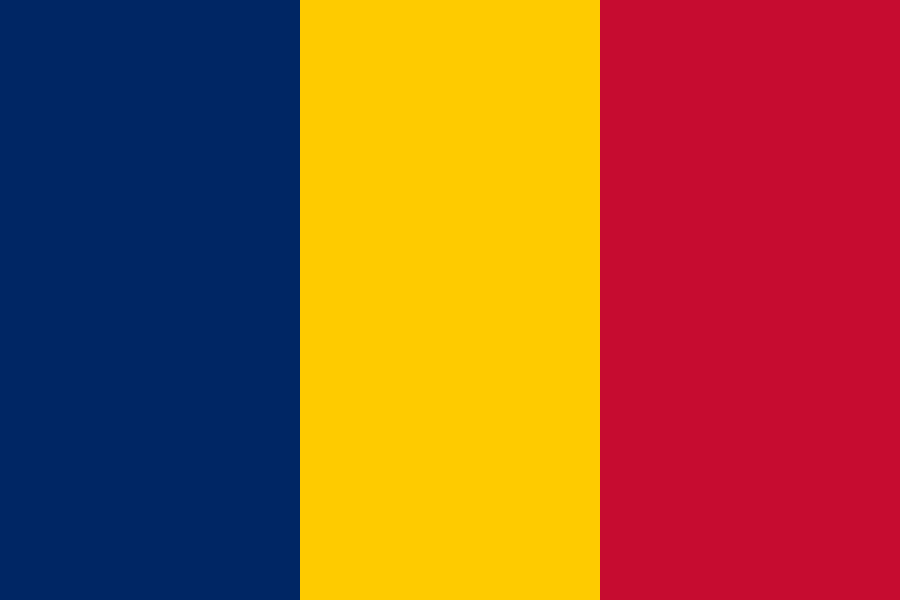
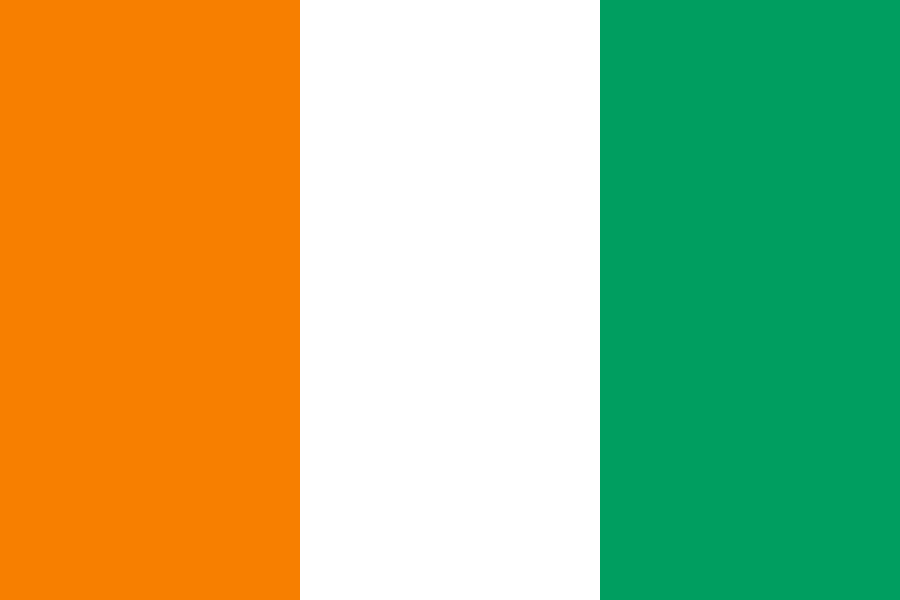
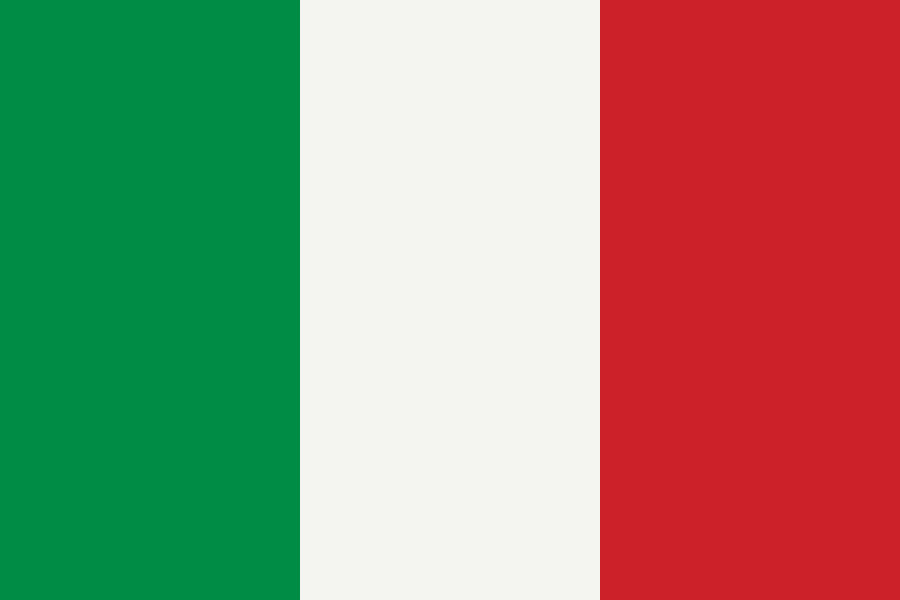
The Flag of Guinea is commonly confused with or compared alongside the following flags due to shared colors, stripe geometry, or central emblems:
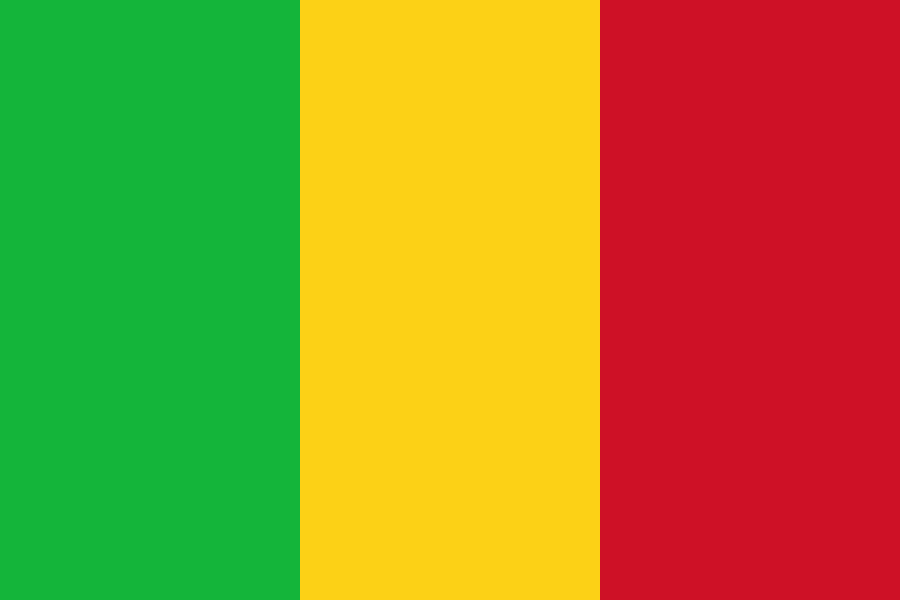
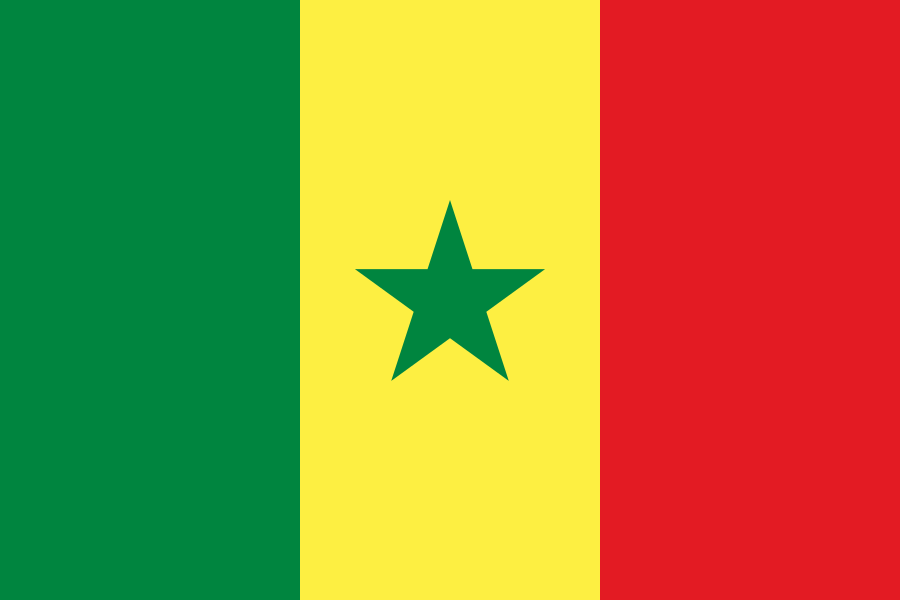
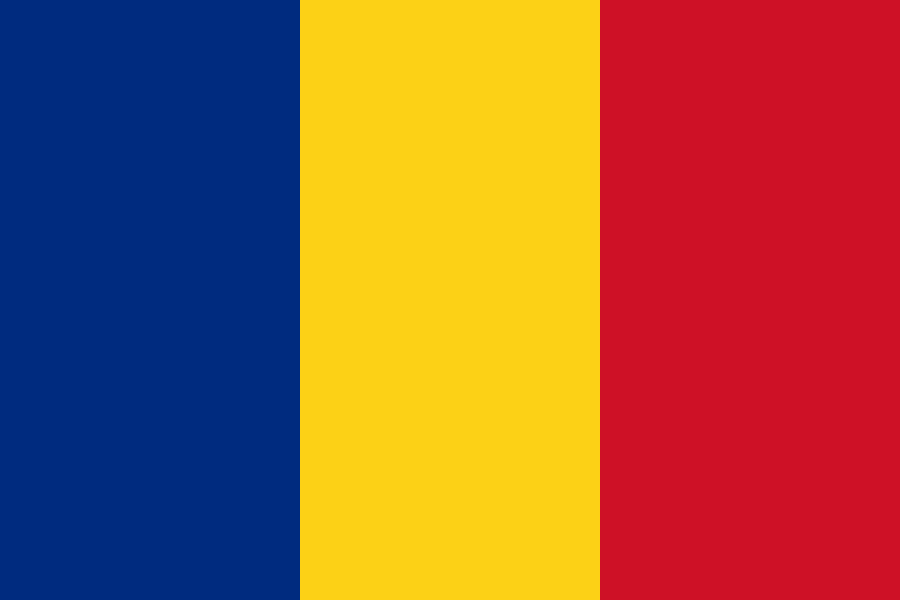
Visually and structurally similar flags
Ranked deterministically across layout family (35%), color overlap and stripe order (25%), symbols (20%), aspect ratio (10%), and stripe/symmetry geometry (10%):
Sources and image-rights provenance
- Constitution of the Republic of Guinea — Article 1
- World Factbook: Guinea Flag Description
SVG artwork provenance: Constructed from statutory specifications (public-domain-statute, verified 2026-10-13, SHA-256 7b4c7a2df15f…).