
Flag of Palau
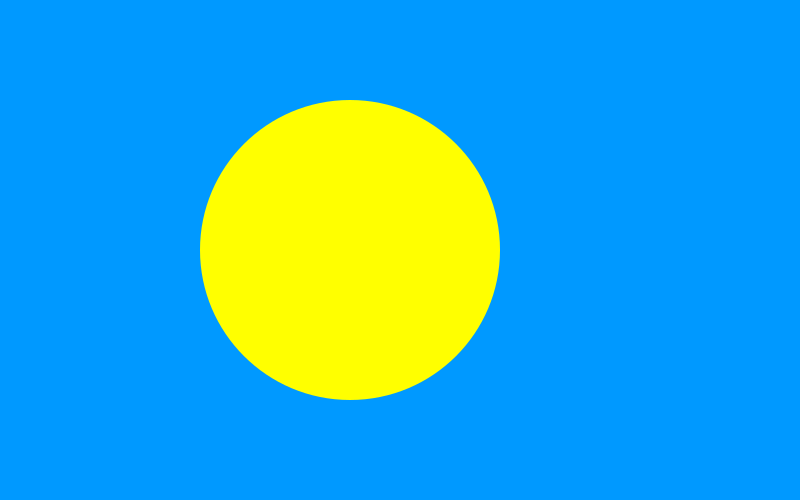
| Entity | Palau (PW) |
|---|---|
| Type | Sovereign national flag (national, civil, state) |
| Proportion | 5:8 (5:8) |
| Primary colors | light blue, yellow |
| Main symbol | disc |
| Arrangement | centered centered emblem |
| Official adoption | 1981-01-01 — Public Law No. 7-6-2 (passed 18 September 1980, approved 22 October 1980); flag in official use from 1 January 1981, when the constitutional Republic of Palau came into being |
| Region | Micronesia |
Plain-language visual description
Palau's national flag shows a golden-yellow full disc offset slightly toward the hoist on a bright sky-blue rectangular field in a 5:8 proportion.
Construction and geometry
Proportion & symmetry: The Flag of Palau uses a 5:8 height-to-width ratio (Public Law No. 7-6-2 (1980), Section One: width to length 1.0 to 1.6) on a rectangular field with mirror symmetry about its horizontal centre line (the top and bottom halves match). Width-to-length ratio 5:8; golden disc diameter is 3/5 of hoist height, offset slightly toward the hoist (7/16 of length).
- The official width-to-length ratio is 5:8 (100:160). The diameter of the golden disc is 3/5 of the hoist height, and its center is positioned 7/16 of the flag's length from the hoist edge.
Colors and how they are specified
A color code is marked official only when the governing law, decree or official government specification itself gives it, and the source is quoted below the table. Where the law names a color without a code, or sets no shade at all, the table says so and the display hex is an approximation. Commonly used but unofficial codes are labelled as such. Unless the table names another source for it, a hex shown beside a Pantone code is Pantone's own published sRGB value for that code.
| Color | Shade name | Specification system | Code | Display hex |
|---|---|---|---|---|
| light blue | Sky Blue | statute-named | named in law, no code | #0099FF |
| yellow | Golden Yellow (Full Moon) | statute-named | named in law, no code | #FFFF00 |
- Sky Blue (statute-named): Government of the Republic of Palau, official flag description (quoted by Flags of the World); Public Law No. 7-6-2 (1980) names the colours golden yellow and sky blue —
The National Flag of the Republic of Palau shall be a golden-yellow moon slightly off-centered on a field of sky-blue.
- Golden Yellow (Full Moon) (statute-named): Government of the Republic of Palau, official flag description (quoted by Flags of the World); Public Law No. 7-6-2 (1980) names the colours golden yellow and sky blue —
The National Flag of the Republic of Palau shall be a golden-yellow moon slightly off-centered on a field of sky-blue.
Meaning and symbolism
Documented symbolism
The Government of Palau's official flag description identifies the disc as the full moon rather than the sun. It states that the moon plays a significant role in harvests, reproductive cycles and the launching of events in traditional Palau, that the full moon signifies Palau's emergence as an independent sovereign country, and that the blue ocean, a constant that has provided sustenance through its bounties, signifies the constancy of Palau through the years, surviving various foreign dominations.
Common interpretations
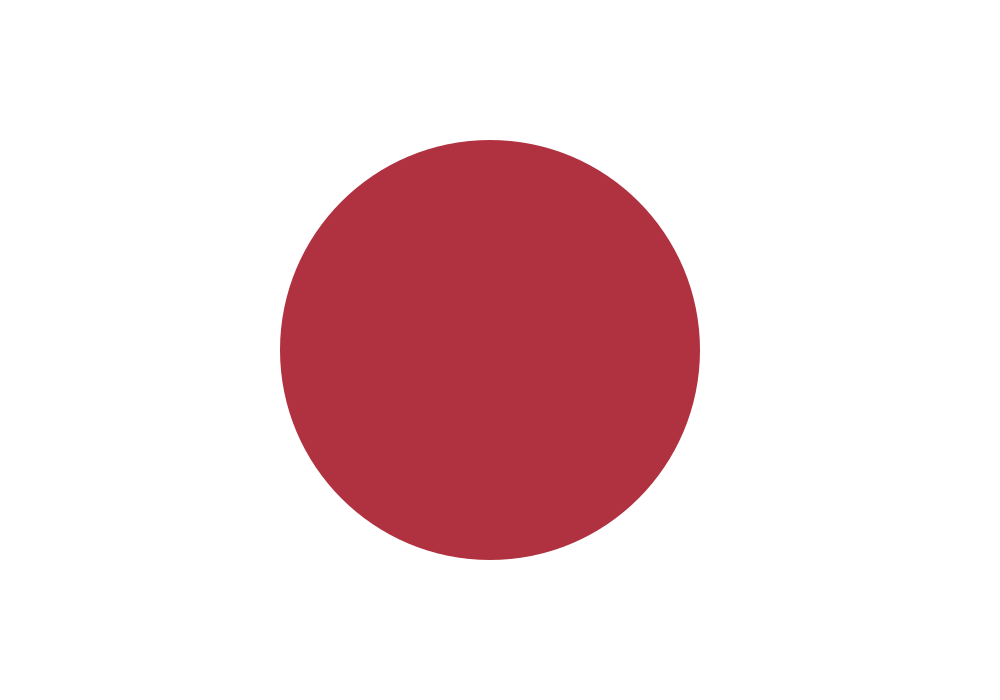
Because its layout mirrors the flags of Japan and Bangladesh, casual observers often assume the yellow circle represents the sun or derives directly from pre-war Japanese administration in Micronesia; the Government of Palau's flag description identifies the disc as the full moon and gives no Japanese source for the design.
History and design evolution
Following World War II, Palau was administered by the United States as part of the United Nations Trust Territory of the Pacific Islands, under the United States and United Nations flags and, from 1962, the light-blue six-star Trust Territory flag. As Palau drafted its own constitution and prepared for self-government in 1979, a national flag contest invited Palauans to submit designs for a flag of the future Republic of Palau.
The winning entry, submitted by Blau Skebong, distilled Palauan island identity into a luminous golden full moon over an ocean-blue expanse. Palau's legislature enacted the design as Public Law No. 7-6-2, passed on 18 September 1980 and approved on 22 October 1980; the Government of Palau's own flag description credits the adoption to the Olbiil Era Kelulau (Palau National Congress).
The flag was officially raised on 1 January 1981 when the Republic of Palau established constitutional self-government, and it remained the sovereign national flag when Palau entered into its Compact of Free Association as an independent nation on 1 October 1994.
Key historical milestones
- 1979National flag competition: Blau Skebong's full-moon-over-ocean design wins the 1979 Republic of Palau flag contest.
- 1981Flag officially raised: Raised on 1 January 1981 upon the inauguration of Palau's constitutional government.
- 1994Full sovereignty: Retained unchanged when Palau becomes a fully independent sovereign republic in October 1994.
Frequently confused with
The Flag of Palau is commonly confused with or compared alongside the following catalog flags due to shared colors, stripe geometry, or central emblems:
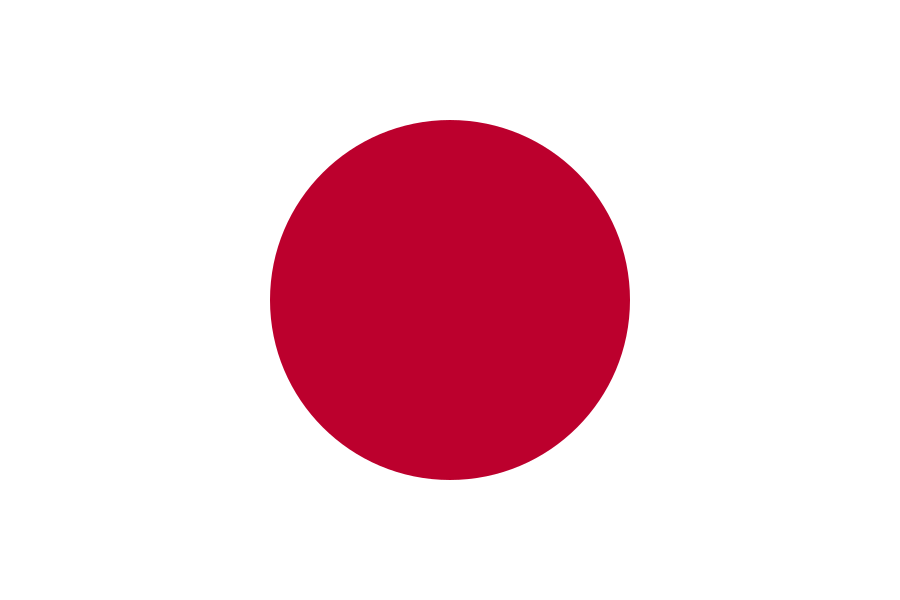
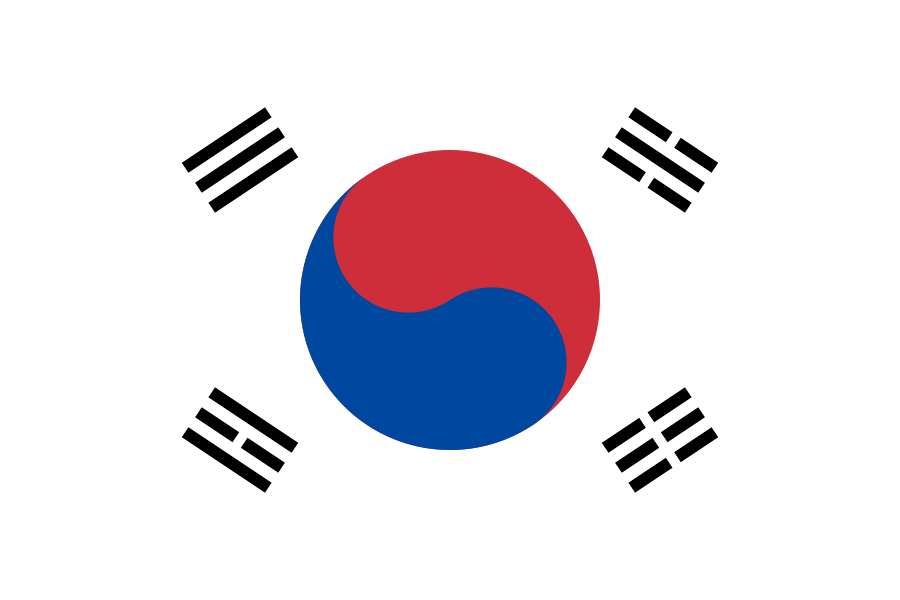
Visually and structurally similar flags in this catalog
Ranked deterministically across layout family, orientation and shape (35%), color overlap and stripe order (25%), symbols (20%), aspect ratio (10%), and stripe/symmetry geometry (10%):
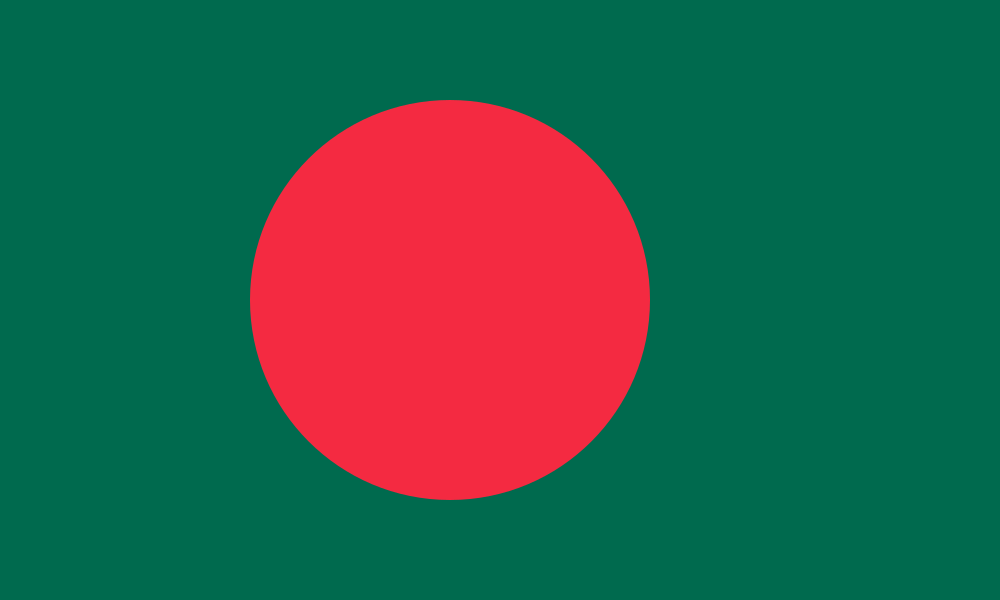
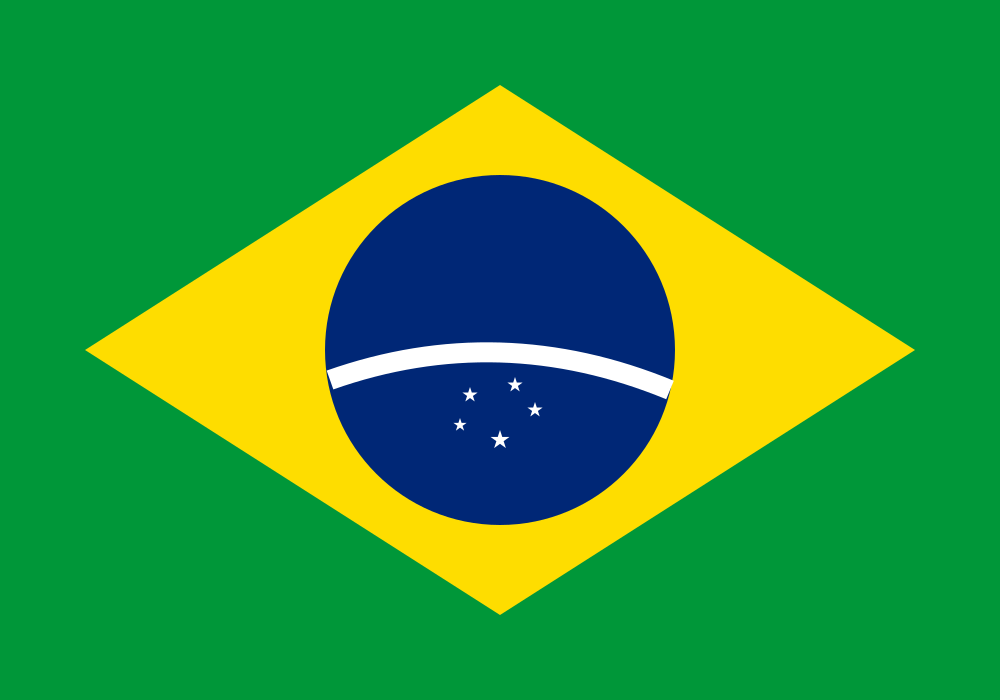
Sources and image-rights provenance
- Flags of the World — Palau (quotes Public Law No. 7-6-2 and the Government of Palau flag description)
- Whitney Smith, Flag Lore of All Nations — Smith, W. (2001). Flag Lore of All Nations. Brookfield, CT: Millbrook Press.
SVG artwork provenance: Original FastFlags drawing generated by scripts/generate-seed-svg-assets.ts from this record's ratio, layout and display colours; not an official construction sheet. (public-domain-statute, checked 2026-10-15, SHA-256 788600964fbc…).