
Flag of Japan (1870–1999 Proclamation No. 57)
Native & traditional name: 日章旗 (太政官布告第57号)
| Entity | Japan (1870–1999) (JP) |
|---|---|
| Parent state | Japan |
| Type | Historical national / naval flag (historical, national, civil) |
| Proportion | 7:10 (7:10) |
| Primary colors | white, red |
| Main symbol | disc |
| Arrangement | centered centered emblem |
| Official adoption | 1870-02-27 |
| Superseded / abolished | 1999-08-13 |
| Region | Eastern Asia |
Plain-language visual description
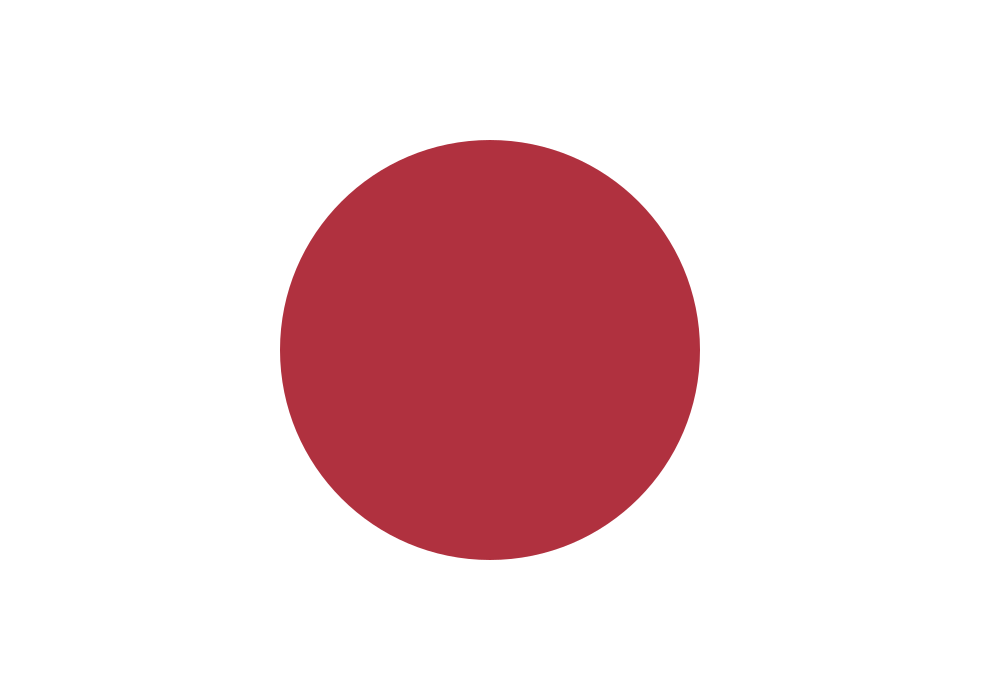
The 1870–1999 specification of the Japanese national flag (Nisshōki) features a deep crimson circular sun disc on a white rectangular field in a 7:10 aspect ratio, with the disc shifted 1% of the fly length toward the hoist.
Construction and geometry
Proportion & symmetry: The Flag of Japan (1870–1999 Proclamation No. 57) uses a statutory 7:10 height-to-width ratio on a rectangular field with horizontal mirror symmetry. 7:10 aspect ratio; sun disc diameter is 3/5 of the hoist height, shifted 1/100 (1%) of the fly length toward the hoist.
- Aspect ratio is 7:10 (height 70, width 100).
- Disc diameter is 3/5 of hoist height (42 units; radius 21 units).
- Disc center is shifted 1/100 of width toward the hoist (at x = 49, y = 35 on a 100 × 70 grid, leaving 28 units on the hoist side and 30 units on the fly side).
Official colors and specification system
Rather than manufacturing false RGB precision where a statute specifies dyed cloth, Pantone, Munsell, or CIE coordinates, the table below records the governing color system alongside a calibrated display hex approximation.
| Color | Official shade name | Specification system | Statutory / standard code | Display hex |
|---|---|---|---|---|
| white | White | statute-named | Named in statute | #FFFFFF |
| red | Deep Crimson (Beni-iro) | statute-named | Named in statute | #B0313F |
Meaning and symbolism
Documented symbolism
Proclaimed by the Meiji Grand Council of State (Daijō-kan) in Proclamation No. 57 on 27 February 1870, the crimson sun disc represents Amaterasu and Japan's identity as the Land of the Rising Sun.
The 1% shift toward the hoist was an optical correction for flags flying in the wind: because the fly edge flutters more than the hoist edge, shifting the disc slightly toward the flagpole made the emblem appear centered when airborne at sea.
Common interpretations
By the mid-20th century, many government offices and manufacturers had already begun centering the disc and using a 2:3 ratio in practice, even though the 1870 7:10 off-center specification remained on the books until 1999.
History and design evolution
After the Tokugawa shogunate designated the Hinomaru ('circle of the sun') as the collective maritime ensign of Japanese merchant and official vessels in 1854 following the opening of treaty ports, the newly formed Meiji imperial government issued Daijō-kan Proclamation No. 57 on 27 January, Meiji 3 (27 February 1870) to establish a formal statutory construction for civil merchant flags.
Proclamation No. 57 defined three official sizes of the flag (large, medium, and small), all sharing a 7:10 height-to-width ratio, a crimson sun disc diameter equal to 3/5 of the hoist height, and a horizontal offset placing the disc 1/100 (1%) of the fly length closer to the hoist edge so it would appear optically centered when fluttering in maritime winds.
Although an 1885 cabinet reform abolished the old proclamation framework, the 7:10 off-center specification remained the sole statutory construction for 129 years until the National Diet passed the Act on National Flag and Anthem (Law No. 127) on 13 August 1999, which modernized the ratio to 2:3, moved the sun disc to the exact geometric center, and brightened the crimson shade.
Key historical milestones
- 1854Tokugawa Maritime Order: Hinomaru is designated the national ship ensign.
- 1870Daijō-kan Proclamation No. 57: Sets the 7:10 proportion and 1% hoist-shifted sun disc on 27 February 1870.
- 1999Replaced by Law No. 127: The 1999 Act replaces the 7:10 off-center design with a 2:3 centered design.
Frequently confused with
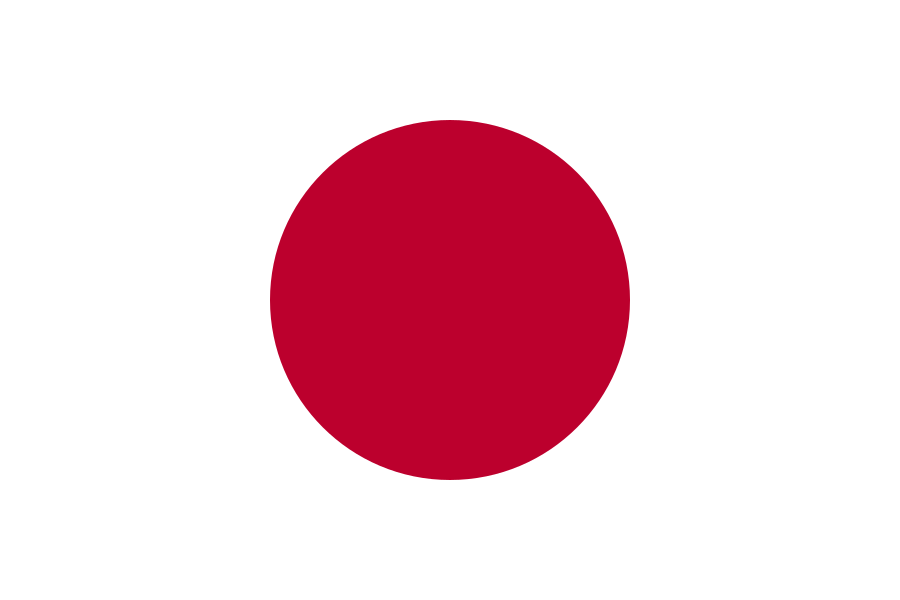
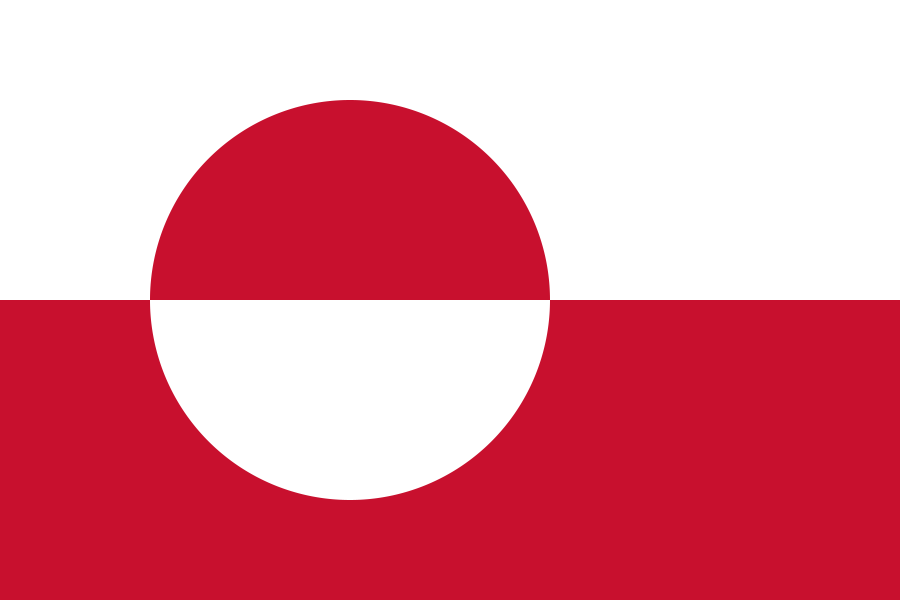
The Flag of Japan (1870–1999 Proclamation No. 57) is commonly confused with or compared alongside the following flags due to shared colors, stripe geometry, or central emblems:
Visually and structurally similar flags
Ranked deterministically across layout family (35%), color overlap and stripe order (25%), symbols (20%), aspect ratio (10%), and stripe/symmetry geometry (10%):




Sources and image-rights provenance
- Daijō-kan Proclamation No. 57 (27 January, Meiji 3)
- Act on National Flag and Anthem (Law No. 127 of 1999), Supplementary Provisions
SVG artwork provenance: Constructed from statutory specifications (public-domain-statute, verified 2026-10-13, SHA-256 f36cb7897d72…).