
Flag of South Korea
Native & traditional name: Taegeukgi (태극기)
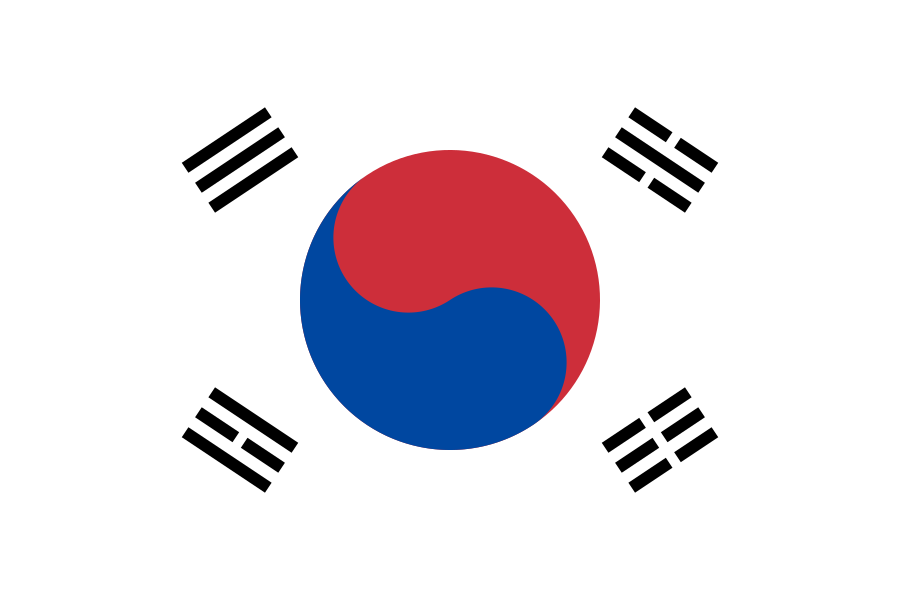
| Entity | South Korea (KR) |
|---|---|
| Type | Sovereign national flag (national, civil) |
| Proportion | 2:3 (2:3) |
| Primary colors | white, red, blue, black |
| Main symbol | disc |
| Arrangement | centered centered emblem |
| Official adoption | 1949-10-15 |
| Region | Eastern Asia |
Plain-language visual description
The national flag of South Korea (Taegeukgi) features a white field in a 2:3 ratio with a centered red and blue Taegeuk yin-yang disc, flanked by four black trigrams in the corners.
Construction and geometry
Proportion & symmetry: The Flag of South Korea uses a statutory 2:3 height-to-width ratio on a rectangular field with none mirror symmetry. White 2:3 field with centered red and blue Taegeuk disc and four black trigrams in corners.
Official colors and specification system
Rather than manufacturing false RGB precision where a statute specifies dyed cloth, Pantone, Munsell, or CIE coordinates, the table below records the governing color system alongside a calibrated display hex approximation.
| Color | Official shade name | Specification system | Statutory / standard code | Display hex |
|---|---|---|---|---|
| white | White Field | statute-named | Named in statute | #FFFFFF |
| red | Yang (Red) | pantone | Pantone 186 C | #CD2E3A |
| blue | Yin (Blue) | pantone | Pantone 294 C | #0047A0 |
| black | Black Trigrams | statute-named | Named in statute | #000000 |
Meaning and symbolism
Documented symbolism
The National Flag Act defines the elements: the white field represents peace and purity; the central Taegeuk disc represents universal cosmic harmony between Yang (red) and Yin (blue).
The four black trigrams represent fundamental cosmic elements: Geon (sky/heaven), Gon (earth), Gam (water), and Ri (fire).
Common interpretations
The white field reflects the traditional white Hanbok clothing worn by Koreans, historically known as the 'white-clad people.'
History and design evolution
The national flag of South Korea, known as the Taegeukgi, was created in 1882 during the late Joseon Dynasty. Historically, the Joseon court had not used a national flag, but as Korea was compelled to enter modern diplomatic treaties with Western powers and neighboring Asian empires, the need for a distinct sovereign banner became urgent. King Gojong ordered the creation of a national standard that would express Korea's ancient philosophical heritage and royal dignity.
In August 1882, Korean diplomat Bak Yeong-hyo led a diplomatic mission to Japan. During the sea voyage aboard the British vessel Swatara, Bak and fellow Korean envoys, working from instructions provided by King Gojong and drawing upon advice from British Captain James, finalized the design: a white field representing peace and purity, a circular Taegeuk emblem in the center symbolizing the balanced cosmic forces of eum (blue) and yang (red), and four black trigrams (gwae) taken from the ancient I Ching (Book of Changes).
King Gojong formally promulgated the Taegeukgi as the national flag of the Kingdom of Joseon on March 6, 1883, and it was continued as the flag of the Korean Empire (1897–1910). During the Japanese colonial occupation (1910–1945), possession or display of the Taegeukgi was severely outlawed, transforming the flag into a passionate symbol of underground patriotic resistance and the March 1st Movement of 1919. Following liberation and the founding of the Republic of Korea, the government formally standardized the exact geometric layout, coordinates, and angles of the four trigrams on October 15, 1949, through Presidential Decree No. 199.
Key historical milestones
- 1883Joseon Promulgation: King Gojong promulgates the Taegeukgi on 6 March 1883.
- 1949Standardization: Republic of Korea standardizes the geometric layout on 15 October 1949.
- 2007National Flag Act: Act No. 8272 codifies modern flag protocol.
Visually and structurally similar flags
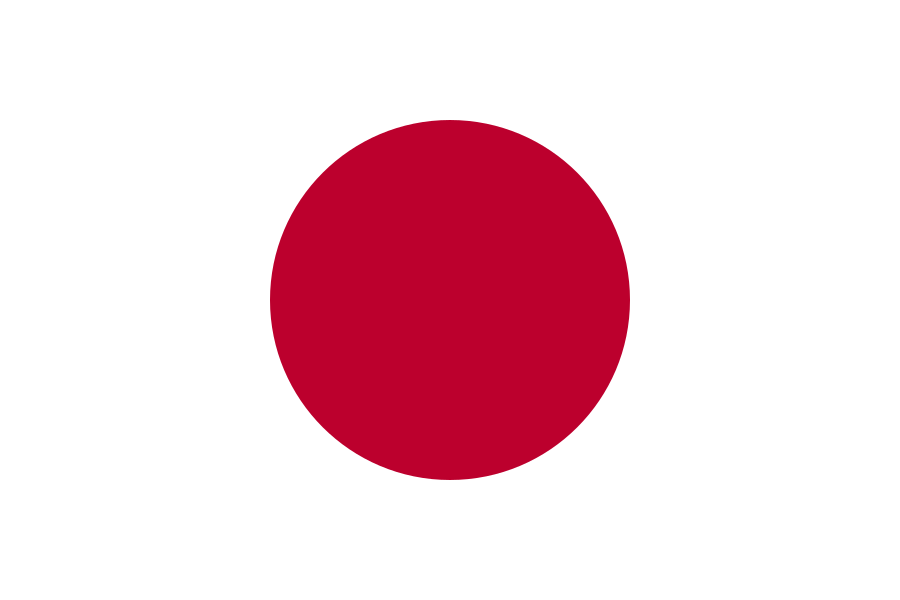
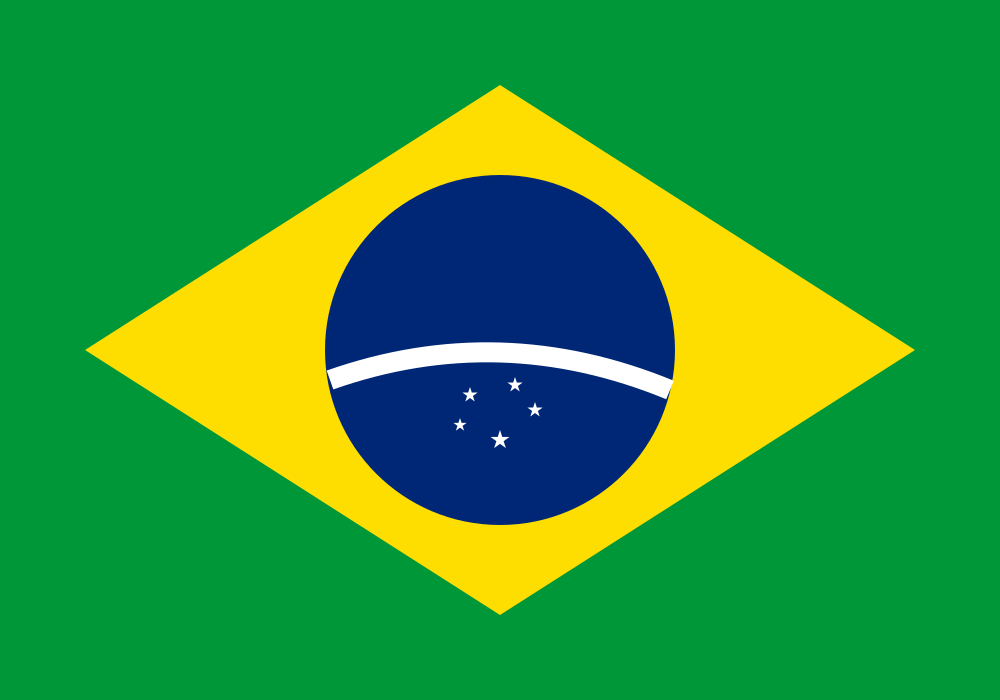
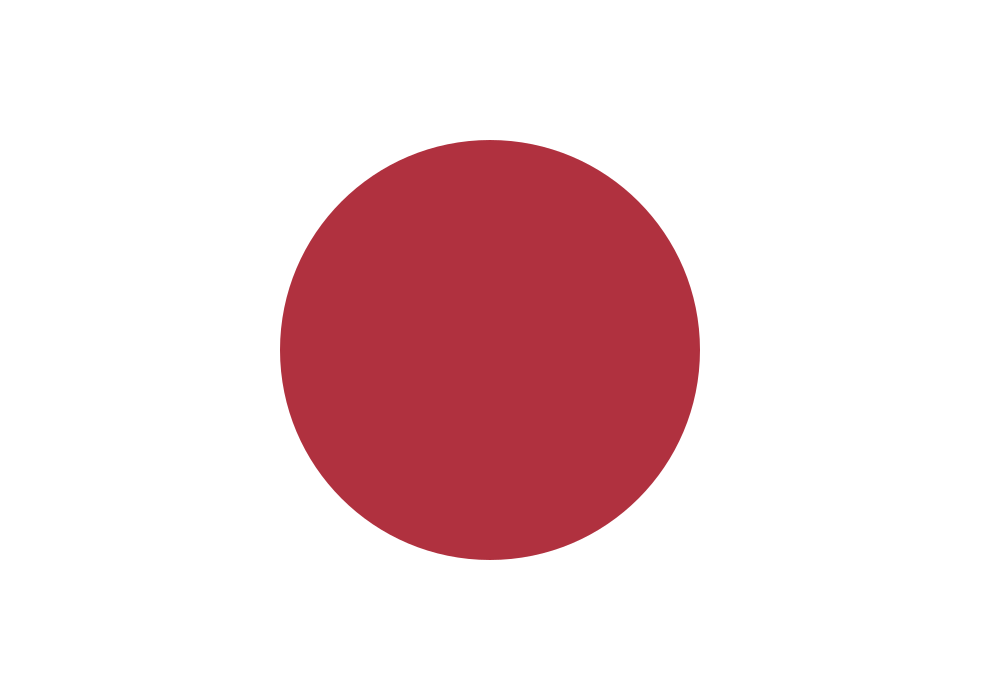
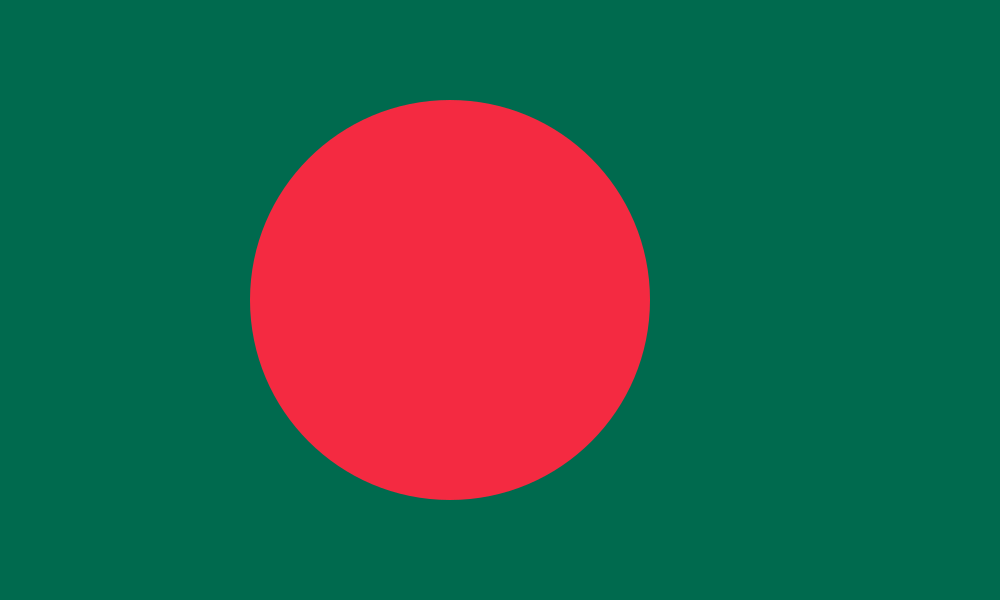
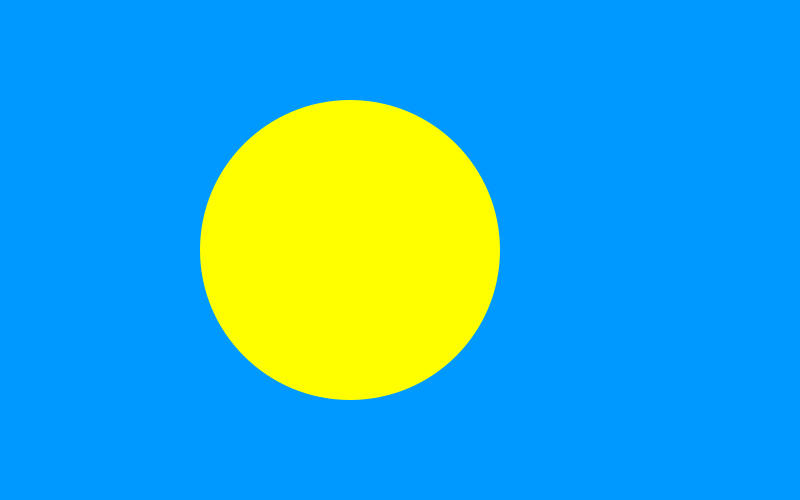
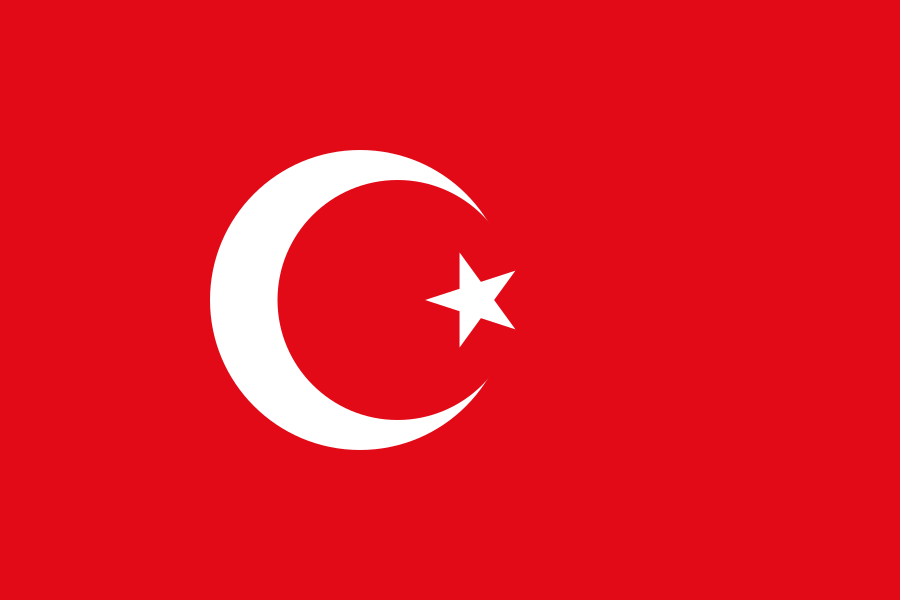
Ranked deterministically across layout family (35%), color overlap and stripe order (25%), symbols (20%), aspect ratio (10%), and stripe/symmetry geometry (10%):
Sources and image-rights provenance
SVG artwork provenance: Constructed from statutory specifications (public-domain-statute, verified 2026-10-14, SHA-256 6ddae7ba2fe1…).