
Flag of Senegal
Native & traditional name: Drapeau du Sénégal
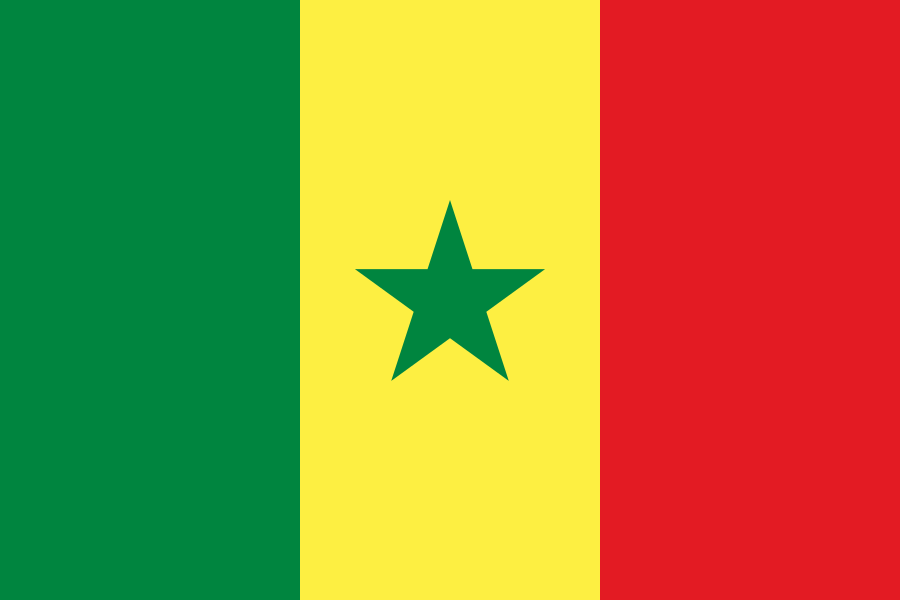
| Entity | Senegal (SN) |
|---|---|
| Type | Sovereign national flag (national, civil, state) |
| Proportion | 2:3 (2:3) |
| Primary colors | green, yellow, red |
| Main symbol | star |
| Arrangement | vertical tricolor (green · yellow · red) |
| Official adoption | 1960-08-20 |
| Region | Western Africa |
Plain-language visual description
The national flag of Senegal consists of three equal vertical bands of green at the hoist, yellow in the middle, and red at the fly, charged in the center of the yellow band with a green five-pointed star.
Construction and geometry
Proportion & symmetry: The Flag of Senegal uses a statutory 2:3 height-to-width ratio on a rectangular field with vertical mirror symmetry. Three equal vertical bands of green, yellow, and red charged in the center with a green five-pointed star.
- Aspect ratio is 2:3.
- Three equal vertical stripes of green, yellow, and red, with an upright green five-pointed star centered in the middle stripe.
Official colors and specification system
Rather than manufacturing false RGB precision where a statute specifies dyed cloth, Pantone, Munsell, or CIE coordinates, the table below records the governing color system alongside a calibrated display hex approximation.
| Color | Official shade name | Specification system | Statutory / standard code | Display hex |
|---|---|---|---|---|
| green | Green (Vert) | pantone | Pantone 355 C (protocol approximation) | #00853F |
| yellow | Yellow / Gold (Or) | pantone | Pantone Yellow C (protocol approximation) | #FDEF42 |
| red | Red (Rouge) | pantone | Pantone 032 C (protocol approximation) | #E31B23 |
Meaning and symbolism
Documented symbolism
Article 1 of the Constitution of Senegal specifies that the flag of the Republic is composed of three vertical and equal bands of green, gold, and red, bearing a five-pointed green star in the center of the gold band.
Official presidential commentary explains that green represents the Prophet's banner for the Muslim majority, Christian hope, and animist fertility; gold symbolizes wealth resulting from collective labor, arts, and literature; red recalls the blood shed for independence; and the five-pointed star represents openness to the five inhabited continents.
Common interpretations
The five points of the central star are also popularly associated with the Five Pillars of Islam and the human form that replaced the Mali Federation's black kanaga figure.
History and design evolution
On 25 November 1958, Senegal became an autonomous republic within the French Community and initially adopted a green field with a yellow star. Less than five months later, on 4 April 1959, Senegal joined French Sudan to form the Mali Federation, adopting a vertical green-gold-red tricolor defaced with a black human kanaga emblem in the center of the gold band.
The Mali Federation achieved full independence from France on 20 June 1960, but political and constitutional disagreements between Senegalese leaders and Sudanese leaders caused Senegal to withdraw from the federation and proclaim its separate independence on 20 August 1960 under President Léopold Sédar Senghor and Prime Minister Mamadou Dia. Rather than discarding the federal flag, Senegal retained the green-yellow-red vertical tricolor and replaced the black kanaga figure with a green five-pointed star echoing its 1958 autonomous banner.
When Mali subsequently removed its kanaga figure altogether in March 1961, the central green star became the single visual feature distinguishing the flag of Senegal from the flag of Mali.
Key historical milestones
- 1959Mali Federation: Senegal and French Sudan adopt the green-gold-red vertical tricolor with a central black kanaga figure.
- 1960Green Star Adopted: Upon withdrawing from the federation on 20 August 1960, Senegal replaces the kanaga with a centered green five-pointed star.
Frequently confused with
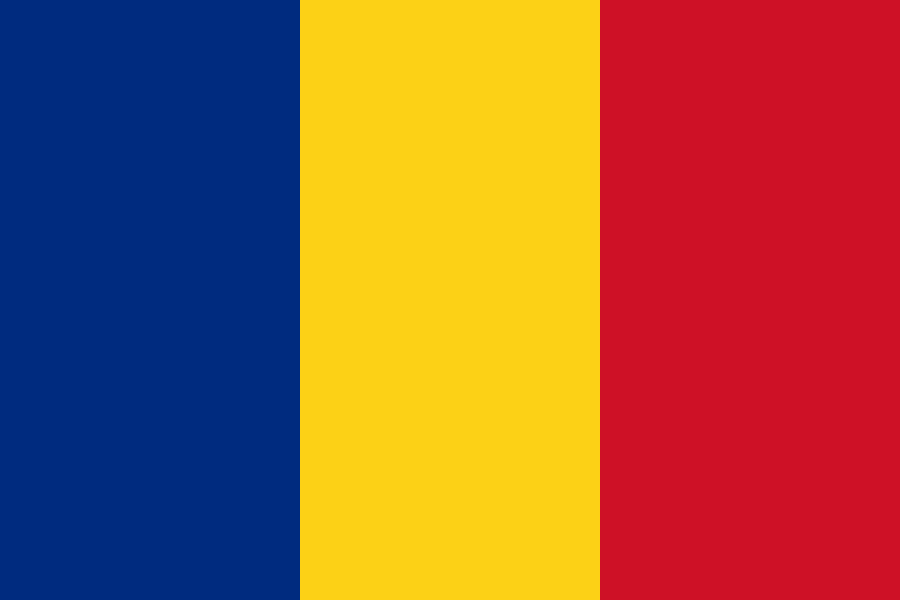
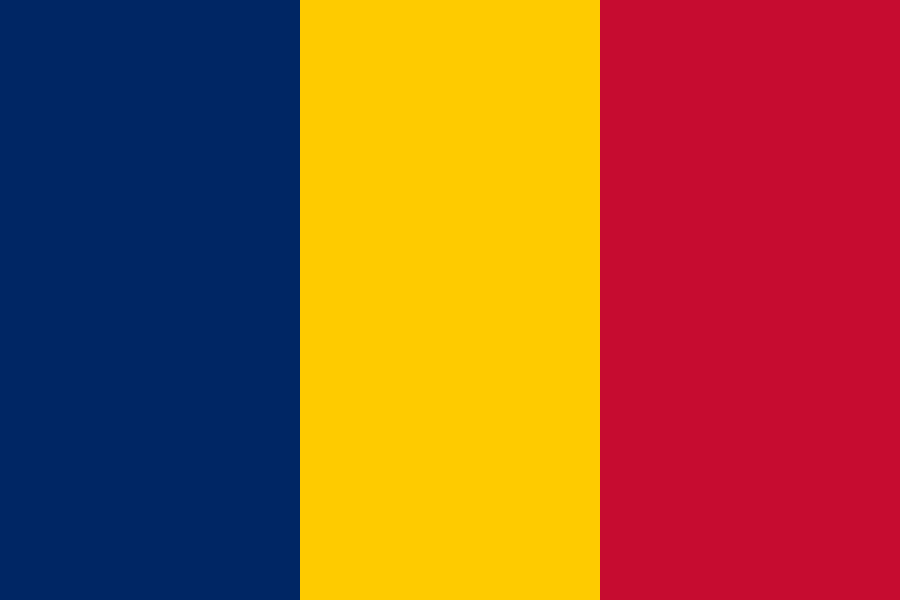
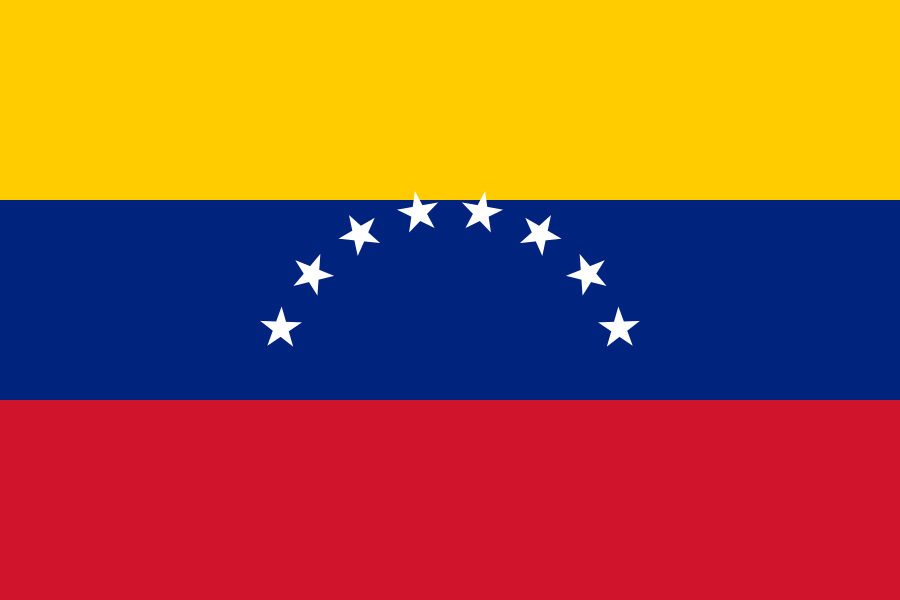
The Flag of Senegal is commonly confused with or compared alongside the following flags due to shared colors, stripe geometry, or central emblems:
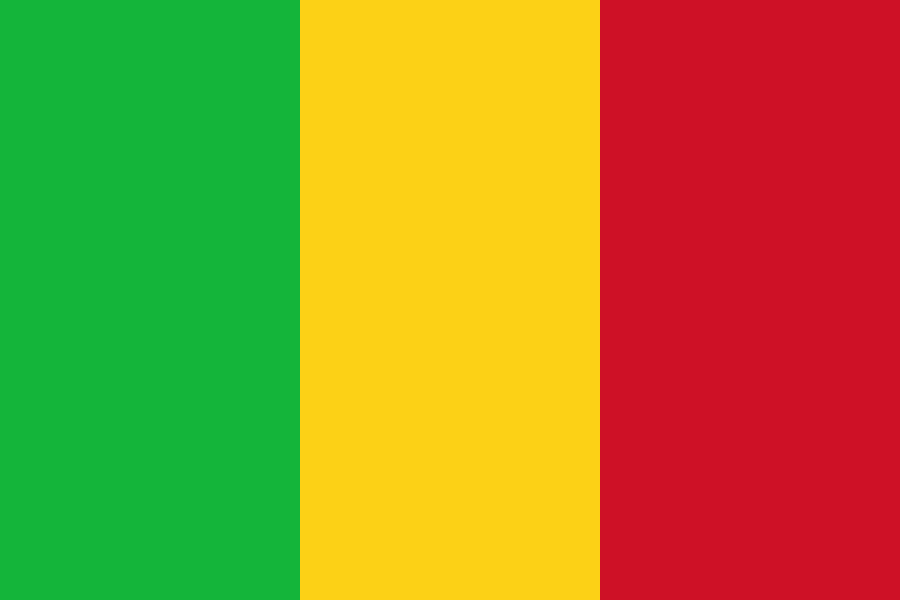
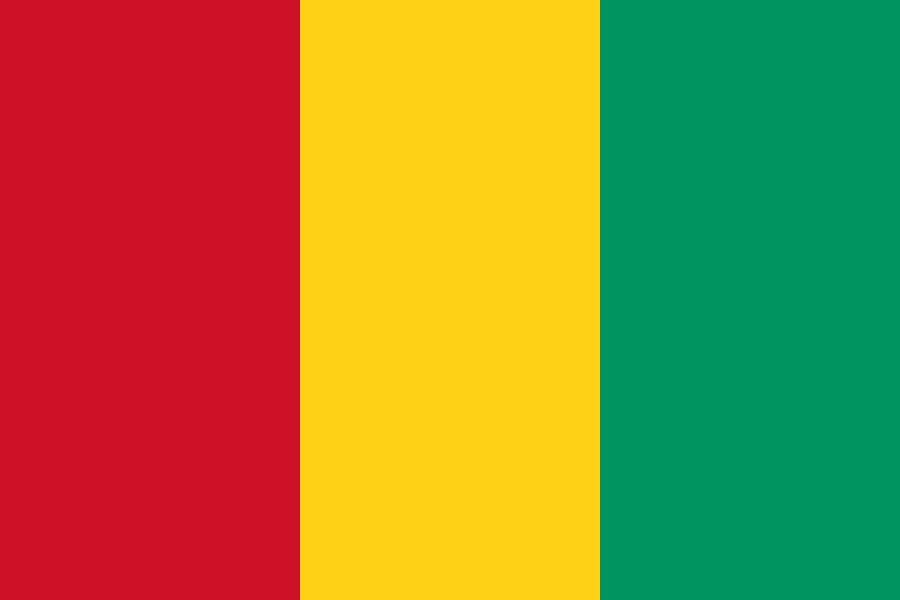
Visually and structurally similar flags
Ranked deterministically across layout family (35%), color overlap and stripe order (25%), symbols (20%), aspect ratio (10%), and stripe/symmetry geometry (10%):
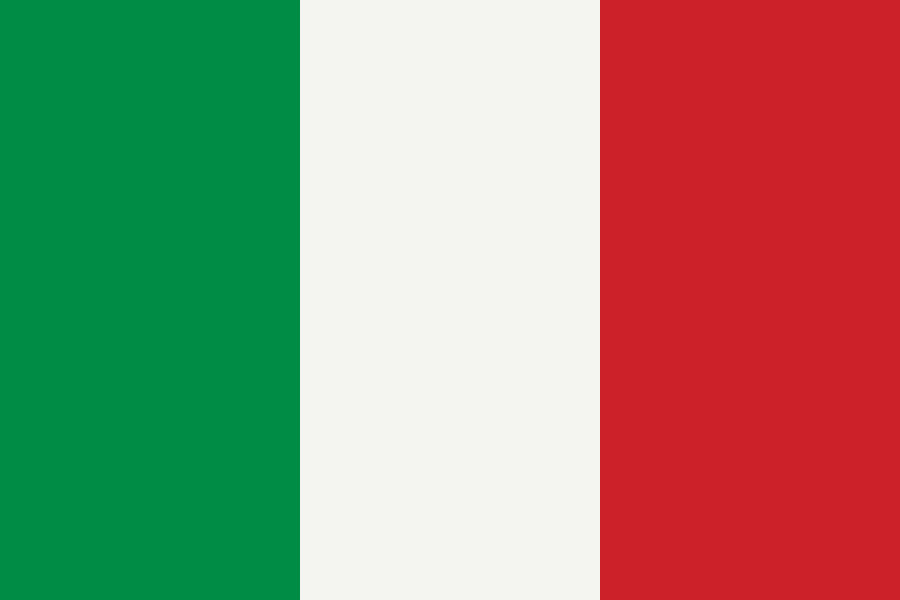
Sources and image-rights provenance
SVG artwork provenance: Constructed from statutory specifications (public-domain-statute, verified 2026-10-13, SHA-256 8dca5024da8e…).