
Flag of Norway
Native & traditional name: Norges flagg
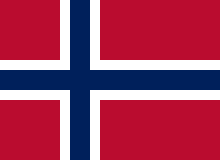
| Entity | Norway (NO) |
|---|---|
| Type | Sovereign national flag (national, civil) |
| Proportion | 8:11 (8:11) |
| Primary colors | red, white, blue |
| Main symbol | cross |
| Arrangement | horizontal nordic cross |
| Official adoption | 1821-07-13 — Design proposed by Storting representative Fredrik Meltzer and passed by the Storting in May 1821; approved by royal resolution of 13 July 1821 for merchant use in near waters. The flag without the union mark was fixed by the Flag Act of 10 December 1898, which became law without royal sanction. |
| Region | Northern Europe |
Plain-language visual description
Norway's national flag is an 8:11 crimson-red rectangular field charged with an indigo-blue Nordic cross bordered (fimbriated) in white.
Construction and geometry
Proportion & symmetry: The Flag of Norway uses a 8:11 height-to-width ratio (Flag Act of 10 December 1898, § 1 (breadth to length 16:22)) on a rectangular field with mirror symmetry about its horizontal centre line (the top and bottom halves match). 16:22 (8:11) overall ratio. Vertical proportions are 6:1:2:1:6; horizontal proportions are 6:1:2:1:12.
- Overall proportion is 16:22 (8:11). Along the hoist, the bands measure 6:1:2:1:6 (total 16); along the length, they measure 6:1:2:1:12 (total 22), making the two hoist cantons 6×6 squares.
Colors and how they are specified
A color code is marked official only when the governing law, decree or official government specification itself gives it, and the source is quoted below the table. Where the law names a color without a code, or sets no shade at all, the table says so and the display hex is an approximation. Commonly used but unofficial codes are labelled as such. Unless the table names another source for it, a hex shown beside a Pantone code is Pantone's own published sRGB value for that code.
| Color | Shade name | Specification system | Code | Display hex |
|---|---|---|---|---|
| red | Crimson Red (Høyrød) | statute-named | named in law, no code; commonly Pantone 200 (unofficial) | #BA0C2F |
| white | White | statute-named | named in law, no code | #FFFFFF |
| blue | Dark Blue (Mørkeblå) | statute-named | named in law, no code; commonly Pantone 281 (unofficial) | #00205B |
- Crimson Red (Høyrød) (statute-named): Lov om Norges Flag (flaggloven) of 10 December 1898, § 1 (høirødt = deep red, mørkeblaat = dark blue, hvid = white) —
Norges Koffardiflag skal være et høirødt, med et mørkeblaat, og af en hvid Kant indfattet Kors
- White (statute-named): Lov om Norges Flag (flaggloven) of 10 December 1898, § 1 (høirødt = deep red, mørkeblaat = dark blue, hvid = white) —
Norges Koffardiflag skal være et høirødt, med et mørkeblaat, og af en hvid Kant indfattet Kors
- Dark Blue (Mørkeblå) (statute-named): Lov om Norges Flag (flaggloven) of 10 December 1898, § 1 (høirødt = deep red, mørkeblaat = dark blue, hvid = white) —
Norges Koffardiflag skal være et høirødt, med et mørkeblaat, og af en hvid Kant indfattet Kors
Meaning and symbolism
Documented symbolism
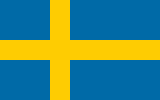
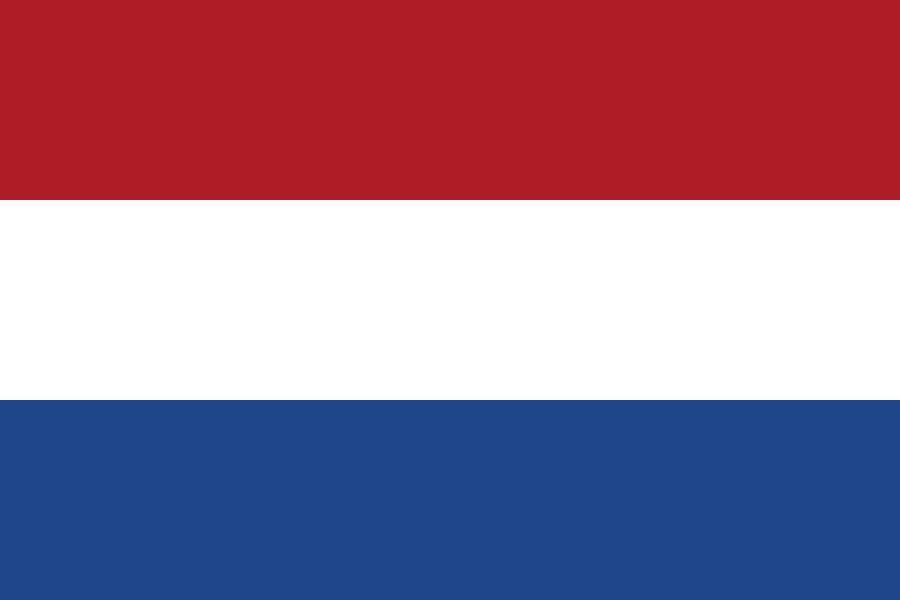
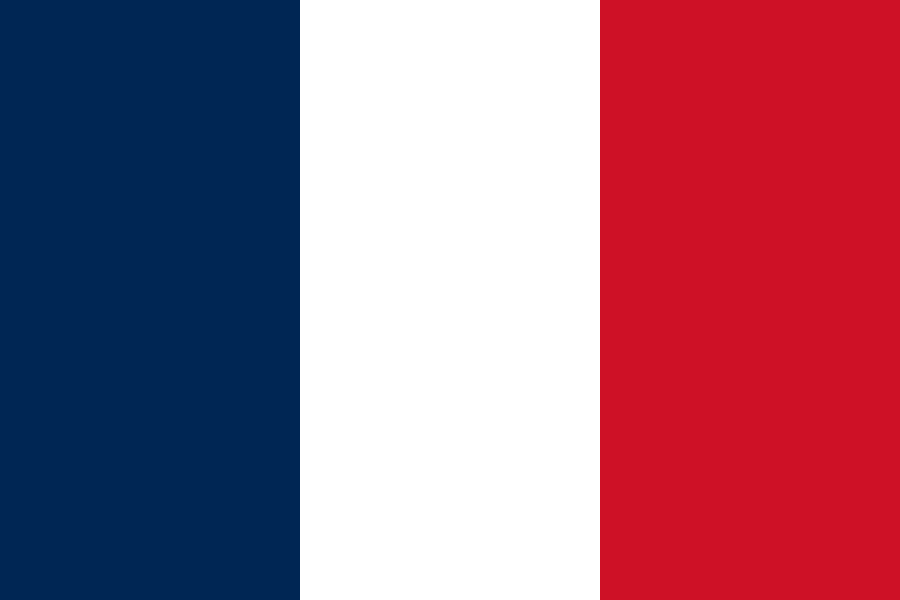
In the Odelsting flag debate of 30 April 1821, designer Fredrik Meltzer argued for red, white and blue as "the three colours that now denote freedom", as seen in the French flag of liberty, the Dutch and American flags and the British Union flag, and argued that the flag should take a cross form like the flags of Sweden, Denmark, England and Russia.
Common interpretations
The red field and white cross are commonly read as recalling the former union with Denmark and the blue as a courteous gesture to the new union partner Sweden; Store norske leksikon attributes this reasoning to Meltzer, though it is not among the arguments the Storting quotes from his preserved speech.
Because the white border separates the blue cross from the red field, Norway's flag is also a classic example of the heraldic rule of tincture, which avoids placing one colour (blue) directly on another (red).
History and design evolution
When Denmark ceded Norway to Sweden in 1814, Norway initially flew a modified Danish flag with the Norwegian crowned lion in the upper hoist canton, and later a Swedish flag with a red-and-white canton. In 1821 the Norwegian parliament (Storting) considered a large number of proposals for a distinct merchant flag, and Bergen parliamentarian Fredrik Meltzer submitted the winning red, white, and blue Nordic cross.
Adopted by the Storting in May 1821 and approved by King Karl III Johan on 13 July 1821 for merchant use in near waters (north of Cape Finisterre), the flag received a union mark ('Sildesalaten', combining Norwegian and Swedish colors) in the upper hoist corner between 1844 and 1899.
In 1898 the Storting passed the Norwegian Flag Act removing the union mark from the merchant and national flag for the third time, after the king had refused sanction in 1893 and 1896, so that it became law without royal sanction and took effect in 1899. After the peaceful dissolution of the union with Sweden in 1905 the union mark was also removed from the naval flag, and the clean 6:1:2:1:12 cross became the sole national flag.
Key historical milestones
- 1821Fredrik Meltzer's design adopted: Approved by the Storting in May 1821 and by royal resolution on 13 July 1821.
- 1898Norwegian Flag Act removes union canton: Establishes the pure red, white, and blue cross in 16:22 proportions as the civil and merchant flag.
- 1905Dissolution of the union with Sweden: The union mark is removed from the naval flag, and the pure flag is used for all civil and state purposes.
Frequently confused with
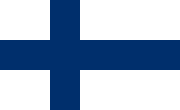
The Flag of Norway is commonly confused with or compared alongside the following catalog flags due to shared colors, stripe geometry, or central emblems:
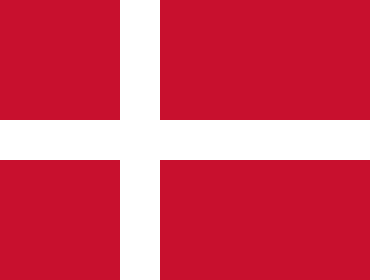
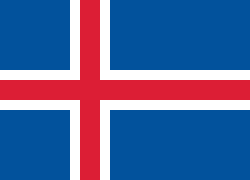
Visually and structurally similar flags in this catalog
Ranked deterministically across layout family, orientation and shape (35%), color overlap and stripe order (25%), symbols (20%), aspect ratio (10%), and stripe/symmetry geometry (10%):
Sources and image-rights provenance
- Lovdata — Lov om Norges Flag (10. desember 1898 nr. 1)
- Stortinget — Det norske flagg
- Store norske leksikon — Norges flagg
SVG artwork provenance: Original FastFlags drawing generated by scripts/generate-seed-svg-assets.ts from this record's ratio, layout and display colours; not an official construction sheet. (public-domain-statute, checked 2026-10-15, SHA-256 dd2850cf0711…).