Anatomy & Parts of a Flag — Hoist, Fly, Canton, Field, Charge & Fimbriation
Flag specifications that fix a construction rely on anatomical coordinates to locate stripes, crosses, and emblems relative to the flagpole.
Hoist vs. fly: the horizontal axis of a flag
In vexillology, the side of a flag attached to the flagpole or halyard is always called the hoist, while the outer edge that flutters freely in the wind is called the fly. By convention, Western and international flag diagrams are drawn with the hoist on the left (dexter) and the fly on the right (sinister).
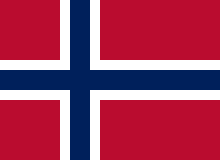
Some flags place their main charge off-center toward the hoist. The Nordic crosses of Denmark, Norway, Sweden, Finland, and Iceland have their vertical arm set toward the hoist, and the discs of Bangladesh, Palau, and Greenland are likewise shifted toward the pole; for Bangladesh this is commonly explained as making the disc appear centered when the flag flies.
The canton, field, charge, and fimbriation
The upper-hoist quarter of a flag is called the canton (or union). The canton is traditionally regarded as the place of honor on a flag, and it stays visible near the pole even when the flag hangs limp; the United States, Chile, and many naval ensigns place their stars or parent emblem there.
The background cloth is called the field (or ground), while any symbol placed upon it—a star, disc, cross, or coat of arms—is a charge. When a dark charge rests on a dark field (such as Norway's dark blue cross on red, or the Union Flag's red cross and saltire on dark blue), designers following the heraldic rule of tincture usually add a narrow white or yellow border called a fimbriation so the shapes do not blur together at long distance.
Key terminology & reference summary
| Concept / Term | Vexillological definition |
|---|---|
| Hoist | The edge or half of the flag nearest the flagpole; also used to mean the vertical height of the flag. |
| Fly | The outer half or free edge of the flag farthest from the pole; also used to mean the horizontal length of the flag. |
| Canton (Union) | A rectangular sub-compartment in the upper-hoist corner, such as the 50-star union of the United States or the lone-star square of Chile. |
| Fimbriation | A narrow contrasting border (usually white or yellow) separating a band, cross or other charge from its field or from another color. |
| Couped | Cut off cleanly before reaching the edges of the flag, as in the centered cross of Switzerland and the Red Cross. |